American Ice Company: Business Model Analysis
The American Ice Company represents a fascinating case study in the evolution of commodity-based businesses operating within highly competitive, capital-intensive industries. As a distributor and manufacturer of ice products, the company navigates complex supply chain dynamics, seasonal demand fluctuations, and the perpetual challenge of maintaining margins in a market dominated by both large regional players and emerging competitors. Understanding the American Ice Company’s business model reveals critical insights into operational efficiency, customer relationship management, and strategic positioning within the broader beverage and food service sectors.
This comprehensive analysis examines how American Ice Company sustains profitability through its integrated distribution network, examines the technological innovations reshaping the industry, and explores the strategic frameworks that enable success in what might appear to be a commoditized market. By dissecting the company’s operational model, revenue streams, and competitive advantages, we uncover valuable lessons applicable to businesses operating in similar logistics-intensive, thin-margin environments.
Core Business Model Overview
American Ice Company operates on a fundamentally straightforward yet operationally complex business model centered on the manufacture, distribution, and sale of ice products to commercial, retail, and consumer segments. The company’s core value proposition rests on three pillars: reliable product availability, consistent quality standards, and efficient last-mile delivery logistics. Unlike capital-intensive manufacturing operations, ice production requires relatively modest initial investment but demands significant ongoing operational expenditure for refrigeration, transportation, and facility maintenance.
The business model thrives on high-volume, low-margin transactions—a characteristic shared with many distribution-based enterprises. What distinguishes successful ice distributors from struggling competitors is their ability to optimize the cost structure across manufacturing, warehousing, and delivery functions. American Ice Company achieves this through strategically positioned production facilities, fleet optimization, and route planning that maximizes delivery efficiency while maintaining product freshness and availability.
The company’s model also incorporates direct-to-consumer sales through retail partnerships, vending operations, and point-of-sale availability in convenience stores and supermarkets. This multi-channel approach diversifies revenue sources and reduces dependency on any single customer segment. By leveraging customer relationship management systems, American Ice Company maintains detailed insights into purchasing patterns, seasonal trends, and customer preferences that inform inventory management and marketing strategies.

Revenue Streams and Market Segmentation
American Ice Company generates revenue through several distinct but interconnected streams, each serving different customer demographics and usage occasions. The primary segments include commercial foodservice (restaurants, bars, catering operations), retail grocery and convenience stores, ice vending machines, and direct consumer delivery services.
The foodservice segment represents a critical revenue pillar, as restaurants and hospitality venues require consistent ice supplies to maintain beverage quality and operational continuity. These customers typically operate on long-term supply agreements with negotiated pricing, creating predictable revenue streams and reducing transaction costs. The retail segment, encompassing grocery stores and convenience retailers, demands flexible delivery schedules and responsive inventory management, as ice competes for valuable shelf space with higher-margin products.
Vending operations represent an increasingly important revenue stream, allowing American Ice Company to capture consumer spending at convenient locations—gas stations, parking lots, outdoor events, and recreational facilities. This channel generates higher per-unit margins than wholesale distribution while building brand visibility and direct consumer relationships. The direct delivery segment, serving residential customers and small businesses, commands premium pricing compared to retail channels, reflecting the convenience and customization benefits customers receive.
Seasonal demand patterns significantly influence revenue timing and distribution. Summer months generate peak demand driven by outdoor entertaining, recreational activities, and increased beverage consumption, while winter demand contracts substantially in most geographic markets. Successful ice companies manage this seasonality through geographic diversification, serving both northern and southern markets to balance demand fluctuations, and by developing winter-demand applications such as ice for fishing, industrial cooling, and specialized commercial uses.
Operational Infrastructure and Supply Chain
The operational foundation of American Ice Company depends on an integrated supply chain architecture encompassing production facilities, cold storage infrastructure, distribution centers, and last-mile delivery logistics. This infrastructure represents the company’s primary competitive moat—competitors cannot easily replicate the geographic coverage, delivery speed, and operational reliability that established networks provide.
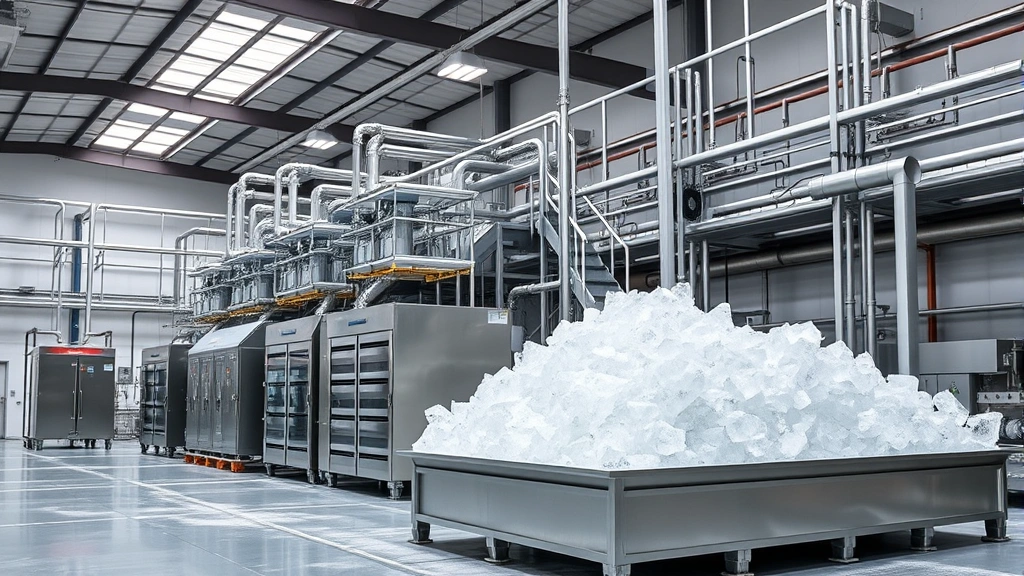
Production facilities utilize industrial-scale ice-making equipment, typically flake ice, cube ice, or specialty ice products depending on customer requirements. The manufacturing process itself remains relatively standardized across the industry, making operational efficiency and cost control paramount. American Ice Company differentiates through facility location strategy, positioning plants near major demand centers to minimize distribution distances and transportation costs. This network optimization directly impacts profitability, as transportation comprises a substantial portion of total operating expenses.
Cold storage facilities maintain product quality and enable buffer inventory to absorb demand spikes and supply disruptions. These facilities require continuous energy expenditure to maintain sub-freezing temperatures, representing a significant fixed cost component. American Ice Company manages this through energy-efficient refrigeration systems, facility consolidation where possible, and strategic partnerships with third-party logistics providers who operate shared cold storage networks.
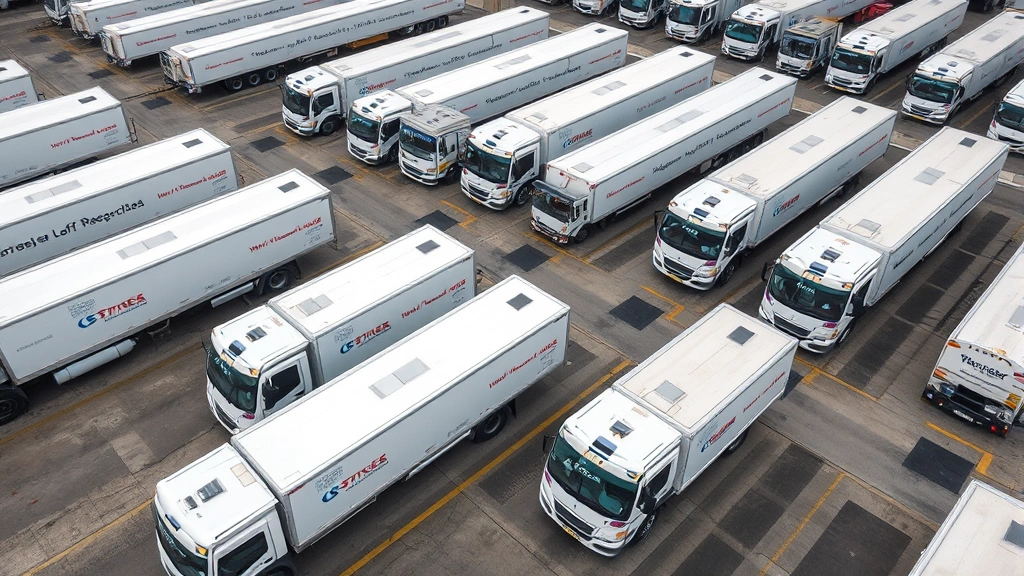
The distribution fleet represents both a critical operational asset and a major capital requirement. Vehicle selection balances payload capacity, fuel efficiency, and refrigeration performance. Many ice companies are transitioning to electric or hybrid vehicles to reduce fuel costs and address sustainability concerns, though the technology remains capital-intensive. Route optimization software, powered by predictive analytics and real-time delivery data, ensures that distribution vehicles maximize stops per route while maintaining product temperature integrity and on-time delivery performance.
Effective supply chain management requires sophisticated inventory planning that balances production capacity against demand forecasting. American Ice Company likely employs demand sensing technologies and historical sales analysis to anticipate seasonal peaks, promotional impacts, and special events that drive ice consumption. Poor inventory management creates dual penalties: excess inventory ties up working capital and increases storage costs, while insufficient inventory results in lost sales and customer dissatisfaction.
Technology and Digital Transformation
Modern ice distribution increasingly depends on digital technologies that enhance operational visibility, improve customer service, and optimize cost structures. American Ice Company’s competitive positioning reflects investments in technology infrastructure that many traditional ice companies have been slower to adopt.
Route planning and fleet management systems represent foundational technologies enabling operational excellence. GPS-enabled delivery vehicles provide real-time location data, allowing dispatchers to respond to urgent orders, optimize routes dynamically, and provide customers with accurate delivery windows. These systems generate valuable operational data that informs continuous improvement initiatives, identifying inefficiencies and opportunities for route consolidation or facility relocation.
Cloud computing infrastructure enables American Ice Company to scale technology capabilities without proportional capital investment in on-premises infrastructure. Cloud-based systems support inventory management, customer relationship management, financial reporting, and business intelligence functions across distributed facilities and delivery operations. This architecture provides flexibility to adapt to changing business requirements and integrate third-party applications that enhance specific operational functions.
E-commerce and mobile ordering platforms have transformed customer engagement in the ice distribution industry. Consumers increasingly expect the ability to order ice online for delivery or pickup, track orders in real-time, and manage recurring deliveries through digital interfaces. American Ice Company’s investment in these capabilities addresses evolving customer expectations and captures market share from competitors relying on traditional phone ordering and walk-up retail sales.
Predictive analytics applied to historical sales data, weather patterns, and event calendars enable more accurate demand forecasting. By anticipating demand spikes driven by summer weekends, major sporting events, or holiday entertaining seasons, American Ice Company optimizes production scheduling and inventory positioning, reducing stockouts while minimizing excess inventory and associated carrying costs.
Competitive Positioning and Market Dynamics
The ice distribution industry exhibits characteristics typical of commodity markets: low product differentiation, price sensitivity, and competition based primarily on service reliability and cost efficiency. Despite these dynamics, American Ice Company maintains competitive advantages through superior operational execution and customer service orientation.
The competitive landscape includes large national and regional players, local independent operators, and emerging players experimenting with new distribution models. Large competitors benefit from scale economies in production and distribution, but may struggle with service responsiveness in smaller markets or specialized applications. Local competitors possess intimate knowledge of regional demand patterns and customer relationships but lack scale economies and capital resources for technology investment. American Ice Company positions itself between these extremes—larger than most local competitors but more agile than national giants.
Price competition remains intense but is tempered by the localized nature of ice distribution. High transportation costs relative to product value create natural geographic boundaries, limiting direct competition from distant suppliers. American Ice Company leverages this geographic protection through facility density in key markets, making it difficult for competitors to underprice the company while maintaining acceptable margins.
Conducting a SWOT analysis of American Ice Company reveals distinct competitive dynamics. Strengths include established distribution networks, brand recognition, operational expertise, and customer relationships built through reliable service. Weaknesses encompass capital intensity, seasonal demand volatility, and exposure to commodity pricing pressure. Opportunities exist in expanding geographic presence, developing specialty ice products, and capturing market share through technology-enabled customer experiences. Threats include new entrants with innovative distribution models, increased competition from large beverage companies extending into ice distribution, and consolidation among competitors creating larger, more efficient rivals.
Sustainability and Future Growth
American Ice Company’s future growth strategy addresses both market expansion opportunities and the operational imperatives of a maturing industry. Sustainability considerations increasingly influence business decisions, as environmental regulations tighten and consumers demonstrate preferences for environmentally responsible companies.
Market expansion opportunities include geographic extension into underserved regions, product line expansion into specialty ice products serving medical, industrial, or culinary applications, and vertical integration into adjacent businesses such as water or beverage distribution. Each expansion path requires careful evaluation through structured business case analysis assessing capital requirements, competitive response, and return on investment potential.
Sustainability initiatives address both regulatory compliance and competitive differentiation. Energy-efficient refrigeration systems reduce operating costs while lowering carbon footprint. Sustainable packaging solutions—recyclable or compostable ice bag materials—appeal to environmentally conscious customers and differentiate the company from competitors. Fleet electrification, while capital-intensive, reduces emissions and aligns with emerging emissions regulations in many jurisdictions.
Implementing robust risk management frameworks protects American Ice Company against operational disruptions, commodity price volatility, and market shifts. Climate change presents both challenges and opportunities—changing seasonal patterns affect demand distribution, while increased temperatures in many regions may increase year-round ice consumption. Supply chain resilience investments, including facility redundancy and alternative sourcing strategies, mitigate disruption risks.
Industry consolidation trends suggest that American Ice Company may pursue strategic acquisitions to expand geographic presence or specialized capabilities, or alternatively may attract acquisition interest from larger beverage distribution companies seeking to expand service portfolios. Either scenario requires clear strategic alignment and integration planning to capture intended synergies.
FAQ
What makes the American Ice Company business model viable despite apparent commoditization?
The ice distribution business remains viable through geographic market segmentation, operational efficiency optimization, and customer service differentiation. High transportation costs relative to product value create natural geographic boundaries, limiting direct price competition from distant suppliers. Successful operators like American Ice Company differentiate through reliable delivery, consistent quality, and responsive customer service rather than product innovation.
How does seasonality impact American Ice Company’s financial performance?
Seasonal demand fluctuations create significant revenue and operational challenges. Summer months generate peak demand, while winter demand contracts substantially. American Ice Company mitigates seasonality through geographic diversification, developing winter-demand applications, and managing inventory strategically to balance production capacity against demand variation.
What role does technology play in American Ice Company’s competitive positioning?
Technology investments in route optimization, fleet management, e-commerce platforms, and demand forecasting enable operational efficiency and enhanced customer service. These capabilities differentiate American Ice Company from competitors relying on traditional operations and provide scalability advantages as the company expands.
How does American Ice Company compete against larger national distributors?
American Ice Company competes through superior operational execution, responsive customer service, and geographic market focus that larger competitors may underserve. Local facility density, personalized account management, and agile decision-making enable competitive advantages despite scale disadvantages relative to national players.
What sustainability challenges does ice distribution present?
Ice production and distribution are energy-intensive, creating environmental impacts through refrigeration and transportation. American Ice Company addresses these challenges through energy-efficient equipment, sustainable packaging, fleet electrification, and operational optimization reducing overall environmental footprint.