Taco Business Growth: CEO’s Proven Tips for Scaling Success
The taco industry represents one of the most dynamic and resilient segments in the food service sector. With consumer demand for authentic, convenient, and affordable dining experiences at an all-time high, taco businesses face unprecedented growth opportunities. Whether you’re operating a single location or managing a multi-unit franchise, understanding the strategic principles that drive sustainable expansion is essential to staying competitive in this thriving market.
Leading CEOs in the taco industry have consistently demonstrated that growth isn’t about cutting corners or chasing trends blindly. Instead, it’s about building a foundation of operational excellence, understanding your customer base deeply, and making calculated decisions backed by data and market intelligence. This comprehensive guide reveals the actionable strategies that successful taco company leaders use to scale their operations while maintaining quality, profitability, and brand integrity.
Master Your Core Operations Before Scaling
The most successful taco company leaders understand a fundamental truth: premature scaling destroys businesses. Before expanding to multiple locations, you must have mastered the operational mechanics of a single, highly profitable unit. This means developing standardized recipes, streamlined workflows, and consistent quality metrics that can be replicated across all future locations.
Begin by conducting a comprehensive operational audit of your flagship location. Document every process, from ingredient sourcing to customer service protocols. Create detailed standard operating procedures (SOPs) that your team can follow with precision. The goal is to remove variability and create a predictable, replicable system. When potential investors or franchisees evaluate your taco business, they’re looking for evidence that you’ve cracked the code on consistent profitability.
Quality control is non-negotiable in the food industry. Implement a rigorous testing protocol that monitors everything from food safety to customer satisfaction. Conducting a SWOT analysis of your current operations will help you identify operational strengths to leverage and weaknesses to address before expansion. This strategic assessment reveals whether you’re truly ready to grow or if refinement is necessary.
Develop a Winning Financial Strategy
Financial discipline separates thriving taco companies from those that plateau or fail. Successful CEOs approach growth as a carefully orchestrated financial plan rather than an opportunistic venture. This begins with understanding your unit economics in granular detail: cost of goods sold (COGS), labor expenses, rent, utilities, and all overhead costs must be tracked and optimized.
Most successful taco operations maintain COGS between 28-35%, allowing sufficient margin for labor and overhead while remaining competitive. Your gross profit margin should typically range from 60-65%, with net profit targets of 10-15% for established locations. These benchmarks provide the financial cushion necessary to invest in growth initiatives, weather market disruptions, and maintain operational excellence.
When developing expansion plans, creating a business case is essential. This document should outline capital requirements, projected revenue streams, break-even timelines, and return on investment scenarios. Present multiple growth scenarios: conservative, moderate, and aggressive. This analytical approach demonstrates maturity to stakeholders and helps you make decisions based on data rather than enthusiasm.
Consider the financing models available: internal cash flow, bank loans, venture capital, or franchise partnerships. Each approach has implications for control, growth speed, and risk distribution. Many successful taco company leaders use a hybrid approach, combining personal investment with strategic partnerships to accelerate expansion while managing risk.

Build Brand Loyalty Through Consistency
Your brand is the promise you make to customers every single day. In the taco industry, where competition is fierce and customer loyalty is earned through repetition and reliability, consistency is your most powerful marketing asset. Successful CEOs invest heavily in brand development, not as a marketing expense, but as a strategic foundation for sustainable growth.
Consistency manifests in multiple dimensions. Taste consistency ensures that a customer’s favorite taco tastes identical whether they’re ordering at location one or location fifty. Service consistency means that wait times, employee friendliness, and order accuracy remain predictable across all units. Visual consistency in restaurant design, signage, and packaging reinforces brand recognition and creates a professional image that justifies premium pricing.
Build a brand identity that resonates with your target demographic. Are you positioning as authentic and artisanal, or convenient and affordable? Are you emphasizing local sourcing, family recipes, or innovative flavor combinations? This positioning should inform every business decision, from menu development to location selection to marketing messaging. When your brand promise is clear and consistently delivered, customers become advocates who drive word-of-mouth growth.
Implement a comprehensive brand standards manual that covers everything from food presentation to employee uniforms to social media tone. This document becomes your north star, ensuring that as you grow and delegate authority, your brand identity remains intact. Maintaining accurate website and company information across all digital touchpoints reinforces brand consistency and builds customer trust in the digital age.
Leverage Technology for Competitive Advantage
Modern taco companies must embrace technology as a core business function, not an afterthought. The most successful CEOs recognize that technology investments directly impact profitability, customer experience, and scalability. Point-of-sale (POS) systems, inventory management software, and customer relationship management (CRM) platforms provide the data visibility necessary to make informed decisions.
Cloud-based systems offer particular advantages for growing taco companies. The business benefits of cloud computing include real-time data access across multiple locations, reduced IT infrastructure costs, and seamless scalability as you add new units. You can monitor sales performance, inventory levels, and labor metrics from anywhere, enabling rapid response to operational issues.
Online ordering platforms and delivery partnerships have become essential revenue streams. Integrate with platforms like DoorDash, Uber Eats, and Grubhub to capture the growing delivery market. However, manage these relationships carefully—platform fees can erode margins, so ensure your pricing strategy accounts for these costs while remaining competitive.
Customer data analytics reveal valuable insights about purchasing patterns, peak hours, popular items, and demographic trends. Use this intelligence to optimize menu offerings, adjust staffing levels, and personalize marketing campaigns. Loyalty programs powered by technology create repeat customers and provide rich data for targeted promotions.
Strategic Location Selection and Expansion
Real estate decisions have outsized impact on taco company profitability and growth trajectory. Successful CEOs approach location selection with scientific rigor, analyzing foot traffic patterns, demographic composition, competitor density, parking availability, and lease terms before committing capital. A mediocre location in a high-traffic area will always outperform an exceptional restaurant in a low-visibility spot.
Conduct thorough market research before entering new territories. Understand local food preferences, competitive landscape, and demographic alignment with your target customer. A taco concept that thrives in an urban millennial neighborhood may struggle in a suburban family-oriented market. Conversely, a value-focused taco operation might find tremendous success in price-sensitive markets overlooked by premium competitors.
Evaluate lease terms with the same scrutiny as real estate location. Negotiate percentage rent structures, renewal options, and tenant improvement allowances. A slightly higher base rent in a proven location often beats a lower rent in an unproven area. Factor in buildout costs, equipment purchases, and pre-opening marketing when calculating total capital requirements for new locations.
Franchise expansion offers an alternative growth model that accelerates market penetration while leveraging franchisee capital and local market knowledge. However, franchise success requires robust systems, comprehensive training programs, and ongoing support infrastructure. Ensure your operations are truly replicable before recruiting franchisees.
Manage Supply Chain Complexity
As taco companies scale, supply chain management becomes increasingly complex and strategically important. Sourcing consistent ingredients across multiple locations, managing supplier relationships, and optimizing logistics directly impact food quality, cost structure, and operational reliability.
Develop relationships with multiple suppliers for critical ingredients, reducing dependency on any single vendor. However, maintain strong primary supplier partnerships that enable you to negotiate favorable pricing and secure priority allocation during supply disruptions. The COVID-19 pandemic demonstrated the vulnerability of companies reliant on single suppliers.
Consider vertical integration opportunities for high-volume, high-margin items. Some successful taco companies operate central commissaries where they prepare items like salsas, marinades, and prepared proteins, then distribute to individual locations. This approach improves consistency, reduces costs, and creates operational efficiency.
Implement inventory management systems that track ingredient usage, minimize waste, and prevent stockouts. Food waste directly impacts profitability—every spoiled ingredient reduces margin. Train staff on proper storage, rotation practices, and portion control to maximize ingredient utilization.
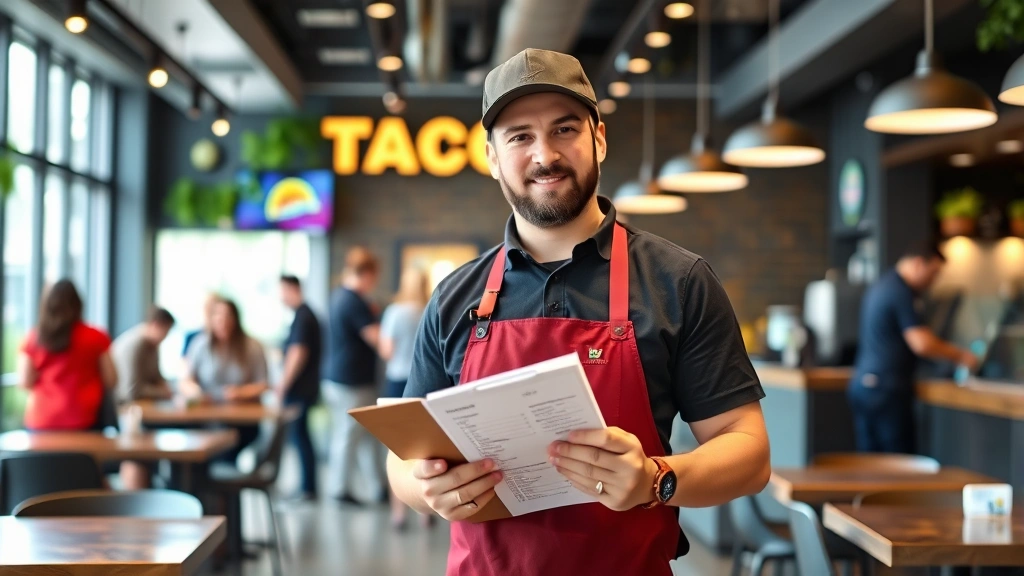
Create a High-Performance Team Culture
Ultimately, taco company growth is limited by your ability to recruit, train, and retain talented people. Successful CEOs understand that their competitive advantage resides in their team. High-performing employees deliver superior customer experiences, maintain operational excellence, and drive innovation.
Develop a strong company culture that attracts people who share your values and vision. Offer competitive compensation, opportunities for advancement, and a work environment where people feel valued. In an industry with historically high turnover, creating a culture where employees want to stay is a significant competitive advantage.
Invest in training and development. Create clear career pathways from entry-level positions to management roles. Implement management training programs that develop leadership skills in promising employees. When your team sees opportunities for growth within your organization, they invest more fully in your success.
Implement performance management systems that hold people accountable while providing support for improvement. Celebrate wins, learn from failures, and maintain transparent communication about business performance. Employees who understand how their work contributes to company success become partners in growth rather than mere workers.
FAQ
What is the typical timeline for expanding a taco business from one to multiple locations?
Most successful taco company leaders recommend perfecting a single location for 18-24 months before expanding. This timeframe allows you to optimize operations, build financial reserves, develop management talent, and prove your business model’s viability. Premature expansion typically leads to operational breakdowns and financial stress.
How much capital is typically required to open a new taco location?
A new taco restaurant typically requires $250,000-$500,000 in startup capital, depending on location, size, and buildout requirements. This includes lease deposits, buildout and renovation, equipment, initial inventory, permits and licenses, and working capital for pre-opening and early operations. Franchise models may have different capital requirements.
Should taco companies focus on company-owned locations or franchise expansion?
This depends on your growth objectives, capital availability, and operational maturity. Company-owned locations provide greater control and margin capture but require significant capital. Franchising accelerates growth and leverages franchisee capital but requires robust systems and quality control mechanisms. Many successful taco companies use a hybrid approach with company-owned flagship locations and franchised expansion units.
How do successful taco companies maintain quality as they scale?
Quality maintenance during scaling depends on standardization, training, and monitoring. Develop detailed SOPs for every process, implement rigorous training programs for all staff, and establish quality control checkpoints throughout operations. Use technology to monitor compliance and performance metrics across locations. Regular audits and mystery shopping programs identify quality issues before they damage brand reputation.
What role does marketing play in taco business growth?
Marketing is essential for building brand awareness, driving customer acquisition, and reinforcing brand positioning. However, in the food industry, word-of-mouth marketing driven by product quality and service excellence is often more effective than paid advertising. Invest in marketing that tells your brand story, builds community connections, and creates memorable customer experiences. Digital marketing, social media, and loyalty programs provide cost-effective channels for customer engagement.