Water conservation has become a critical business imperative for organizations operating in California’s Inland Empire, particularly for those served by Fontana Water Company. As municipal water rates continue to climb and environmental regulations tighten, reducing water consumption directly impacts operational costs and corporate environmental footprints. Strategic water management isn’t merely about cutting expenses—it represents a fundamental shift toward sustainable business operations that align with modern stakeholder expectations and regulatory requirements.
For businesses in the Fontana service area, understanding how to optimize water usage can yield substantial financial returns while simultaneously advancing business sustainability strategies. This comprehensive guide provides actionable, expert-backed approaches to systematically reduce water bills without compromising operational efficiency or service quality.
Understanding Your Fontana Water Bill
The first step toward reducing water expenses involves thoroughly understanding how Fontana Water Company structures its billing. Most municipal water bills contain multiple components: base charges, consumption fees, wastewater treatment charges, and stormwater management fees. Base charges typically remain fixed regardless of usage, while consumption fees scale directly with water volume. Wastewater charges often mirror consumption costs, meaning every gallon saved generates double savings—one on water intake and another on treatment discharge.
Fontana Water Company provides detailed billing statements that itemize usage patterns across different time periods. Analyzing 12 months of historical data reveals seasonal fluctuations, peak consumption periods, and anomalies indicating leaks or inefficiencies. Many businesses discover that simply reviewing billing trends identifies obvious reduction opportunities. When implementing how to create a business case for water conservation investments, baseline billing data provides essential ROI calculations.
Request a detailed breakdown from Fontana Water Company showing consumption by meter, time-of-use patterns, and comparative benchmarks against similar facilities. This transparency enables data-driven decision-making rather than guesswork-based conservation efforts.
Conducting a Water Audit
Professional water audits systematically identify consumption sources, quantify waste, and prioritize intervention opportunities. These assessments typically examine:
- Indoor water systems: Restrooms, break rooms, kitchen facilities, and cleaning operations
- Outdoor irrigation: Landscaping systems, parking lot maintenance, and cooling towers
- Production processes: Equipment-specific water requirements and recycling potential
- Leak detection: Visible drips plus hidden leaks within walls and underground infrastructure
The audit process begins with meter readings at different times to establish baseline consumption. Industrial facilities should measure water use during operational and non-operational periods to isolate process-specific requirements. Many organizations discover that 20-30% of consumption occurs during closed hours, indicating significant leak problems.
According to EPA WaterSense research, comprehensive audits typically identify 10-30% reduction opportunities within existing infrastructure. Facilities that implement business risk management framework principles toward water security often discover that audit-identified improvements align with broader operational resilience goals.
Engage certified water auditors familiar with Fontana service area characteristics, local water quality conditions, and regional climate patterns. Their expertise ensures recommendations account for local regulations, seasonal variations, and infrastructure-specific constraints.
Implementing Technology Solutions
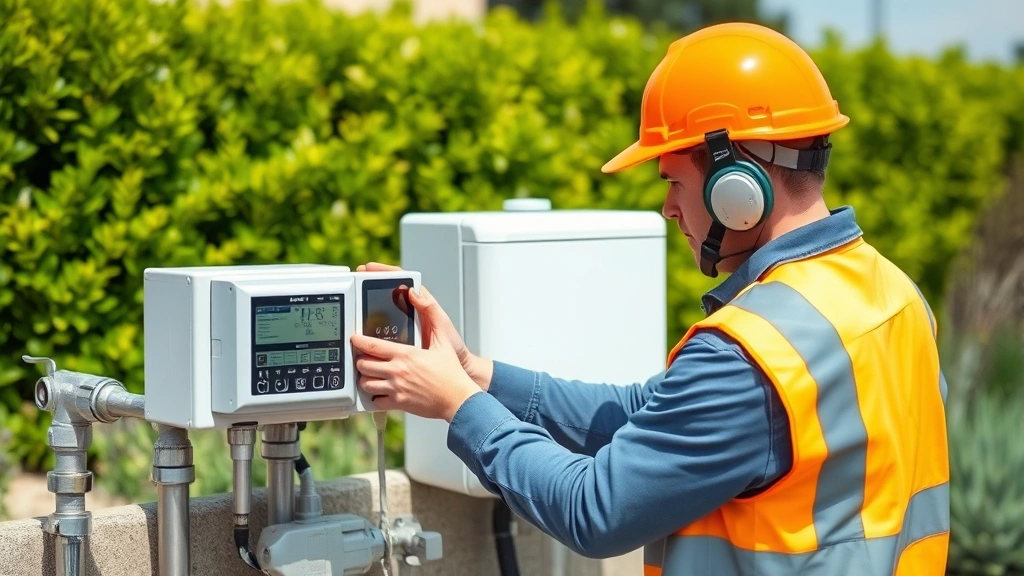
Modern water management technology delivers measurable consumption reductions through real-time monitoring and automated optimization. Advanced metering infrastructure (AMI) systems provide granular consumption data, enabling precise leak detection and usage pattern analysis. Smart meters connected to cloud platforms generate alerts when consumption exceeds predetermined thresholds or deviates from historical patterns.
Key technology implementations include:
- IoT water sensors: Monitor individual fixture performance, detecting leaks within minutes rather than weeks
- Automated shutoff systems: Disable water supply when preset limits are exceeded or during non-operational periods
- Flow restrictors: Reduce water pressure and volume at faucets, showerheads, and irrigation zones without affecting functionality
- Recirculation systems: Capture and reuse water from cooling processes, cleaning operations, and landscape irrigation
- Data analytics platforms: Visualize consumption patterns, benchmark against industry standards, and predict maintenance needs
Organizations implementing these technologies typically achieve 15-25% consumption reductions within the first year. Return on investment periods often fall between 2-4 years, with benefits extending well beyond initial payback through sustained operational improvements.
Fontana Water Company occasionally offers rebate programs for qualifying technology installations. Verify current incentive availability before finalizing technology procurement decisions, as rebates significantly improve financial viability for comprehensive system upgrades.
Operational Best Practices
Systematic operational changes require minimal capital investment while delivering consistent consumption reductions. These practices address behavioral and procedural inefficiencies:
- Maintenance protocols: Establish regular inspection schedules identifying and repairing leaks before they escalate. A single dripping faucet wastes approximately 3,000 gallons annually
- Cleaning procedures: Substitute dry sweeping for water-intensive hosing, use waterless sanitizers where feasible, and consolidate cleaning activities to optimize water use
- Equipment operation: Run water-dependent machinery only during necessary periods, maintain optimal equipment function to prevent inefficiency-related overconsumption
- Seasonal adjustments: Modify irrigation schedules based on rainfall and temperature patterns, reducing unnecessary outdoor watering during cooler months
- Staff training: Educate employees about water conservation importance, proper equipment operation, and leak reporting procedures
Implementing operational best practices costs virtually nothing beyond staff time and management attention. Despite minimal financial investment, these changes typically reduce consumption by 5-15%, making them the highest ROI conservation strategy available.

Landscape and Irrigation Management
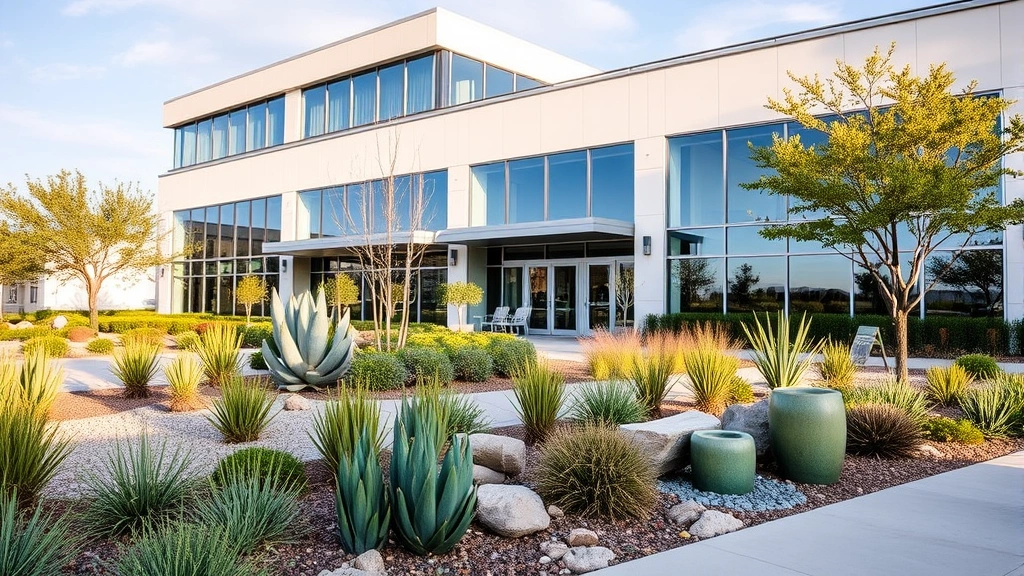
Outdoor water consumption often represents 30-50% of total facility usage in arid climates like Fontana’s. Strategic landscape and irrigation management delivers substantial savings while enhancing property aesthetics and environmental value.
Drought-resistant landscaping substitutes water-intensive plants with native species adapted to regional climate conditions. Desert-adapted plants require minimal supplemental irrigation once established, dramatically reducing long-term water demands. Replacing traditional turf grass with drought-resistant alternatives or hardscaping features can reduce outdoor water consumption by 50-75%.
Irrigation system optimization includes:
- Smart controllers: Adjust watering schedules based on real-time weather data, soil moisture sensors, and seasonal requirements
- Drip irrigation: Deliver water directly to plant root zones, reducing evaporation losses compared to spray systems by 30-50%
- Mulching: Retain soil moisture and reduce evaporation rates by 25-50%, decreasing irrigation frequency requirements
- Soil amendment: Enhance soil water-holding capacity through organic matter incorporation, reducing supplemental irrigation needs
- Hydrozoning: Group plants by water requirements, allowing independent irrigation scheduling and preventing overwatering of drought-tolerant species
Professional landscape audits identify species-specific water requirements, assess irrigation system efficiency, and recommend replacement schedules optimizing long-term cost performance. Many Fontana-area facilities discover that landscape redesigns pay for themselves within 3-5 years through reduced water bills.
Employee Engagement Programs
Sustainable water conservation requires organizational culture shift where employees understand conservation importance and actively participate in reduction initiatives. Engagement programs transform employees from passive water consumers into active conservation champions.
Effective engagement strategies include:
- Awareness campaigns: Communicate water conservation goals, progress metrics, and individual contribution opportunities through regular updates and visible signage
- Training programs: Educate staff about conservation techniques, proper equipment operation, and leak reporting procedures
- Recognition systems: Acknowledge teams and individuals demonstrating exceptional conservation commitment through awards, bonuses, or public recognition
- Suggestion programs: Incentivize employee ideas for conservation improvements, leveraging frontline insights often overlooked by management
- Performance tracking: Share facility-wide consumption data, departmental benchmarks, and progress toward reduction targets, creating accountability and friendly competition
Research from Harvard Business Review demonstrates that employee engagement programs increase conservation initiative success rates by 40-60% compared to top-down mandates alone. When employees understand their role in organizational sustainability goals, participation rates and sustained behavior change improve dramatically.
Organizations implementing corporate social responsibility examples that emphasize environmental stewardship often integrate water conservation into broader sustainability narratives, enhancing employee pride and external reputation simultaneously.
Financial Incentives and Rebates
Fontana Water Company and regional water authorities offer various incentive programs reducing the financial burden of conservation investments. Understanding available programs enables strategic timing of capital improvements and improves project economics.
Common rebate categories include:
- Fixture replacement rebates: Incentives for installing low-flow toilets, urinals, faucets, and showerheads meeting WaterSense standards
- Irrigation system upgrades: Rebates for smart controllers, drip irrigation installation, and landscape conversion projects
- Process equipment: Incentives for water-efficient cooling towers, cleaning systems, and production equipment
- Auditing support: Partial or full rebates for professional water audits conducted by certified providers
- Behavioral programs: Rebates or rate reductions for facilities achieving documented consumption reduction targets
Rebate programs frequently change and vary by property type, consumption level, and project category. Contact Fontana Water Company directly or visit their website to obtain current program details, eligibility requirements, and application procedures. Strategic timing of multiple projects can maximize cumulative rebate benefits.
When planning business continuity improvements, consider integrating water conservation projects to leverage multiple funding sources and optimize capital allocation efficiency.
Comprehensive water conservation strategies combine multiple approaches—technology implementation, operational improvements, landscape optimization, employee engagement, and rebate utilization—to achieve maximum impact. Organizations that systematically address water consumption typically reduce bills by 20-40% within 12-24 months while improving operational resilience and environmental performance.
The business case for water conservation strengthens continuously as municipal rates increase and environmental regulations tighten. Early action positions organizations as industry leaders in sustainability while capturing financial benefits others will eventually pursue. Fontana-area businesses implementing comprehensive strategies today secure competitive advantages through reduced operating costs and enhanced stakeholder relationships.
FAQ
How much can businesses typically reduce water bills through conservation?
Comprehensive conservation programs typically reduce consumption by 20-40% within the first year, with additional savings accumulating through sustained operational improvements and behavioral changes. Facilities with significant inefficiencies often achieve 40-50% reductions.
What’s the average ROI for water conservation investments?
Most technology and infrastructure investments achieve positive ROI within 2-4 years through reduced consumption and associated wastewater charges. Operational improvements and behavioral changes generate immediate returns with minimal capital investment.
Does Fontana Water Company offer rebate programs?
Yes, Fontana Water Company offers various rebate programs for qualifying conservation projects. Contact their customer service department or visit their website for current program details, eligibility criteria, and application procedures.
How often should facilities conduct water audits?
Initial comprehensive audits establish baseline conditions and identify major improvement opportunities. Follow-up audits every 2-3 years verify sustained performance, identify emerging issues, and evaluate new technology effectiveness.
What’s the most cost-effective water conservation strategy?
Operational improvements and maintenance protocols deliver the highest ROI with minimal capital requirements. Fixing leaks, adjusting procedures, and implementing staff training programs typically reduce consumption by 5-15% at virtually no cost.
Can businesses recycle water for multiple uses?
Many facilities successfully implement water recycling systems capturing and reusing water from cooling processes, cleaning operations, and landscape irrigation. Recycled water applications vary by local regulations and water quality requirements.
How does smart irrigation technology reduce water consumption?
Smart controllers adjust watering schedules based on real-time weather data, soil moisture levels, and seasonal requirements, preventing unnecessary irrigation during rainy periods or cooler seasons when plants require less supplemental water.


