Ulysse Nardin’s Legacy: Watchmaker’s Heritage and Business Excellence
Ulysse Nardin stands as one of the most prestigious names in luxury watchmaking, with a heritage spanning nearly two centuries. Founded in 1846 in Le Locle, Switzerland, this iconic manufacture has transcended the watchmaking industry to become a masterclass in business longevity, brand positioning, and strategic innovation. The company’s journey from a modest workshop to a global luxury powerhouse offers invaluable insights into building and maintaining a sustainable business legacy.
The watchmaker’s story is more than just technical precision and aesthetic excellence—it represents a compelling case study in how businesses survive disruption, adapt to market changes, and maintain relevance across generations. From mechanical innovation to digital transformation, Ulysse Nardin has navigated multiple industry revolutions while preserving its core identity. Understanding this legacy provides entrepreneurs and business leaders with practical lessons in brand building, mission statement development, and long-term strategic planning.

The Founding Vision and Early Innovation
Ulysse Nardin’s foundation in 1846 emerged from the vision of Ulysse Nardin, a watchmaker who recognized the critical need for precision in maritime navigation. During this era, accurate timekeeping was literally a matter of life and death at sea—ships required chronometers capable of withstanding extreme conditions while maintaining absolute precision. This necessity created the watchmaker’s initial competitive advantage: solving a real, urgent business problem.
The company’s early strategy demonstrates fundamental business principles that remain relevant today. Rather than competing on price or volume, Ulysse Nardin positioned itself as the premium solution for the most demanding applications. This niche-focused strategy allowed the young manufacture to command premium pricing while building an unassailable reputation. The company earned the title “Fabricant d’Horlogers” (watchmaker of watchmakers), reflecting its status as the preferred chronometer manufacturer for naval expeditions and maritime commerce.
This positioning established what would become the company’s defining characteristic: technical innovation paired with market leadership. Ulysse Nardin didn’t simply make watches—the company solved critical problems that other manufacturers couldn’t address. This problem-solving orientation became embedded in the organizational DNA, much like how successful business incubators focus on solving specific market gaps rather than pursuing generic solutions.
Throughout the 19th century, Ulysse Nardin accumulated an impressive portfolio of innovations: the lever escapement improvements, specialized marine chronometers, and increasingly accurate movement designs. Each innovation reinforced the brand’s positioning as the manufacturer for professionals who couldn’t afford failure. By 1900, Ulysse Nardin had established itself not merely as a luxury brand, but as a trusted partner in high-stakes environments.
Building a Global Reputation Through Excellence
The transition from the 19th to the 20th century represented a critical inflection point for Ulysse Nardin. The company faced a strategic choice: remain a specialized manufacturer serving a narrow market, or expand into broader luxury markets. The watchmaker chose strategic expansion while maintaining quality standards—a delicate balance that many heritage brands fail to execute.
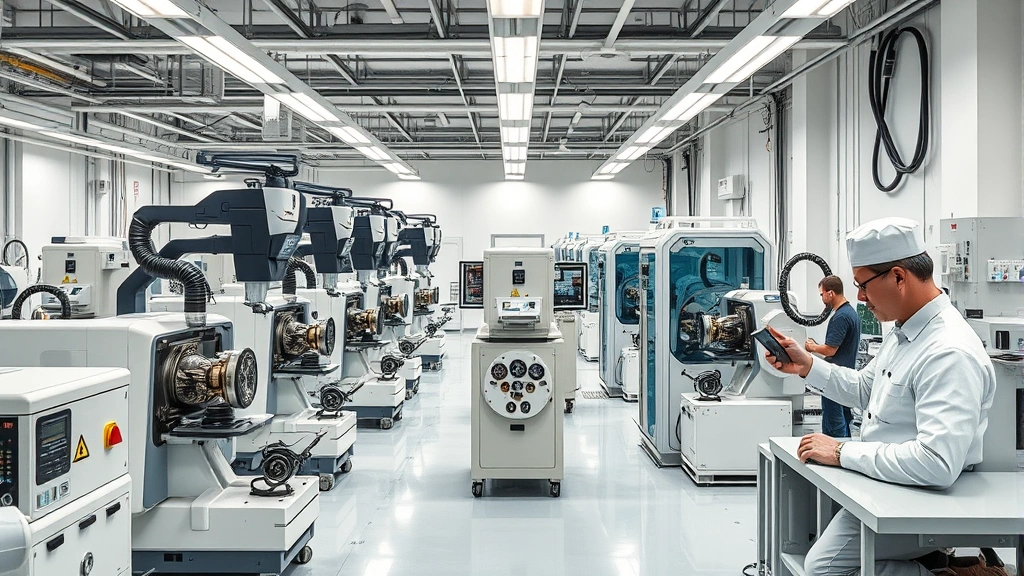
Ulysse Nardin invested heavily in manufacturing infrastructure, establishing production facilities that combined traditional craftsmanship with emerging industrial techniques. This hybrid approach—respecting heritage while embracing efficiency—became a template for sustainable luxury manufacturing. The company understood that scaling premium products requires investment in systems and processes, not compromises on quality.
The brand’s global expansion was methodical and strategic. Rather than pursuing mass-market distribution, Ulysse Nardin cultivated relationships with exclusive retailers in major cosmopolitan centers: Geneva, London, Paris, and eventually New York. Each partnership was carefully curated to maintain brand prestige. This approach to marketing and distribution strategy demonstrates sophisticated channel management—a principle that applies far beyond luxury watches.
During this period, Ulysse Nardin earned numerous international awards and accolades. These weren’t marketing gimmicks but genuine recognition of technical achievement. The company participated in world’s fairs and international competitions, using these platforms to demonstrate superiority. This approach created what modern marketers call “third-party validation”—allowing respected institutions to validate claims rather than relying solely on company messaging.
By mid-century, Ulysse Nardin had achieved something remarkable: the brand commanded premium pricing not through artificial scarcity or marketing hype, but through demonstrated technical superiority and consistent delivery. Customers understood precisely why Ulysse Nardin watches cost more, and they valued the investment accordingly.
Navigating Industry Disruption and the Quartz Crisis
The 1970s and 1980s presented an existential threat to Swiss watchmaking. The quartz revolution—triggered by Japanese manufacturers’ ability to produce accurate, affordable electronic watches—devastated the traditional watchmaking industry. This period, known as the “Quartz Crisis,” eliminated thousands of jobs and forced many heritage manufacturers into bankruptcy or consolidation.
Ulysse Nardin faced the same disruption as competitors, but the company’s strategic response proved superior. Rather than dismissing quartz technology as inferior, Ulysse Nardin invested in understanding and adopting it. The manufacture developed hybrid strategies: maintaining mechanical watch production for heritage-conscious customers while simultaneously building expertise in quartz movements. This dual-capability approach preserved revenue streams during the transition period.
More importantly, Ulysse Nardin recognized that the crisis created an opportunity to acquire talented craftspeople and manufacturing capacity at depressed prices. While competitors downsized, Ulysse Nardin strategically expanded, positioning itself to capitalize on the eventual revival of mechanical watches. This requires understanding risk management frameworks—specifically how to identify existential threats and convert them into strategic advantages.
The company’s survival through the Quartz Crisis demonstrates a critical business principle: heritage and innovation aren’t mutually exclusive. Ulysse Nardin maintained respect for traditional watchmaking while embracing technological change. This balanced approach allowed the company to emerge from the crisis stronger than many competitors, with expanded capabilities and renewed market position.
Strategic Ownership and Modern Positioning
In 1983, Ulysse Nardin became part of the Société Suisse de Microélectronique et d’Horlogerie (SMH), which later became the Swatch Group. This acquisition represented a pivotal moment in the company’s evolution. Rather than diminishing Ulysse Nardin’s independence, the Swatch Group recognized the value of maintaining distinct brand identities within a portfolio structure.
This organizational approach reflects sophisticated business strategy. The Swatch Group understood that luxury brands require autonomy to maintain their positioning. By preserving Ulysse Nardin as a distinct entity with dedicated leadership, the parent company gained the scale benefits of group ownership while retaining the brand authenticity that customers valued. This structure mirrors best practices in business transition planning—ensuring that acquired companies maintain operational independence while leveraging parent resources.
Under Swatch Group stewardship, Ulysse Nardin invested in manufacturing innovation, research and development, and brand building. The manufacture expanded its product range, introducing models that appealed to broader luxury markets while maintaining technical excellence. Notable collections like the Freak, Blast, and Diver lines demonstrated the company’s ability to innovate while respecting heritage.
The Freak collection, in particular, exemplifies modern Ulysse Nardin philosophy. Introduced in 2001, this revolutionary timepiece featured a silicium hairspring—a material previously considered impossible for watchmaking. The Freak demonstrated that heritage manufacturers could lead technological innovation, not merely preserve tradition. This positioning differentiated Ulysse Nardin from competitors who chose either pure heritage or pure innovation.
The Business Model of Luxury Manufacturing
Ulysse Nardin’s business model reveals important principles about sustainable luxury manufacturing. Unlike mass-market producers, luxury manufacturers operate on fundamentally different economics. Understanding these dynamics provides insights applicable across premium industries.
First, unit economics in luxury manufacturing depend on price premium and production efficiency, not volume. A single Ulysse Nardin timepiece generates margins equivalent to thousands of mass-market units. This means that luxury manufacturers can invest substantially in quality, craftsmanship, and innovation while maintaining profitability at modest volumes.
Second, the business model requires vertical integration and supply chain control. Ulysse Nardin manufactures most components internally rather than outsourcing to suppliers. This approach—capital intensive and seemingly inefficient by mass-production standards—actually optimizes for the characteristics that luxury customers value: consistency, quality, and the ability to innovate at the component level.
Third, luxury manufacturing demands significant investment in intangible assets: brand reputation, heritage narrative, and customer relationships. Ulysse Nardin allocates resources to brand building, heritage preservation, and customer experience that would be economically irrational in mass markets but essential in luxury positioning. This reflects the reality that luxury customers purchase status, heritage, and identity—not merely functionality.
Fourth, the business model requires strategic distribution and retail presence. Ulysse Nardin maintains control over distribution through carefully selected boutiques and authorized retailers. This approach preserves brand prestige by preventing channel dilution. The company understands that allowing watches to be sold through discount channels would irreparably damage the brand positioning that justifies premium pricing.
These business model characteristics explain Ulysse Nardin’s resilience through multiple industry cycles. The manufacture isn’t optimized for competing on price or volume—it’s optimized for delivering premium value to customers willing to pay for excellence. This clarity of strategic positioning enables consistent decision-making across the organization.
Digital Transformation and Contemporary Challenges
Today, Ulysse Nardin faces a different set of challenges than the Quartz Crisis or industry consolidation. The contemporary luxury market demands digital sophistication, omnichannel presence, and direct customer engagement—capabilities that traditional manufacturers must build deliberately.
The company has invested in digital transformation while maintaining the brand’s heritage positioning. Ulysse Nardin’s digital strategy focuses on customer experience rather than transactional efficiency. The manufacture uses digital channels to tell the brand story, educate customers about watchmaking, and build community among enthusiasts. This approach recognizes that business continuity in luxury markets depends on maintaining emotional connections with customers, not merely offering products.
Contemporary challenges include competition from new luxury brands, changing consumer preferences toward experiences over possessions, and sustainability pressures. Ulysse Nardin has responded by emphasizing the longevity and repairability of its watches—positioning mechanical timepieces as sustainable alternatives to disposable electronics. This messaging aligns with evolving customer values while reinforcing the brand’s core positioning.
The company has also expanded into new market segments, including women’s watches and sports-oriented models, without diluting core brand identity. This requires sophisticated product portfolio management—offering diversity without sacrificing coherence. Each new collection must reinforce rather than contradict the brand narrative.
Ulysse Nardin’s contemporary strategy demonstrates that heritage brands remain relevant by evolving intentionally, not by clinging to tradition. The manufacture invests in understanding emerging technologies (like blockchain for authenticity verification), exploring new materials, and engaging customers through contemporary channels—all while maintaining the technical excellence and quality standards that built the brand.
Looking forward, Ulysse Nardin faces questions about generational succession, market saturation in developed economies, and competition from both mass-market and emerging luxury brands. However, the company’s 175+ year history suggests it possesses the strategic flexibility and operational excellence to navigate these challenges successfully.
FAQ
What makes Ulysse Nardin different from other luxury watch manufacturers?
Ulysse Nardin combines technical innovation with heritage authenticity. Unlike competitors that choose either pure tradition or pure innovation, Ulysse Nardin pursues both simultaneously. The manufacture invests heavily in research and development while maintaining respect for traditional watchmaking craftsmanship. This balanced approach, sustained over nearly two centuries, creates a competitive advantage that’s difficult for newer entrants to replicate.
How did Ulysse Nardin survive the Quartz Crisis?
The company recognized that the crisis represented an opportunity rather than merely a threat. Ulysse Nardin invested in quartz technology while maintaining mechanical capabilities, created a dual-product strategy, and strategically acquired distressed assets from competitors. This balanced approach preserved revenue during transition while positioning the company to capitalize on the eventual revival of mechanical watches.
What is the relationship between Ulysse Nardin and the Swatch Group?
Ulysse Nardin became part of the Swatch Group in 1983. The parent company preserved Ulysse Nardin as a distinct entity with operational autonomy, recognizing that luxury brands require independence to maintain positioning. This structure allows Ulysse Nardin to access group resources and scale benefits while maintaining the brand authenticity that customers value.
Does Ulysse Nardin manufacture all its components internally?
Ulysse Nardin practices significant vertical integration, manufacturing most components in-house. This approach, while capital intensive, enables the company to maintain quality standards, innovate at the component level, and ensure supply chain consistency. However, like most manufacturers, Ulysse Nardin does source some specialized components from trusted external suppliers.
How does Ulysse Nardin maintain relevance in digital markets?
The company invests in digital transformation focused on customer experience and storytelling rather than transactional efficiency. Ulysse Nardin uses digital channels to educate customers about watchmaking heritage, build community among enthusiasts, and explore new technologies like blockchain for authenticity verification. This approach recognizes that luxury customer loyalty depends on emotional connection and brand narrative, not merely product availability.
What can entrepreneurs learn from Ulysse Nardin’s business strategy?
Ulysse Nardin demonstrates several principles applicable across industries: niche-focused positioning based on solving real problems, investment in quality and innovation to justify premium pricing, balanced approach to tradition and change, strategic distribution control to maintain brand prestige, and long-term thinking that prioritizes brand integrity over short-term revenue. The company’s survival through multiple industry disruptions reflects commitment to these principles despite pressures for compromise.