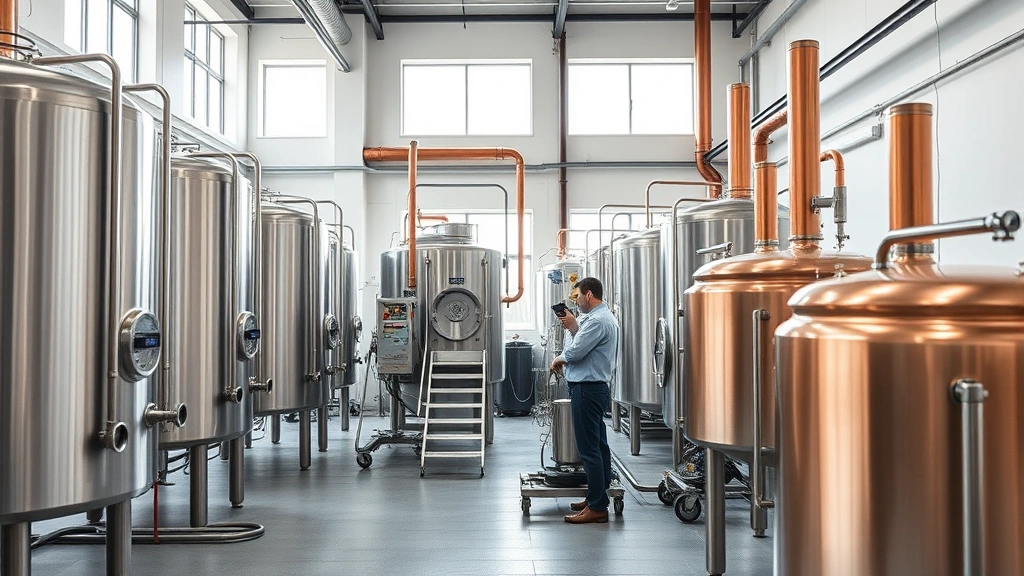
Starting a Brewing Company? Savannah Insights
Savannah, Georgia has emerged as a vibrant hub for craft beverage entrepreneurs, combining historic charm with modern entrepreneurial spirit. The city’s thriving hospitality industry, strategic location between Charleston and Jacksonville, and growing consumer demand for locally-produced craft beverages create an ideal environment for launching a service brewing company. Whether you’re planning to establish a full-scale production facility, contract brewing operation, or co-packing service, understanding Savannah’s unique business landscape is essential for success.
The Georgia craft beverage market has experienced consistent growth over the past decade, with Savannah positioned as a key market driver. The city’s tourism infrastructure, established supply chain networks, and supportive business community provide tangible advantages for new brewing ventures. This comprehensive guide explores the essential steps, regulatory requirements, and strategic considerations for starting a brewing company in Savannah.
Understanding the Savannah Brewing Market
Savannah’s craft brewing sector represents one of Georgia’s most dynamic growth segments. The city hosts over 15 established breweries, distilleries, and cideries, each capturing distinct market segments and customer demographics. This competitive landscape demonstrates both opportunity and the necessity for differentiation. The local market supports multiple brewing models: traditional brewpubs, production breweries, contract brewing services, and nano-breweries targeting niche consumer segments.
Market research indicates that Savannah’s tourism sector generates approximately 15 million annual visitors, creating substantial demand for unique, locally-produced beverages. Visitors actively seek authentic, locally-owned brewing experiences, positioning service brewing companies as attractive investment opportunities. The city’s demographics show strong support for craft beverages, with millennials and Gen Z consumers driving premiumization trends and experimental flavor profiles.
Understanding competitive positioning is critical. Successful Savannah breweries differentiate through storytelling, unique flavor development, event experiences, and community engagement. Service brewing companies that offer contract production, recipe development, or co-packing services address the needs of smaller producers and entrepreneurs without capital for full-scale facilities. This model has proven particularly successful in Savannah’s entrepreneurial ecosystem.
Legal Structure and Business Registration
Selecting the appropriate business structure forms the foundation for your brewing company’s legal and financial framework. Most successful brewing ventures adopt either Limited Liability Company (LLC) or C Corporation structures, each offering distinct advantages regarding liability protection, tax treatment, and operational flexibility.
An LLC provides liability protection while maintaining pass-through taxation benefits, making it attractive for smaller to mid-sized operations. C Corporations offer more sophisticated capital structure options and facilitate investor relationships, essential if you’re seeking venture capital or multiple investors. Understanding regulated investment companies structures becomes important if you’re accepting outside investment or planning future expansion.
Georgia’s Secretary of State requires formal registration of your business entity. You’ll need to file Articles of Organization (for LLCs) or Articles of Incorporation (for Corporations), obtain an EIN from the IRS, and register for Georgia state taxes. Savannah-specific requirements include local business licensing through the City of Savannah’s Business License Department. Maintain detailed company secretarial file documentation including bylaws, operating agreements, shareholder records, and meeting minutes for compliance and future reference.
Consider consulting with a Georgia-licensed attorney specializing in beverage industry law. The regulatory landscape is complex, and professional guidance during formation prevents costly mistakes. Additionally, establish clear partnership agreement templates if operating with co-founders, explicitly defining equity stakes, decision-making authority, and exit provisions.
Federal and State Licensing Requirements
Brewing operations require multiple federal licenses and permits, with the Alcohol and Tobacco Tax and Trade Bureau (TTB) serving as the primary regulatory authority. The Federal Brewer’s Notice, officially the Application for Brewery Permit (Form 5100.1), represents the foundational federal authorization. This application requires detailed information about your facility, production capacity, management structure, and operational procedures.
The TTB approval process typically requires 30-60 days for standard applications, though complex operations may require extended review. You’ll need to demonstrate facility compliance with federal standards, including sanitation protocols, storage requirements, and production monitoring systems. Federal excise tax registration is mandatory, establishing your obligation to pay federal taxes on beer production.
Georgia-specific requirements include state brewery licenses issued by the Georgia Department of Revenue’s Alcohol and Beverage Division. Georgia recognizes several brewing categories: breweries (producing over 10,000 barrels annually), brewpubs (on-premise consumption), and limited breweries (producing under 10,000 barrels). Each category carries distinct licensing requirements and operational restrictions. Service brewing companies offering contract production must obtain appropriate licensing covering their specific operational model.
Local Savannah permits include health department approval, zoning verification, and building permits. The Savannah-Chatham County Health Department conducts facility inspections ensuring compliance with sanitation standards, wastewater management, and food safety protocols. Zoning verification confirms your location permits manufacturing or food service operations, critical in a historic city like Savannah with designated preservation districts.
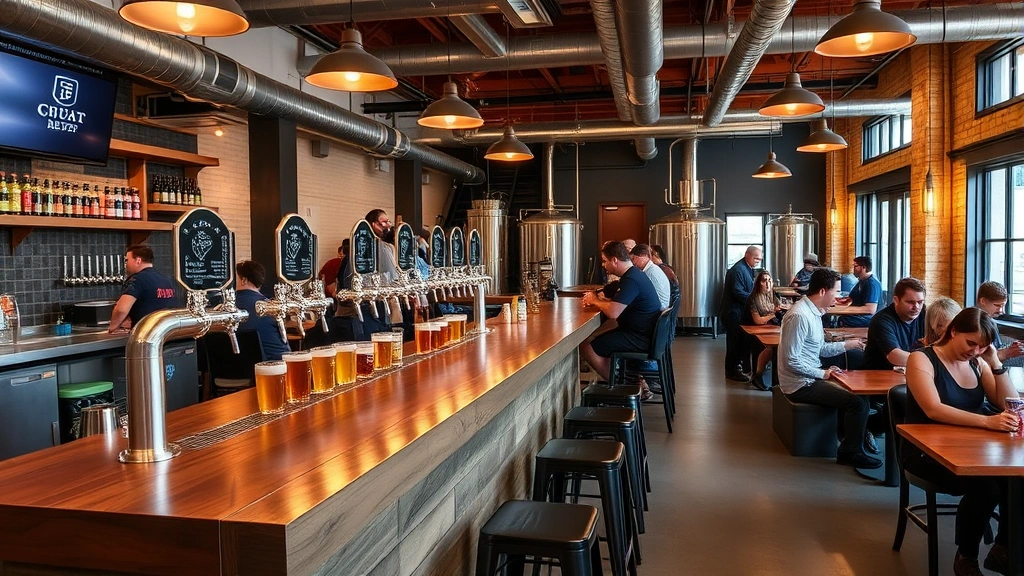
Equipment, Facilities, and Location Strategy
Your brewing facility represents your largest capital investment and operational foundation. Equipment selection depends on your production model: nano-breweries (under 1,000 barrels annually) require 3-7 barrel systems, while production breweries need 15-100+ barrel capacity. Service brewing companies offering contract production require flexible, scalable systems accommodating varied client specifications.
Essential equipment includes brewing kettles, fermentation tanks, cooling systems, filtration equipment, canning or bottling lines, and quality control laboratories. New equipment from manufacturers like Specific Mechanical Systems or American Brewcraft ranges from $50,000 (nano-scale) to $500,000+ (production-scale). Used equipment offers cost savings but requires careful inspection and potential refurbishment.
Location selection critically impacts success. Savannah’s Industrial Corridor near I-95 offers affordable real estate with adequate utilities and logistics infrastructure. The Starland District has emerged as a creative hub attracting breweries seeking lower overhead and community engagement opportunities. Historic downtown locations command premium pricing but offer tourist foot traffic and brand visibility advantages.
Facility requirements include adequate water supply (brewing requires 3-5 gallons water per gallon beer produced), wastewater treatment capacity, electrical infrastructure supporting 200+ amp service, and climate control for temperature-sensitive fermentation. Savannah’s humid subtropical climate requires robust HVAC systems and dehumidification equipment. Facility size depends on production targets: a 3,000 barrel annual operation requires approximately 3,000-4,000 square feet including production, storage, and tasting areas.
Financial Planning and Capital Requirements
Successful brewing ventures require comprehensive financial planning addressing startup capital, operating expenses, and revenue projections. Startup costs typically range from $250,000 (nano-brewery) to $2 million+ (production facility), distributed across equipment, facility improvements, licensing, and working capital.
Capital allocation typically follows this distribution: equipment (40-50%), facility improvements and construction (20-30%), licensing and professional services (5-10%), initial inventory and supplies (5-10%), marketing and branding (5-10%), and working capital reserves (10-15%). Service brewing companies focusing on contract production may require lower initial capital than retail-focused breweries, as they avoid tasting room buildout and retail inventory investment.
Financing options include personal savings, bank loans, Small Business Administration (SBA) loans, equipment financing, and investor capital. Georgia banks including Synovus, United Community Banks, and regional lenders offer specialized beverage industry lending. SBA 7(a) loans provide favorable terms for qualified borrowers, though beverage industry lending faces increasing scrutiny. Angel investors and venture capital firms increasingly fund beverage entrepreneurs with strong management teams and differentiated products.
Develop detailed financial projections including production costs, ingredient expenses, labor, facility costs, distribution, and marketing. Most breweries achieve break-even between 18-36 months, depending on production scale and market penetration. Conservative projections assuming slower market adoption prove more realistic than optimistic growth scenarios.
Regulatory Compliance and Permits
Ongoing regulatory compliance extends far beyond initial licensing. The TTB requires extensive record-keeping documenting production volumes, ingredient sourcing, tax payments, and distribution tracking. Monthly excise tax reports must be filed accurately, with penalties for late payment or underreporting. Facility inspections occur regularly, with compliance violations potentially resulting in license suspension.
Georgia’s Alcohol and Beverage Division conducts periodic audits and compliance inspections. Recent regulatory changes include updated labeling requirements, expanded direct-to-consumer shipping provisions, and enhanced sustainability reporting. Service brewing companies must maintain detailed client records, ingredient documentation, and production logs for each contract production engagement.
Environmental compliance includes wastewater management, as brewing generates substantial liquid waste requiring treatment. Savannah’s Department of Environmental Services enforces strict wastewater discharge standards. Many breweries invest in wastewater treatment systems or partner with municipal treatment facilities. Sustainability initiatives including grain recycling, water conservation, and energy efficiency increasingly influence community perception and regulatory standing.
Employment regulations require compliance with federal and Georgia wage laws, workplace safety standards (OSHA), and workers’ compensation insurance. Beverage industry employees face specific safety considerations regarding equipment operation, chemical handling, and sanitation protocols. Comprehensive employee training programs addressing safety, product knowledge, and customer service establish operational excellence and regulatory compliance.
Distribution and Market Entry
Distribution strategy fundamentally shapes your brewing company’s market reach and profitability. Three-tier distribution—producer to distributor to retailer to consumer—dominates the U.S. market but creates margin compression for smaller producers. Direct-to-consumer channels including taproom sales, online ordering, and direct shipping provide higher margins but require direct customer relationship management.
Savannah’s distribution landscape includes regional distributors like Stein Distribution, local wholesalers, and direct retail partnerships. Building relationships with established distributors requires professional sales presentations, competitive pricing, and reliable production capability. Service brewing companies offering contract production should develop distribution partnerships for clients, adding value beyond production services.
Effective customer relationship management systems track retailer relationships, inventory levels, and sales performance. Digital tools enable real-time visibility into market performance, supporting data-driven decision-making. Savannah’s tourism infrastructure creates unique opportunities for direct consumer engagement through taproom experiences, brewery tours, and event hosting.
Georgia’s direct-to-consumer shipping laws permit beer shipment to specific states, though restrictions vary. Compliance with each state’s alcohol shipping laws is mandatory, requiring legal review before launching online sales. Building a strong brand presence through digital marketing, social media engagement, and experiential events accelerates market penetration and customer loyalty.
Building Your Brand and Customer Base
Brand development distinguishes successful breweries in competitive markets. Compelling storytelling connecting your founding vision, ingredient sourcing, and community values creates emotional customer connections. Savannah’s historic character and creative community offer rich narrative opportunities for brewery brands emphasizing local heritage, sustainability, and artisanal craftsmanship.
Product development should balance signature styles with seasonal and experimental offerings. Consistency in core products builds customer loyalty, while limited releases generate excitement and trial. Service brewing companies should develop signature contract clients, building reputation for quality and reliability that attracts additional business.
Marketing investments in business communication tools and digital platforms maximize reach and engagement. Social media presence on Instagram, Facebook, and TikTok showcases brewery culture and connects with target demographics. Email marketing to loyalty program members drives repeat visits and event attendance. Partnership with local media, tourism boards, and community organizations amplifies brand visibility.
Experiential marketing through taproom events, brewery tours, food pairings, and community sponsorships builds lasting customer relationships. Savannah’s vibrant event calendar—including St. Patrick’s Day festivities, art walks, and food festivals—provides visibility opportunities. Collaborative events with complementary businesses (restaurants, food trucks, music venues) create cross-promotional opportunities and expanded customer reach.
Employee training in product knowledge, customer service, and brand representation ensures consistent customer experiences. Your team represents your brand daily, making recruitment and retention of talented individuals critical to long-term success. Competitive compensation, professional development opportunities, and positive workplace culture attract and retain quality employees.
FAQ
How much capital do I need to start a brewing company in Savannah?
Startup capital ranges from $250,000 for nano-breweries to $2 million+ for production facilities. Service brewing companies focusing on contract production typically require $300,000-$600,000 for equipment, facility improvements, and working capital. Financing options include personal savings, bank loans, SBA loans, and investor capital.
What licenses do I need to operate a brewery in Georgia?
You need federal approval (TTB Brewer’s Notice), Georgia state brewery license, local Savannah business license, health department permits, and building permits. The process typically requires 60-90 days from application to full operational approval, depending on complexity.
Can I operate a service brewing company without a tasting room?
Yes. Service brewing companies offering contract production, recipe development, or co-packing services can operate without retail tasting rooms. This model requires appropriate federal and state licensing for production but eliminates retail licensing complexity and customer-facing operational requirements.
What are Savannah’s zoning requirements for brewing facilities?
Savannah permits manufacturing and food production in industrial zones, particularly in the Industrial Corridor and Starland District. Historic district locations require additional approval from the Savannah Historic District Board of Review. Verify zoning compliance before committing to facility leases.
How long before a brewery becomes profitable?
Most breweries achieve break-even between 18-36 months, depending on production scale, market penetration, and operational efficiency. Service brewing companies with contract clients may achieve profitability faster due to lower customer acquisition costs and predictable revenue streams.
What are the primary regulatory compliance challenges for breweries?
Key compliance challenges include TTB record-keeping requirements, monthly excise tax reporting, wastewater management standards, facility inspection compliance, and evolving labeling regulations. Maintaining detailed documentation and engaging qualified compliance professionals prevents costly violations.
How can I differentiate my brewing company in Savannah’s competitive market?
Differentiation strategies include unique flavor profiles, compelling brand storytelling, experiential taproom experiences, community engagement, sustainability initiatives, and service-based offerings like contract production. Understanding your target demographic and building authentic connections drives competitive advantage.