
Investing in The Boring Company? Expert Analysis
The Boring Company, Elon Musk’s infrastructure venture focused on tunnel construction and underground transportation systems, represents one of the most unconventional investment opportunities in the modern startup ecosystem. Founded in 2016, the company has garnered significant attention from venture capitalists, industry analysts, and retail investors curious about its viability as an investment vehicle. However, determining whether The Boring Company stock presents genuine value or speculative risk requires a comprehensive analysis of the company’s business model, market position, financial trajectory, and growth potential.
This analysis examines the critical factors investors must consider before allocating capital to The Boring Company, including its technological innovation, revenue generation capacity, competitive landscape, and the inherent risks associated with infrastructure development ventures. Whether you’re evaluating this opportunity for your portfolio or seeking to understand the broader implications of tunnel-boring technology on urban infrastructure, this detailed examination provides the strategic insights necessary for informed decision-making.
Company Overview and Business Model
The Boring Company operates within the infrastructure construction sector, specifically targeting underground tunnel development for transportation, utilities, and urban planning solutions. Unlike traditional construction firms, The Boring Company emphasizes innovation in tunnel-boring machine (TBM) technology, aiming to reduce costs and accelerate construction timelines significantly. The company’s fundamental premise challenges conventional infrastructure development by proposing that advanced automation and engineering optimization can make underground construction economically viable for urban congestion solutions.
The business model centers on three primary revenue streams: government contracts for infrastructure projects, private partnerships for underground transportation systems, and licensing technology to other construction firms. The company has secured contracts including the Las Vegas Convention and Visitors Authority project, which demonstrated proof-of-concept for rapid tunnel construction. Understanding this diversified approach is essential for evaluating investment potential, as it suggests multiple pathways to profitability rather than dependence on a single market segment.
The organizational structure reflects Musk’s typical approach: lean operations, aggressive cost-reduction targets, and vertical integration of manufacturing and construction processes. This model differs substantially from traditional construction companies, creating both advantages in efficiency and challenges in scaling operations across multiple geographies and project types.
Revenue Streams and Financial Performance
Analyzing The Boring Company’s financial performance requires acknowledging that the company operates privately, limiting publicly available financial data. However, available information suggests the company has generated revenue through completed projects while simultaneously investing heavily in research and development. The Las Vegas Convention Center Loop project, completed ahead of schedule, provided important validation of the company’s operational capabilities and cost management.
Current revenue appears modest relative to infrastructure industry standards, but growth trajectory indicators suggest acceleration potential. The company has pursued funding rounds that valued the organization in the billions, indicating investor confidence despite limited historical revenue. This valuation premium reflects expectations about future market penetration rather than current earnings multiples—a critical distinction for prospective investors.
Implementing robust business process mapping tools has enabled The Boring Company to optimize construction workflows and reduce project timelines substantially. This operational efficiency directly impacts profitability margins and competitive positioning within the infrastructure sector.
Future revenue projections depend heavily on contract acquisition pace and project execution success. The company’s ability to secure government contracts for major urban infrastructure initiatives will determine whether current valuations prove justified or represent speculative excess.
Technological Innovation and Competitive Advantage
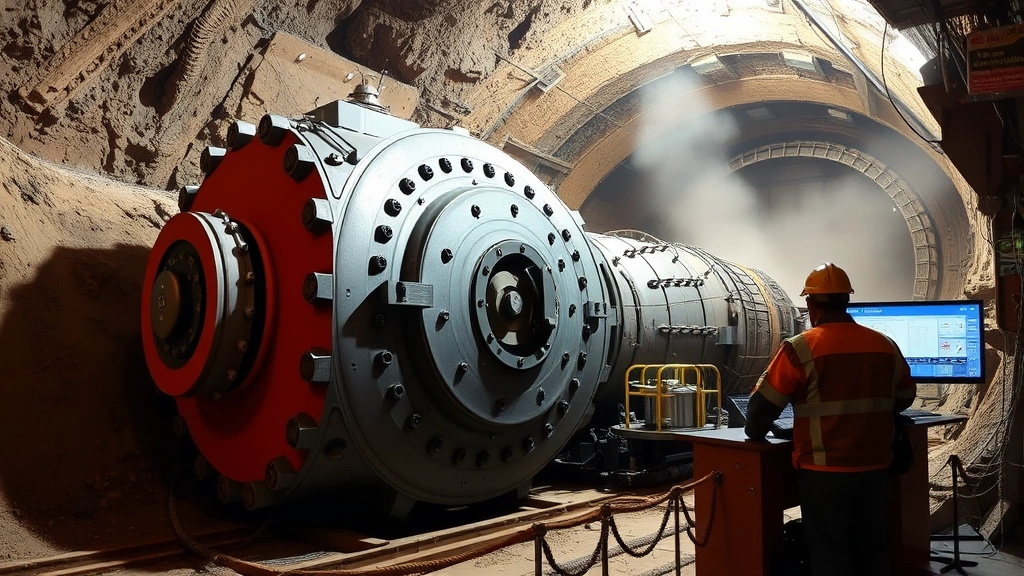
The Boring Company’s core competitive advantage rests on its tunnel-boring machine technology and construction methodology innovations. The company claims its machines operate at significantly higher speeds than industry-standard equipment while maintaining cost efficiency. These technological claims, if substantiated at scale, would fundamentally disrupt traditional construction practices and create substantial competitive moats.
Patent filings and technical publications indicate genuine innovation in tunneling automation, precision guidance systems, and excavation efficiency. However, translating laboratory successes into consistent field performance across diverse geological conditions remains an unproven challenge. The company’s willingness to tackle complex urban projects demonstrates confidence in its technology, but execution risks persist.
Competitive positioning against established construction firms like Herrenknecht and Robbins Company matters significantly. These organizations possess decades of operational experience, established client relationships, and proven track records across global markets. The Boring Company’s advantages in innovation and cost structure must overcome entrenched competitors’ advantages in reputation and market access.
Integration with Musk’s broader business ecosystem—particularly Tesla and SpaceX—creates unique synergies in advanced manufacturing, materials science, and automation technology. This interconnected approach potentially accelerates innovation but also concentrates risk around a single visionary leader and organizational culture.
Market Opportunities and Growth Potential
The addressable market for underground infrastructure solutions continues expanding globally. Urban congestion, aging infrastructure systems, and environmental concerns regarding surface-level transportation create compelling demand for innovative solutions. Cities worldwide face critical decisions about transportation infrastructure, and underground solutions offer advantages in land preservation and congestion reduction.
Potential market opportunities include: urban rapid transit systems, utility tunnel networks, emergency shelter infrastructure, and autonomous vehicle transportation networks. Each segment presents distinct characteristics, requiring tailored solutions and different go-to-market strategies. The company’s ability to penetrate multiple segments simultaneously will significantly influence revenue growth and profitability.
Government infrastructure spending cycles, particularly in developed economies, create cyclical opportunities aligned with political priorities. The Biden administration’s infrastructure investment initiatives in the United States, combined with similar programs in Europe and Asia, generate substantial potential contract volumes. However, government procurement processes involve lengthy timelines and competitive bidding, introducing execution uncertainty.
Implementing effective business risk management frameworks becomes essential as The Boring Company scales operations across multiple jurisdictions and project types. Managing geological surprises, regulatory compliance variations, and labor challenges across different markets requires sophisticated risk infrastructure.
Strategic partnerships with established construction firms, government agencies, and technology companies could accelerate market penetration. Licensing technology to established players represents an alternative growth path with lower execution risk but potentially lower upside than direct project execution.
Risk Factors and Investment Challenges
Investing in The Boring Company involves substantial risk factors that sophisticated investors must carefully evaluate. First, the company operates in a capital-intensive industry with long project timelines, creating significant cash burn requirements before achieving profitability. Infrastructure projects frequently experience cost overruns and schedule delays, potentially straining financial resources.
Technology execution risk represents perhaps the most critical challenge. While the company demonstrates impressive prototypes and limited project successes, scaling technology across diverse geological, regulatory, and climatic conditions presents formidable technical hurdles. Failures in major projects could substantially damage credibility and investor confidence.
Regulatory and permitting challenges vary significantly across jurisdictions, creating complexity in project development. Government agencies maintain conservative attitudes toward innovative construction methodologies, requiring extensive testing and validation before approving large-scale implementations. This regulatory friction extends project timelines and increases costs.
Leadership concentration around Elon Musk creates organizational risk. Musk’s involvement across multiple ventures—Tesla, SpaceX, Twitter—potentially diverts attention and resources from The Boring Company. Key personnel departures or organizational instability could compromise execution capability.
Market adoption uncertainty persists despite compelling value propositions. Established construction practices, union considerations, and client preferences for proven methodologies may limit market penetration despite technological advantages. Customers require confidence in technology reliability before committing to major infrastructure projects.
Understanding proper business exit strategies becomes critical for investors considering equity positions. The company’s private status limits liquidity options, and potential exits through acquisition or public offering involve substantial uncertainty regarding timing and valuation.
Valuation Considerations
Valuing a private infrastructure technology company with limited historical revenue and substantial future cash burn requirements presents analytical challenges. Traditional valuation methodologies struggle with companies that prioritize growth and market development over near-term profitability.
Comparable company analysis proves difficult due to The Boring Company’s unique positioning between technology firms and traditional construction companies. Neither category perfectly captures its characteristics, creating valuation ambiguity. Recent funding rounds suggest valuations in the range of several billion dollars, but these reflect venture capital market dynamics rather than fundamental financial metrics.
Discounted cash flow analysis requires projecting future revenue streams, margin assumptions, and capital requirements—all highly uncertain for an early-stage infrastructure company. Sensitivity analyses reveal substantial valuation variation based on modest assumption changes, indicating significant uncertainty.
Venture capital methodology values companies based on potential exit opportunities and return multiples. For The Boring Company, potential exits include acquisition by major construction firms, infrastructure investors, or public offerings. Each scenario implies different valuation implications and investor return profiles.
Expert analysis from McKinsey & Company suggests infrastructure technology companies typically achieve valuations reflecting 5-8 year revenue multiples, assuming successful market penetration. Applying these frameworks to The Boring Company’s potential suggests current valuations may be justified if the company achieves projected contract acquisition and execution targets.
Investment Thesis and Expert Recommendations
The investment thesis for The Boring Company rests on several interconnected propositions. First, underground infrastructure solutions address genuine market needs supported by government spending and urban development trends. Second, technological innovations provide genuine competitive advantages that could disrupt traditional construction practices. Third, the company’s organizational capabilities and leadership position it favorably to capture market share in an emerging segment.
However, realizing this thesis requires successful execution across multiple dimensions: technology scaling, project delivery, regulatory navigation, and market adoption. Each represents substantial challenges, and failure in any dimension could materially impact investment returns.
For sophisticated investors with high risk tolerance and long investment horizons, The Boring Company presents an interesting portfolio addition. The company’s potential upside—particularly if underground infrastructure becomes standard practice for major cities—could generate substantial returns. However, this upside potential comes with commensurate downside risk.
Conservative investors should likely avoid direct equity investment in The Boring Company until the company demonstrates consistent project execution, profitability pathways, or clearer market validation. The investment remains speculative, with returns heavily dependent on execution and market adoption factors that remain uncertain.
Research from Forbes and Harvard Business Review consistently emphasizes the importance of diversification when investing in early-stage infrastructure technology companies. Portfolio allocation should reflect the speculative nature of The Boring Company investment, with position sizing appropriate to individual risk tolerance and overall portfolio construction.
Monitoring key performance indicators will prove essential for existing investors. Contract pipeline development, project execution metrics, cost management, and technological validation should guide ongoing investment decisions. Quarterly updates or periodic reviews should assess whether the company maintains trajectory toward achieving its strategic objectives.
The broader organizational culture and workplace diversity initiatives may influence long-term organizational stability and talent retention—factors critical for technology-dependent ventures. Infrastructure companies increasingly face scrutiny regarding environmental practices and community engagement, making these factors relevant to long-term viability.
FAQ
Is The Boring Company stock publicly traded?
No, The Boring Company remains privately held. The company has not conducted an initial public offering, limiting investment opportunities to private equity investors, venture capital funds, and accredited individuals participating in private funding rounds. Public trading may occur in the future, but no timeline has been announced.
What is The Boring Company’s primary business?
The Boring Company specializes in tunnel construction using advanced boring machine technology. The company pursues contracts for underground transportation systems, utility tunnels, and infrastructure projects while licensing its technology to other construction firms.
How profitable is The Boring Company?
The company has not publicly disclosed financial statements, but available information suggests the company remains unprofitable while investing heavily in technology development and project execution. Revenue generation has increased, but profitability timelines remain uncertain.
What are the main risks of investing in The Boring Company?
Primary risks include technology execution challenges, regulatory delays, market adoption uncertainty, leadership concentration, capital requirements for scaling operations, and competitive responses from established construction firms. Infrastructure projects frequently experience cost overruns and schedule delays.
Could The Boring Company disrupt the construction industry?
Potentially, if technology scaling and market adoption succeed. The company’s innovations in tunneling efficiency and cost reduction could fundamentally change how cities approach underground infrastructure. However, entrenched practices and conservative client preferences may limit disruption magnitude.
What is The Boring Company’s valuation?
Recent funding rounds valued the company at several billion dollars, though exact current valuations remain proprietary. Valuation reflects venture capital market expectations rather than traditional financial metrics, given limited historical revenue.
How can individual investors access The Boring Company stock?
Individual investors cannot directly purchase stock in most circumstances, as the company remains private. Some venture capital funds or secondary market platforms may offer indirect exposure, but opportunities are limited and typically require substantial minimum investments and accredited investor status.


