How to Choose a Basement Flood Cleanup Company?
Water damage from basement flooding represents one of the most costly and disruptive emergencies homeowners face. When water intrudes into your foundation, it threatens structural integrity, creates mold hazards, and damages valuable possessions within hours. The stress of managing this crisis compounds when you must simultaneously identify a qualified basement flood cleanup company capable of restoring your property safely and thoroughly.
Selecting the right cleanup contractor demands strategic evaluation beyond simple price comparison. You need a partner with certified expertise, proper insurance coverage, advanced equipment, and a proven track record of successful water damage restoration. This decision directly impacts your property’s recovery timeline, the effectiveness of moisture mitigation, and your final out-of-pocket costs.
Understanding the critical factors that distinguish exceptional cleanup companies from mediocre operators empowers you to make an informed choice during an already stressful situation. The following comprehensive guide walks you through the essential criteria for evaluating basement flood cleanup services and establishing a partnership that protects your home and investment.
Verify Licensing and Certifications
Professional credentials separate legitimate restoration companies from unqualified operators who may cause additional damage during cleanup attempts. Before engaging any basement flood cleanup company, verify that they hold appropriate state and local licenses required for water damage restoration work in your jurisdiction.
The Institute of Inspection, Cleaning and Restoration Certification (IICRC) represents the gold standard in water damage restoration credentials. IICRC-certified technicians have completed rigorous training in water extraction, dehumidification, structural drying, and mold prevention protocols. This certification demonstrates that your chosen company adheres to industry best practices established by leading restoration professionals.
Beyond IICRC certification, inquire about individual technician qualifications. Ask whether your assigned crew members hold certifications in Water Damage Restoration (WRT), Applied Structural Drying (ASD), or Mold Remediation Specialist (MRS) credentials. These specialized designations indicate advanced knowledge in specific aspects of basement flood recovery.
Additionally, verify membership in professional associations such as the Restoration Industry Association (RIA) or the American Institute of Restoration Ecology (AIRE). These memberships demonstrate commitment to ongoing professional development and adherence to established ethical standards within the restoration industry.
Request copies of current licenses and certifications before signing any service agreement. Legitimate companies readily provide this documentation without hesitation. Cross-reference license numbers with your state’s licensing board to confirm active status and check for any disciplinary actions or complaints on record.
Assess Insurance Coverage Requirements
Water damage restoration involves inherent risks to both your property and the cleanup crew. A properly insured basement flood cleanup company protects you from liability exposure while ensuring adequate coverage for potential damages during the restoration process.
Require proof of General Liability Insurance with minimum coverage of $1 million. This coverage protects you if the cleanup crew accidentally damages other parts of your home during water extraction or drying operations. Property damage claims arising from negligent practices should be covered under the contractor’s liability policy, not your homeowner’s insurance.
Workers’ Compensation Insurance is equally critical. This coverage protects you from liability if a crew member sustains injury while working on your property. Without adequate workers’ compensation coverage, you could face personal liability for medical expenses and lost wages if an accident occurs. Verify that the company maintains current workers’ compensation coverage for all employees.
Request written proof of insurance (Certificates of Insurance) listing your address as an additional insured party. This documentation ensures you receive notification if the contractor’s policies are cancelled or expire. Never allow work to commence without verified insurance coverage in place.
Ask whether the company carries Flood Insurance or Errors and Omissions coverage. While not universally required, these additional policies indicate a company’s commitment to comprehensive risk management and financial stability. Flood insurance coverage is particularly valuable if restoration work fails to prevent secondary water damage.
Evaluate Technical Equipment and Methods
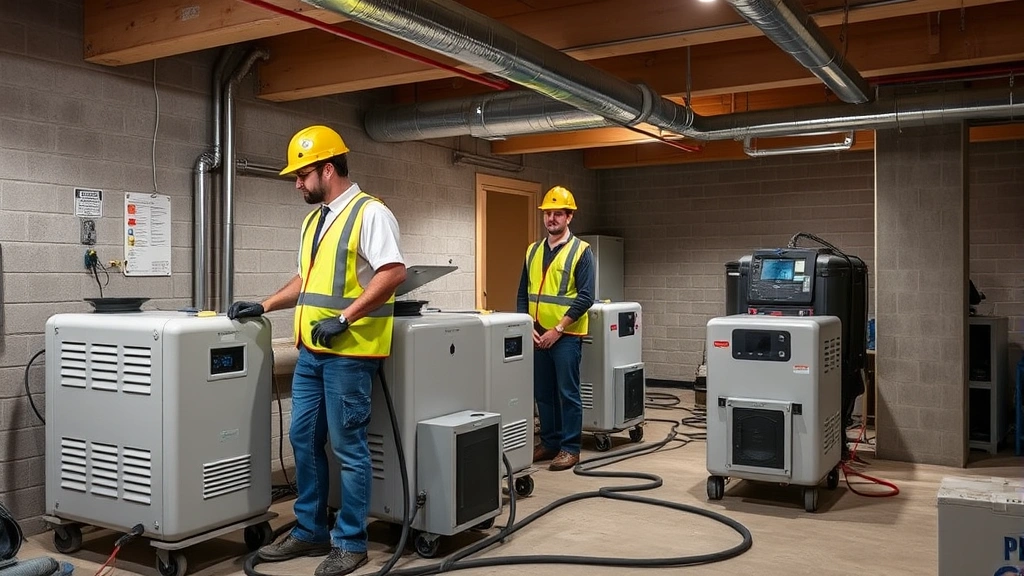
The quality of equipment and drying techniques employed during basement flood cleanup directly determines whether your property experiences complete moisture remediation or lingering humidity problems that foster mold growth. Professional restoration companies invest in industrial-grade equipment that far exceeds consumer-grade alternatives available at rental centers.
Assess the company’s water extraction capabilities. They should employ truck-mounted extraction systems capable of removing thousands of gallons per hour from flooded basements. These powerful systems prevent water from spreading to unaffected areas while minimizing drying time. Ask about their backup equipment in case primary systems fail during extended projects.
Dehumidification technology proves equally important for successful basement flood recovery. Evaluate whether they utilize industrial-strength dehumidifiers that continuously remove moisture from the air and structural materials. Low-grain refrigerant dehumidifiers work effectively in warm climates, while desiccant dehumidifiers perform better in cold conditions. A well-equipped company maintains diverse dehumidification options for varying environmental circumstances.
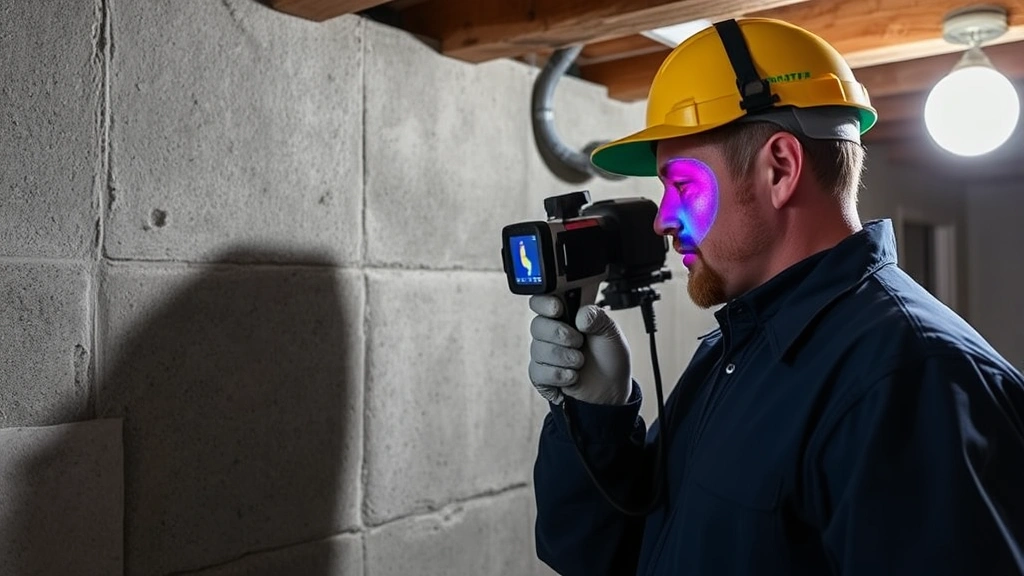
Inquire about moisture detection technology. Professional companies use moisture meters, hygrometers, and thermal imaging cameras to monitor drying progress and identify hidden moisture pockets within walls, subflooring, and structural components. This scientific approach ensures comprehensive drying rather than relying solely on visual assessment.
Ask about their mold prevention protocols. Beyond physical water removal, they should apply antimicrobial treatments to prevent mold colonization during the drying phase. Understanding their approach to structural drying, ventilation management, and documentation of drying progress reveals their commitment to thorough restoration.
A comprehensive risk management framework guides the best restoration companies in selecting appropriate techniques for your specific water damage scenario.
Review Response Time and Availability
Water damage escalates rapidly. Within 24-48 hours, standing water promotes bacterial growth and mold proliferation. Selecting a basement flood cleanup company with rapid response capabilities dramatically reduces secondary damage and associated restoration costs.
Inquire about their emergency response availability. Do they operate 24/7, or only during business hours? Can they dispatch crews to your property within hours of your initial call, or do they require scheduling appointments days in advance? For basement flooding, 24/7 emergency response capability is essential.
Ask about their service area coverage. Companies with multiple locations or regional operations can typically respond faster than single-location businesses. Confirm that they maintain adequate staffing to handle multiple emergency calls simultaneously without extended delays.
Request information about their average response time for emergency water damage calls. Most professional restoration companies can reach residential properties within 1-2 hours of initial contact. Slower response times increase the risk of permanent structural damage, mold development, and property loss.
Discuss their project scheduling and timeline estimates. How long do they typically require for complete basement flood cleanup and drying? Do they provide written timelines with specific milestones? Transparent scheduling helps you plan alternative living arrangements if necessary and understand when your basement will be restored to usable condition.
Examine Customer References and Reviews
Previous customer experiences reveal whether a basement flood cleanup company consistently delivers on promises and maintains high service standards. Systematic review of customer feedback identifies patterns indicating reliability, professionalism, and quality outcomes.
Request references from recent basement flood restoration projects. Contact at least three previous customers directly and ask specific questions about their experience. Did the crew arrive promptly? Was the work completed on schedule? Did the company communicate clearly throughout the process? Were they satisfied with the final results?
Beyond direct references, examine online reviews on Google, Yelp, the Better Business Bureau (BBB), and industry-specific platforms. Look for patterns in feedback rather than focusing on isolated complaints or praise. Consistently high ratings across multiple platforms indicate reliable performance, while numerous negative reviews signal potential problems.
Pay particular attention to reviews mentioning mold issues, incomplete drying, or billing disputes. These recurring complaints suggest systemic problems that could directly impact your restoration experience. Conversely, reviews praising responsiveness, professionalism, and thoroughness indicate a company worthy of your consideration.
Check the Better Business Bureau rating and complaint history. The BBB provides valuable insight into how companies handle customer disputes and whether they resolve complaints satisfactorily. A high BBB rating combined with documented complaint resolution demonstrates commitment to customer satisfaction and accountability.
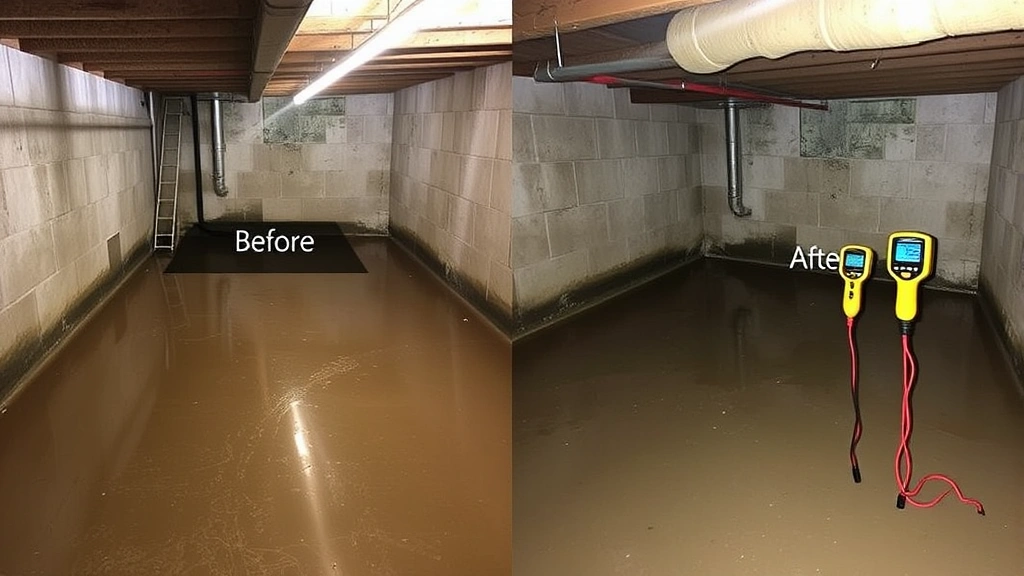
Ask the company for case studies or before-and-after photographs from similar basement flood projects. Professional companies maintain documentation of their work and should readily share examples demonstrating their capabilities and results quality.
Compare Service Scope and Guarantees
Water damage restoration encompasses multiple interconnected services, and comprehensive coverage ensures complete property recovery. Compare the specific services included in proposals from different companies to understand what’s covered and what represents additional costs.
Essential services should include water extraction, structural drying, dehumidification, and mold prevention treatment. Beyond these fundamentals, evaluate whether they offer content cleaning and restoration, hardwood floor drying, carpet restoration, or document recovery services. Some properties require specialized services like crawl space restoration or foundation repair coordination.
Examine warranty and guarantee terms carefully. Do they guarantee complete drying with specific moisture level targets? What happens if mold develops after their work is completed? How long is their warranty period? Written guarantees provide recourse if restoration work proves inadequate.
Ask about their documentation practices. Professional companies provide detailed reports including initial moisture readings, daily drying progress documentation, final moisture verification, and photographic evidence of completed work. This documentation proves valuable for insurance claims and provides peace of mind regarding restoration thoroughness.
Inquire whether they coordinate with your insurance company directly or if you must manage all communication. Companies offering direct insurance coordination simplify the claims process and often have established relationships with adjusters that facilitate faster approval and payment.
Understand Pricing and Payment Terms
Basement flood cleanup costs vary dramatically based on flood severity, affected square footage, and required services. Understanding pricing structures and payment terms prevents financial surprises and enables accurate comparison between competing contractors.
Request detailed written estimates from multiple companies before making your decision. Estimates should itemize specific services with associated costs rather than providing vague lump-sum figures. Compare line-item pricing across companies to identify cost differences for comparable services.
Ask whether estimates are binding or subject to revision based on actual conditions discovered during cleanup. Some complications may only become apparent after initial water extraction and structural assessment. Clarify how price adjustments are handled if additional services become necessary.
Understand payment terms and whether they require deposits before commencing work. Many companies require 50% down payment with final payment due upon project completion. Verify their cancellation and refund policies before committing to a contract.
Inquire about insurance billing arrangements. Do they accept direct payment from your homeowner’s insurance, or do they require you to pay upfront and seek reimbursement? Direct insurance billing simplifies the process significantly when your homeowner’s policy covers water damage.
Compare total project costs but avoid selecting contractors solely based on lowest price. Significantly lower bids often indicate reduced service quality, outdated equipment, or inexperienced crews. The cheapest option frequently proves more expensive when inadequate drying requires repeat services or mold remediation becomes necessary.
A strategic approach to vendor selection—similar to developing business partnership agreements—ensures you establish clear expectations and protect your interests throughout the restoration process.
FAQ
How quickly should a basement flood cleanup company respond to emergency calls?
Professional restoration companies should dispatch crews within 1-2 hours of your initial contact for emergency basement flooding. Rapid response prevents water from spreading to unaffected areas and significantly reduces mold growth risk. Companies offering 24/7 emergency response demonstrate commitment to serving customers during crisis situations.
What certifications should I look for in basement flood cleanup technicians?
IICRC (Institute of Inspection, Cleaning and Restoration Certification) credentials represent the industry standard. Specifically, look for Water Damage Restoration (WRT), Applied Structural Drying (ASD), and Mold Remediation Specialist (MRS) certifications. These designations confirm technicians have completed rigorous training in professional water damage restoration protocols.
What insurance should a basement flood cleanup company carry?
Minimum requirements include $1 million General Liability Insurance and active Workers’ Compensation Insurance. Request Certificates of Insurance listing your property as an additional insured party. These requirements protect you from liability if the contractor’s crew causes additional damage or sustains injuries during restoration work.
Can basement flood damage be completely prevented with professional cleanup?
Professional restoration companies cannot guarantee that water damage won’t recur if the underlying cause (foundation cracks, failed sump pumps, inadequate grading) remains unaddressed. However, they can ensure complete moisture remediation preventing mold growth and secondary damage from initial water intrusion. Permanent prevention requires addressing root causes of water infiltration.
How long does basement flood cleanup typically require?
Timeline varies based on flood severity and affected area. Simple basement flooding might require 3-7 days for complete drying, while extensive damage affecting structural materials may require 2-4 weeks. Professional companies provide written timeline estimates during initial assessment, allowing you to plan accordingly.
Should I hire a basement flood cleanup company or attempt DIY restoration?
Professional restoration companies possess equipment, expertise, and certifications that DIY approaches cannot match. Industrial-grade dehumidifiers and extraction systems dry structures far more effectively than consumer equipment. Additionally, professional work ensures proper mold prevention and documentation for insurance claims. DIY attempts frequently result in incomplete drying and costly mold remediation later.
How do I verify a basement flood cleanup company’s credentials and licensing?
Request copies of current licenses, IICRC certifications, and insurance documentation before hiring. Cross-reference license numbers with your state’s licensing board to confirm active status and check for disciplinary actions. Contact the Better Business Bureau to review complaint history and verify the company’s standing within the industry.
What questions should I ask during initial consultations with cleanup companies?
Ask about response time, equipment specifications, crew certifications, insurance coverage, service scope, warranty terms, pricing structure, and references from recent projects. Request written estimates itemizing specific services and costs. These questions provide comprehensive insight into each company’s capabilities and help identify the best fit for your restoration needs.


