
Why Pretzels? Snack Experts Explain the Rise of the Pretzel Company
The pretzel industry has experienced remarkable growth over the past decade, transforming from a carnival novelty into a sophisticated snacking category worth billions globally. What was once considered a simple, nostalgic treat has evolved into a strategic business opportunity that attracts major food corporations, innovative startups, and health-conscious consumers alike. The pretzel company phenomenon reflects broader trends in consumer behavior, workplace culture, and the evolving snacking landscape that defines modern business strategy.
Understanding why pretzels have become such a focal point for food entrepreneurs and established brands requires examining the intersection of consumer psychology, nutritional science, and smart business positioning. Industry experts point to several converging factors that have elevated pretzels from commodity status to premium product categories. This analysis explores the strategic reasons behind the pretzel company boom and what it reveals about contemporary consumer preferences and business innovation.
The Historical Evolution of Pretzel Markets
Pretzels carry a rich heritage spanning centuries, originating in medieval Europe before becoming embedded in American culture through German and Dutch immigration patterns. However, the modern pretzel company represents something fundamentally different from traditional street vendor operations. Contemporary pretzel businesses leverage sophisticated supply chain management, brand development, and market segmentation strategies that transform a simple baked good into a scalable, profitable enterprise.
The transformation gained significant momentum following the 2000s when major snacking corporations recognized the category’s potential. According to Forbes market analysis, the global pretzel market was valued at approximately $1.8 billion in 2021 and continues expanding at a compound annual growth rate of 4.2%. This growth trajectory outpaces traditional salty snack categories, signaling meaningful shifts in consumer preferences and purchasing patterns.
Leading pretzel companies invested heavily in modernizing production facilities, developing proprietary recipes, and establishing direct-to-consumer distribution channels. This professionalization of the pretzel category attracted venture capital funding, private equity interest, and strategic acquisitions that further legitimized pretzels as a serious business segment rather than a nostalgic treat.
Consumer Demand Drivers and Market Trends
Snacking behavior has fundamentally transformed over the past 15 years, driven by changing work environments, demographic shifts, and evolving nutritional awareness. The pretzel company success story directly correlates with several powerful consumer demand drivers that executives across the food industry cannot ignore.
First, pretzels occupy a unique position in the snacking hierarchy. Unlike heavy, greasy chips, pretzels offer a lighter eating experience with satisfying crunch and salt appeal. This positions them perfectly for health-conscious consumers seeking guilt-free indulgence—a psychological sweet spot that generates exceptional consumer loyalty. Market research from McKinsey & Company demonstrates that consumers increasingly view snacking as an acceptable meal component rather than a guilty pleasure, fundamentally reshaping category dynamics.
Second, the rise of remote and hybrid work arrangements has created unprecedented demand for office-appropriate snacks. Employees purchasing snacks for home offices or break rooms prefer items that don’t leave residue on keyboards, clothing, or hands. Pretzels excel in this application, making them ideal for professional environments where improving employee engagement through thoughtful amenities matters strategically.
Third, demographic preferences among younger consumers demonstrate strong affinity for pretzels. Millennials and Gen Z consumers prioritize transparent ingredient sourcing, minimal processing, and sustainable production methods—all areas where pretzel companies can credibly differentiate themselves from competitors. The category’s natural positioning as a relatively simple, recognizable product appeals to consumers seeking authenticity in their food choices.
Fourth, global expansion opportunities remain largely untapped. While pretzels dominate snacking in North America and Europe, Asian and Latin American markets represent significant growth frontiers. Pretzel companies pursuing international expansion can localize flavors and positioning while maintaining core brand identity, creating multiple revenue streams from a single product category.
Health-Conscious Positioning Strategies
The pretzel company’s strategic positioning around health and wellness represents perhaps the most sophisticated marketing achievement in recent snack industry history. Industry leaders have successfully reframed pretzels from indulgent treats into nutritionally respectable snacking options through careful messaging, product innovation, and scientific substantiation.
Leading brands have invested in developing whole grain pretzel varieties, reducing sodium content without sacrificing taste, and incorporating functional ingredients like omega-3 enrichment or added protein. These innovations allow pretzel companies to command premium pricing while addressing legitimate consumer health concerns. Harvard Business Review research on food science supports the strategic value of health-focused product development, demonstrating that consumers willingly pay 15-25% price premiums for credibly positioned healthier alternatives.
The pretzel company category has also benefited from comparative positioning against competitor snacks. When compared directly to potato chips, corn snacks, or chocolate confections, pretzels demonstrate superior nutritional profiles across multiple metrics including fat content, caloric density, and ingredient simplicity. Strategic marketing emphasizes these comparative advantages without directly attacking competitors, building positive brand perception through substantive product benefits.
Certification strategies amplify health positioning further. Many pretzel companies pursue non-GMO verification, kosher certification, allergen-free labeling, or organic designation depending on target market segments. These certifications function as trust signals that align product offerings with consumer values and purchasing criteria, particularly among affluent, educated consumers who represent disproportionate category spending.
The Role of Workplace Snacking Culture
Corporate environments have become critical distribution channels and consumption occasions for pretzel companies. As organizations increasingly recognize the connection between employee satisfaction and workplace amenities, snacking programs have evolved from basic vending machines into strategic benefits comparable to health insurance or professional development opportunities.
The pretzel company has positioned itself perfectly to capitalize on this trend. When implementing leadership styles focused on employee wellbeing, executives recognize that providing quality snacking options demonstrates organizational care and investment in workforce satisfaction. Pretzel companies have developed B2B sales channels specifically targeting corporate accounts, offering bulk purchasing arrangements, customized packaging, and branded break room solutions.
This workplace integration extends beyond simple vending. Progressive companies partner with pretzel suppliers to create curated snacking experiences that reflect organizational values. A company emphasizing workplace diversity might select pretzel varieties representing different cultural traditions, turning snacking into a subtle cultural expression. Similarly, organizations focused on sustainability can choose pretzel brands demonstrating environmental commitment, aligning break room offerings with corporate values.
The pretzel company’s role in workplace culture has generated significant B2B revenue streams independent from traditional retail distribution. Corporate snacking accounts provide predictable, high-volume orders that support manufacturing efficiency and supply chain optimization. This business model appeals to investors because it generates recurring revenue, improves customer lifetime value, and creates switching costs that reduce churn.
Brand Differentiation and Premium Offerings
In a category with relatively low barriers to entry, successful pretzel companies have distinguished themselves through aggressive brand building and premium product positioning. Rather than competing solely on price, market leaders have created differentiated brand experiences that justify premium pricing and generate emotional loyalty.
Artisanal positioning represents one differentiation strategy. Pretzel companies emphasizing traditional recipes, small-batch production, or heritage sourcing appeal to consumers seeking authenticity and craftsmanship. Brands like Wetzel’s Pretzels and Auntie Anne’s built dominant market positions partly through distinctive brand personalities that transcended basic product functionality.
Flavor innovation provides another differentiation vector. While traditional salted pretzels remain category staples, successful pretzel companies have expanded into sweet-salty combinations, exotic spice blends, and protein-enriched variations. This product line extension captures additional consumption occasions and appeals to broader demographic segments without diluting core brand identity.
Premium ingredient sourcing and transparency represent increasingly important differentiators. Pretzel companies sourcing flour from specific regions, using filtered water, or employing distinctive fermentation processes create storytelling opportunities that elevate perceived value. Food Engineering research demonstrates that consumers increasingly value ingredient transparency and production methodology, justifying premium pricing for products that credibly communicate these attributes.
Sustainability credentials have become essential differentiators in competitive pretzel markets. Companies implementing environmentally responsible practices—from energy-efficient production facilities to compostable packaging—appeal to values-driven consumers and corporate buyers. Corporate social responsibility examples increasingly feature snacking companies demonstrating environmental leadership, creating competitive advantages through authentic sustainability commitment.
Supply Chain and Production Innovation
Modern pretzel companies leverage sophisticated supply chain management and production technology that traditional competitors cannot match. These operational advantages translate into cost efficiencies, quality consistency, and scalability that drive competitive positioning and profitability.
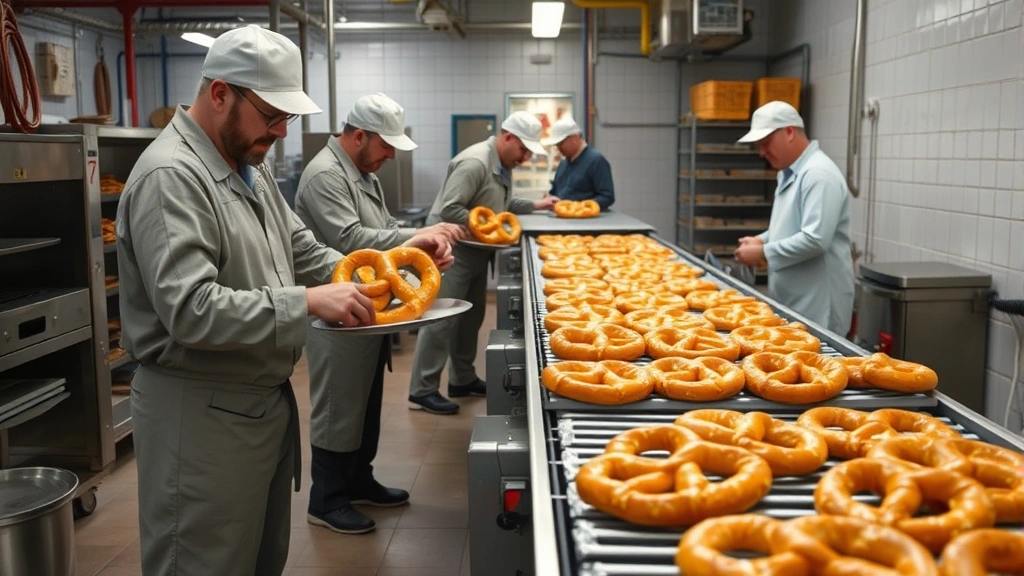
Automation has revolutionized pretzel production. Contemporary manufacturing facilities employ robotic systems for dough preparation, shaping, and packaging that achieve consistent quality while reducing labor costs. This automation allows pretzel companies to scale production rapidly in response to demand fluctuations while maintaining product standards that consumers expect from established brands.
Supply chain visibility represents another competitive advantage. Leading pretzel companies implement real-time tracking systems monitoring ingredient sourcing, production schedules, and distribution logistics. This visibility enables rapid response to supply disruptions, quality issues, or market demand changes—critical capabilities demonstrated during recent global supply chain disruptions.
Production facility location strategies reflect sophisticated market analysis. Pretzel companies strategically position manufacturing facilities near major consumption centers to minimize transportation costs, reduce product freshness degradation, and improve distribution efficiency. Regional production hubs allow companies to customize flavor profiles and product assortments for specific geographic markets while maintaining operational scale.
Sustainability and Corporate Responsibility
The pretzel company industry increasingly recognizes that long-term competitive advantage requires authentic commitment to environmental sustainability and corporate responsibility. Beyond marketing positioning, industry leaders are implementing substantive operational changes that reduce environmental impact while appealing to conscious consumers and corporate partners.
Water conservation represents a critical sustainability focus for pretzel manufacturers. Production processes require significant water inputs for dough preparation, facility cleaning, and cooling systems. Progressive pretzel companies invest in water recycling technologies, process optimization, and facility upgrades that reduce consumption per unit produced. These investments simultaneously reduce operational costs and environmental footprint—a compelling business case that drives adoption across the industry.
Ingredient sourcing sustainability extends beyond simple organic certification. Leading pretzel companies work directly with grain farmers implementing sustainable agriculture practices, supporting crop rotation systems that improve soil health and reduce chemical inputs. These partnerships create supply chain resilience while supporting farming communities and generating authentic storytelling opportunities.
Packaging innovation reflects broader sustainability commitments. Pretzel companies increasingly utilize compostable or recyclable packaging materials, reducing plastic consumption and landfill impact. Some brands have pioneered innovative packaging approaches using minimal materials without compromising product protection or shelf appeal. These initiatives appeal to environmentally conscious consumers and corporate buyers evaluating corporate social responsibility examples when making purchasing decisions.
Employee development and community engagement represent additional corporate responsibility dimensions. Pretzel companies implementing comprehensive workforce development programs, fair labor practices, and community investment initiatives build authentic corporate citizenship that extends beyond product-level positioning. These commitments particularly resonate with values-driven consumers and employees seeking employers aligned with personal values.

FAQ
Why have pretzels become such a popular snacking category?
Pretzels combine several advantageous attributes: lighter eating experience compared to traditional chips, minimal residue for workplace consumption, perceived healthfulness relative to competitor snacks, and strong cultural heritage. Additionally, changing work patterns and evolving consumer preferences toward authentic, simple ingredients have positioned pretzels perfectly to capture growing snacking demand.
What makes the pretzel company business model attractive to investors?
The pretzel business model offers recurring revenue through corporate accounts, premium pricing justification through brand differentiation, multiple geographic expansion opportunities, and relatively straightforward operations compared to more complex food manufacturing. Strong unit economics and demonstrated consumer demand create compelling investment cases.
How do pretzel companies differentiate in a competitive market?
Successful differentiation strategies include artisanal positioning, flavor innovation, premium ingredient sourcing, sustainability commitment, and brand personality development. Companies competing successfully avoid price-based competition, instead emphasizing unique attributes that justify premium positioning and generate emotional brand loyalty.
What role does workplace culture play in pretzel company success?
Corporate snacking has become a critical distribution channel and consumption occasion. Organizations increasingly view snacking amenities as employee benefits reflecting organizational values. Pretzel companies have successfully positioned themselves as premium workplace snacking solutions that support employee satisfaction and corporate culture objectives.
How are pretzel companies addressing sustainability concerns?
Leading pretzel manufacturers implement water conservation technologies, support sustainable agriculture practices with suppliers, utilize innovative packaging approaches, and invest in employee development and community engagement. These initiatives reflect authentic corporate responsibility commitment rather than superficial marketing positioning.
What growth opportunities exist for pretzel companies?
International expansion represents significant opportunity, particularly in Asian and Latin American markets where pretzel consumption remains underdeveloped. Product innovation in functional ingredients, flavor customization, and premium positioning continues expanding addressable markets. Corporate snacking channel expansion also offers substantial growth potential as workplace amenities become increasingly important to employee satisfaction and retention.