
Latest Ridesharing Trends: Industry Update 2023
The ridesharing industry has undergone significant transformation throughout 2023, marked by technological innovation, regulatory evolution, and shifting consumer expectations. Major platforms including Uber, Lyft, and emerging competitors have adapted their business models to address profitability concerns, driver retention challenges, and changing market dynamics. This comprehensive industry update examines the pivotal trends reshaping the ridesharing landscape and their strategic implications for stakeholders.
As the sector matures beyond its disruptive phase, ridesharing companies are prioritizing sustainable growth over rapid expansion. The focus has shifted toward operational efficiency, premium service offerings, and strategic partnerships that create additional revenue streams. Understanding these developments is essential for investors, operators, and business professionals seeking to navigate this dynamic market.
Driver Economy Transformation and Labor Dynamics
The driver experience has emerged as a central competitive differentiator in the ridesharing industry during 2023. Companies are investing substantially in driver support infrastructure, recognizing that service quality directly correlates with driver satisfaction and retention. driver engagement strategies mirror traditional employment practices, though adapted for independent contractor models.
Uber and Lyft have implemented enhanced driver protection programs, including guaranteed earnings during peak hours and improved accident insurance coverage. These initiatives address persistent driver concerns about income volatility and safety. Additionally, platforms are introducing driver education programs and career development pathways, creating opportunities for drivers to specialize in premium services or logistics operations.
The labor classification debate continues influencing industry strategy. California’s Proposition 22 established a precedent allowing ridesharing platforms to maintain contractor status while providing limited benefits. However, regulatory pressure in other jurisdictions—particularly within the European Union—has prompted companies to develop hybrid employment models. These arrangements provide greater worker protections while preserving operational flexibility essential to the platform business model.
Driver supply dynamics have shifted notably, with experienced drivers commanding higher compensation through platform algorithms that prioritize reliable, highly-rated operators. This creates a bifurcated market where premium drivers enjoy improved earnings and working conditions while newer participants face increased competition and lower average fares.
Technology Integration and AI Advancement
Artificial intelligence and machine learning have fundamentally enhanced operational efficiency across ridesharing platforms in 2023. Predictive algorithms now anticipate demand patterns with unprecedented accuracy, enabling dynamic pricing mechanisms that balance driver earnings with customer affordability. These systems analyze historical data, weather patterns, event schedules, and traffic conditions to optimize supply allocation in real-time.
Computer vision technology has improved safety protocols significantly. Vehicle recognition systems verify driver compliance with vehicle insurance and maintenance requirements, while facial recognition enhances security for both drivers and passengers. These technologies reduce fraud and improve accountability across the platform ecosystem.
Navigation and route optimization have advanced substantially, with integrated AI systems reducing average trip times and fuel consumption. cloud computing infrastructure enables processing massive datasets to continuously refine algorithmic performance, creating compounding competitive advantages for established platforms with superior data assets.
Chatbot technology has revolutionized customer service operations, handling routine inquiries and dispute resolution without human intervention. This automation reduces operational costs while maintaining service quality, though companies maintain human support teams for complex issues requiring nuanced judgment.
Autonomous vehicle integration remains on the horizon, with several platforms conducting pilot programs in controlled environments. While full autonomy faces technical and regulatory hurdles, 2023 has seen increased investment in autonomous shuttle services for airport transportation and corporate campuses, representing incremental progress toward broader autonomous deployment.
Regulatory Environment and Compliance Changes
Regulatory frameworks governing ridesharing have become increasingly sophisticated and fragmented across jurisdictions. Cities and countries are implementing stricter licensing requirements, background check protocols, and vehicle safety standards. These regulations increase operational costs but create barriers protecting established platforms from new competitors.
Data privacy regulations, particularly GDPR in Europe and emerging equivalents globally, have necessitated substantial compliance investments. Ridesharing platforms must manage driver and passenger data with heightened scrutiny, implementing encryption protocols and access controls that balance operational efficiency with privacy protection.
Accessibility requirements have gained prominence, with regulatory bodies mandating ridesharing platforms provide services for passengers with disabilities. This includes wheelchair-accessible vehicle options and driver training protocols, creating new service categories and operational complexity.
Environmental regulations increasingly influence platform strategy. Several major cities have implemented zero-emission vehicle mandates for ridesharing fleets, accelerating electric vehicle adoption timelines and creating partnership opportunities with EV manufacturers and charging infrastructure providers.
Pricing transparency requirements have forced platforms to clearly communicate fare calculation methodologies, surge pricing policies, and fee structures. While improving consumer trust, these regulations limit dynamic pricing flexibility and reduce platform earnings during peak demand periods.
Sustainability Initiatives and Electric Vehicle Adoption
Environmental sustainability has transitioned from corporate social responsibility messaging to strategic business imperative for ridesharing companies. sustainability practices now directly influence platform economics, regulatory standing, and investor relations.
Electric vehicle adoption among ridesharing drivers has accelerated significantly, driven by lower operational costs and regulatory incentives. Platforms including Uber have committed to achieving net-zero emissions by 2030, implementing driver incentive programs that reduce EV acquisition costs through platform subsidies and financing partnerships.
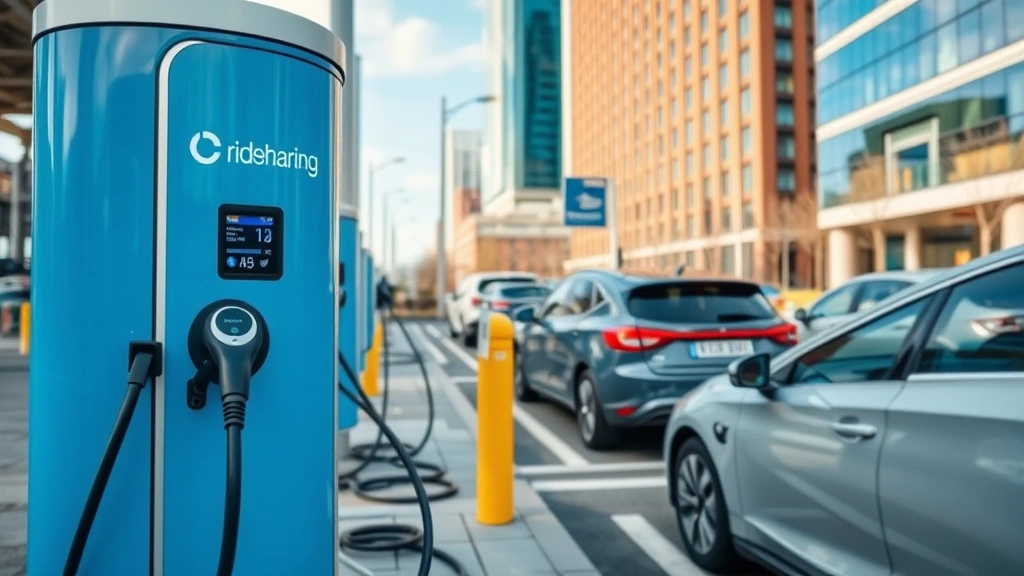
Charging infrastructure partnerships have become critical competitive advantages. Ridesharing platforms are collaborating with charging networks, energy providers, and municipalities to expand charging availability in driver-dense urban areas. These partnerships create mutually beneficial ecosystems supporting electrification objectives.
Carbon offset programs allow passengers to neutralize trip emissions through voluntary contributions, generating modest additional revenue while supporting reforestation and renewable energy projects. These initiatives improve brand perception among environmentally conscious consumers, particularly in affluent urban markets.
Fleet optimization strategies reduce empty vehicle miles and unnecessary congestion, directly lowering environmental impact while improving driver profitability. Advanced routing algorithms and demand prediction systems ensure vehicles are positioned efficiently, benefiting both environmental and business objectives simultaneously.
Premium Services and Revenue Diversification
Ridesharing platforms have aggressively expanded beyond core transportation services, developing complementary offerings that increase customer lifetime value and platform stickiness. pricing strategies now reflect tiered service offerings, with premium options commanding significant price premiums over standard transportation.
Uber Eats has matured into a standalone profit center, leveraging driver supply and logistics infrastructure to dominate food delivery markets globally. This diversification insulates platforms from ridesharing market saturation while capturing additional consumer spending occasions and increasing driver utilization rates.
Advertising has emerged as a substantial revenue opportunity, with platforms monetizing driver and passenger attention through sponsored content, branded experiences, and location-based marketing. Advertisers value the demographic targeting capabilities and contextual relevance of ridesharing platform advertising.
Financial services integration represents emerging opportunity, with platforms exploring payment processing, insurance products, and credit offerings. These services deepen customer relationships while generating revenue from financial services margins and data monetization.
Corporate partnership programs provide bulk transportation solutions for enterprises managing employee commuting and business travel. These B2B offerings generate predictable revenue streams and improve platform utilization during off-peak hours.
Subscription models have gained traction, with platforms offering monthly passes providing discounted fares and premium features. These arrangements improve revenue predictability and create psychological switching costs that enhance customer retention.

Geographic Expansion and Market Competition
Geographic strategy has evolved from rapid expansion to selective market penetration in high-potential regions. Ridesharing platforms now conduct detailed business case analysis before entering new markets, ensuring unit economics support profitable operations within defined timeframes.
Emerging markets in Southeast Asia, Latin America, and Africa present significant growth opportunities, attracting investment from established platforms and regional competitors. These markets offer younger populations, growing smartphone penetration, and underdeveloped traditional taxi infrastructure, creating favorable conditions for ridesharing adoption.
Regional competitors have consolidated positions in specific geographies, challenging Uber and Lyft’s global dominance. Grab in Southeast Asia, Didi in China, and Bolt in Europe demonstrate that local competitors can achieve scale through market-specific strategies and regulatory adaptation.
Consolidation trends have reduced competitive intensity in mature markets, with platforms exiting unprofitable regions or merging with competitors. This rationalization improves unit economics for surviving operators, though it reduces consumer choice and competitive pressure on pricing.
Competitive differentiation increasingly relies on service quality, driver experience, and brand positioning rather than aggressive pricing competition. Platforms emphasize reliability, safety, and premium features that justify price premiums over competitors, recognizing that race-to-the-bottom pricing strategies undermine long-term profitability.
Strategic partnerships with public transportation agencies have created hybrid mobility solutions where ridesharing complements traditional transit. These arrangements improve urban mobility while generating government contracts providing stable, predictable revenue.
FAQ
What are the main profitability challenges facing ridesharing platforms in 2023?
Ridesharing companies face persistent profitability challenges despite mature market positions. High driver acquisition costs, fierce price competition, and regulatory compliance expenses compress margins. Most platforms rely on ancillary services like food delivery and advertising to achieve profitability. Additionally, customer satisfaction measurement investments increase operational costs while managing service quality expectations.
How are ridesharing companies responding to driver shortages?
Platforms are implementing multi-faceted driver retention strategies including guaranteed earnings programs, improved insurance coverage, career development opportunities, and enhanced safety protections. Additionally, companies are investing in driver experience improvements, recognizing that superior working conditions attract and retain quality operators essential for service quality.
What role does artificial intelligence play in ridesharing operations?
AI powers demand prediction, dynamic pricing, route optimization, safety verification, and customer service automation. Machine learning algorithms continuously improve platform efficiency by analyzing vast datasets to identify patterns and optimize resource allocation. These capabilities create significant competitive advantages for platforms with superior data assets and technical infrastructure.
Are ridesharing platforms becoming profitable?
Profitability has improved significantly for mature platforms including Uber and Lyft, though success varies by geography and service line. Profitability requires scale, operational efficiency, and diversified revenue streams. Regional competitors in specific markets have achieved profitability faster through localized strategies, while newer entrants continue operating at losses as they build market position.
How will autonomous vehicles impact the ridesharing industry?
Autonomous vehicles represent long-term disruption potential, eliminating driver costs and enabling new service models. However, technical challenges, regulatory uncertainty, and infrastructure requirements suggest meaningful autonomous deployment remains several years away. Platforms are investing in autonomous capabilities while simultaneously improving driver economics, hedging against multiple future scenarios.
What sustainability commitments have ridesharing platforms made?
Major platforms have committed to net-zero emissions by 2030-2050, with near-term targets including 50-100% electric vehicle adoption in specific markets. These commitments drive platform investments in charging infrastructure partnerships, driver EV incentives, and carbon offset programs, aligning environmental objectives with business strategy.


