
The Boring Company, Elon Musk’s underground tunnel construction venture, has generated significant curiosity among investors and business enthusiasts alike. As a private company, it doesn’t offer traditional stock ownership to retail investors, yet the conversation around its investment potential remains compelling. Understanding whether exposure to this innovative infrastructure company represents a smart financial move requires examining its business model, market positioning, technological advantages, and long-term revenue prospects.
The company’s mission to solve urban congestion through underground transportation networks addresses a genuine infrastructure challenge affecting major metropolitan areas worldwide. However, potential investors must carefully evaluate the distinction between a company’s visionary appeal and its actual financial viability. This analysis explores the critical factors that should influence your investment decision regarding The Boring Company and similar ventures in the infrastructure technology space.
Understanding The Boring Company’s Business Model
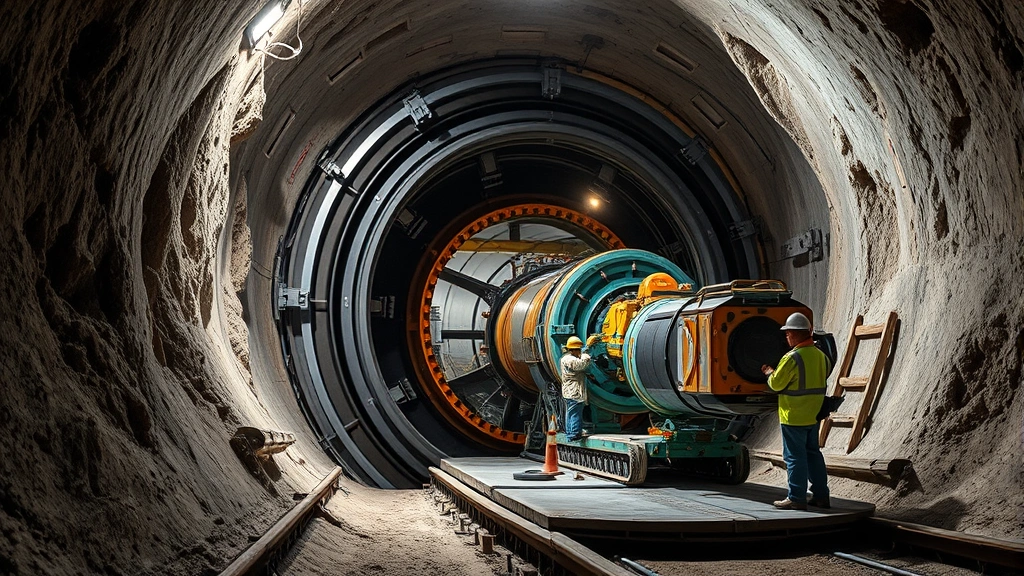
Founded in 2016, The Boring Company operates at the intersection of construction technology and urban infrastructure development. The company’s core proposition involves drilling underground tunnels faster and more cost-effectively than traditional tunnel construction methods. This innovative approach to infrastructure represents a departure from conventional engineering practices, employing advanced boring machine technology and streamlined operational procedures.
The business model centers on several key revenue streams. First, the company contracts with municipalities and transportation authorities to construct underground transportation networks. Second, it develops tunnel infrastructure for utility placement, including fiber optic cables and other services. Third, it generates revenue through autonomous vehicle integration within its tunnel systems. The diversification across these income sources theoretically reduces dependence on any single market segment.
Understanding how companies establish clear strategic missions becomes essential when evaluating The Boring Company’s long-term direction. The company’s stated objective—reducing urban congestion through innovative underground solutions—provides a compelling narrative, yet execution capabilities ultimately determine investment returns.
Current Investment Structure and Availability
A critical distinction separates The Boring Company from publicly traded firms: it remains privately held. This status fundamentally impacts investment accessibility for retail investors. Unlike companies listed on major exchanges, purchasing Boring Company stock through traditional brokerage accounts remains impossible for most individuals. This structural reality eliminates the most straightforward path to equity ownership.
However, several indirect investment pathways exist. Investors can gain exposure through venture capital funds that hold positions in the company. Additionally, some investors pursue ownership through secondary market transactions, though these involve higher complexity and regulatory considerations. Private equity platforms increasingly facilitate such investments, though minimum investment requirements typically exceed $25,000 to $100,000.
The company has conducted multiple funding rounds, with valuations reportedly reaching $5 billion in recent years. Each funding round introduces new equity opportunities, yet participation requires either significant capital or access to sophisticated investment networks. Understanding business continuity planning becomes relevant when assessing how private companies manage investor relations and funding cycles.
Investment Timeline Considerations: Private company investments typically involve longer holding periods than public equities. Liquidity events—such as initial public offerings or acquisitions—may not occur for five to ten years or longer. Investors must genuinely commit capital for extended periods without the ability to rapidly exit positions.
Financial Performance and Revenue Streams
Evaluating Boring Company stock requires examining actual financial performance metrics. The company has completed several significant projects, including the Las Vegas Convention Center Loop, demonstrating technical capability. However, publicly available financial data remains limited due to its private status. This information asymmetry creates challenges for rigorous financial analysis.
Available evidence suggests the company has achieved some revenue generation, though profitability metrics remain unclear. The Las Vegas project reportedly generated revenue, and ongoing contracts indicate sustained business development. However, the company’s cash burn rate—operating expenses relative to revenue—significantly impacts long-term viability and investor returns.
Key revenue considerations include:
- Contract value from municipal transportation projects
- Utility tunnel infrastructure installation fees
- Autonomous vehicle system integration revenue
- Licensing opportunities for boring technology
- Future commercial partnerships and franchise models
The infrastructure sector generally experiences longer sales cycles and extended project timelines compared to technology companies. A single major contract might take 18-36 months from negotiation through completion. This extended timeline means current revenue reflects projects initiated years prior, making forward-looking analysis particularly challenging.
Competitive Landscape and Market Opportunities
The underground infrastructure market encompasses substantial global opportunities. Urban congestion affects major cities across North America, Europe, Asia, and beyond. Traditional tunnel construction involves enormous costs, often exceeding $1 billion per mile in dense urban environments. If Boring Company’s technology can genuinely reduce these costs by 50-75%, the addressable market becomes enormous.
However, competition exists across multiple dimensions. Established construction firms like Tunnel Boring Company competitors possess decades of experience and established relationships with municipal governments. Traditional engineering firms offer proven track records that risk-averse public agencies often prefer. Additionally, sustainable infrastructure practices increasingly influence project selection, requiring contractors to demonstrate environmental stewardship.
Boring Company’s competitive advantages include:
- Novel boring machine design reducing excavation time
- Software-driven optimization of tunnel construction
- Elon Musk’s brand recognition and credibility in innovation
- Integrated approach to transportation solutions
- Autonomous vehicle system compatibility
Conversely, the company faces challenges including regulatory complexity, environmental impact assessments, and the need to prove cost advantages through completed projects. Each new market entry requires navigating distinct regulatory frameworks, further extending project timelines.
Risk Factors and Operational Challenges
Investing in Boring Company stock carries substantial risks that sophisticated investors must carefully consider. The infrastructure sector inherently involves long development timelines, regulatory uncertainties, and capital intensity. Private company investments amplify these risks through limited information disclosure and reduced liquidity.
Regulatory and Permitting Risks: Underground construction projects require extensive environmental reviews, geological surveys, and community approvals. Projects can face delays, permit denials, or modified requirements that increase costs. Any municipality rejecting the Boring Company’s proposal represents not just lost revenue but also wasted development and bidding expenses.
Technology Execution Risk: While the boring technology shows promise, scaling it consistently across diverse geological conditions remains unproven. Unexpected ground conditions could necessitate equipment modifications or operational adjustments that reduce cost advantages. Technology development rarely proceeds exactly as anticipated.
Market Adoption Risk: Municipal governments demonstrate conservative procurement practices. Convincing transportation authorities to adopt novel tunnel construction methods requires demonstrating both cost advantages and reliability. Even with superior technology, adoption may occur slower than projections suggest.
Capital Requirements: Scaling boring operations requires substantial capital investment in equipment, personnel, and research development. The company must balance growth investments against profitability, a tension that typically favors growth in early-stage ventures. Investors might experience extended periods without positive returns.
Understanding organizational communication effectiveness matters because transparent communication about risks and setbacks distinguishes well-managed companies from those hiding operational challenges.
Expert Perspectives and Industry Analysis
Industry analysts and investment professionals offer varied perspectives on Boring Company’s investment potential. McKinsey & Company research on infrastructure technology indicates substantial market opportunities for innovative construction solutions. However, McKinsey analysts also emphasize the challenges inherent in scaling novel infrastructure technologies.
Harvard Business Review has published analyses suggesting that Elon Musk’s ventures frequently demonstrate visionary appeal exceeding near-term financial performance. The publication notes that investor returns depend heavily on whether companies achieve scaling at projected timelines and costs.
Infrastructure-focused venture capital firms express cautious optimism about The Boring Company. These investors recognize genuine market opportunities while acknowledging execution risks. Most recommend substantial diversification—treating Boring Company investment as a small portion of a broader portfolio rather than a concentrated bet.
Forbes coverage highlights the distinction between technological innovation and commercial viability. The publication notes that numerous companies have developed superior technologies yet failed commercially due to market adoption challenges or competitive pressures.
Leading business schools including Stanford Graduate School of Business have examined The Boring Company as a case study in innovation-driven entrepreneurship. Academic analyses emphasize that visionary leadership and technological capability, while necessary, remain insufficient for investment success without sustainable competitive advantages and viable business models.
Expert consensus suggests several key takeaways: First, The Boring Company operates in a genuinely large market with real demand for infrastructure innovation. Second, execution remains highly uncertain, with multiple potential failure points. Third, investment returns depend on successful scaling and adoption across diverse markets. Fourth, timeline uncertainty means investors should expect extended holding periods before liquidity events.

FAQ
Can I buy Boring Company stock directly?
No, The Boring Company remains privately held and does not offer shares through public stock exchanges. Retail investors cannot purchase stock directly through traditional brokerage accounts. Access requires participation in private investment vehicles or secondary market transactions.
What is The Boring Company’s current valuation?
Recent funding rounds have valued the company at approximately $5 billion. However, private company valuations fluctuate based on funding rounds and investor sentiment. The valuation reflects investor expectations rather than proven financial performance.
Has Boring Company generated profits?
The company has generated revenue from completed projects, particularly the Las Vegas Convention Center Loop. However, publicly available profitability data remains limited. The company likely operates at losses or minimal profit margins while investing heavily in technology development and market expansion.
What would cause Boring Company stock value to increase?
Stock value would likely increase following successful completion of major projects, expansion into new markets, technology breakthroughs reducing costs further, regulatory approvals for multiple cities, or news of a potential initial public offering or acquisition.
How does Boring Company compare to traditional construction firms?
Traditional construction firms offer established track records and revenue generation. Boring Company offers innovative technology and lower costs but unproven at scale. Traditional firms represent lower-risk investments, while Boring Company represents higher-risk, higher-potential-reward exposure.
Should I invest my retirement savings in Boring Company stock?
Financial advisors typically recommend against concentrating retirement savings in single private companies, particularly those with execution risks. Boring Company might represent a small portion of a diversified portfolio for investors with high risk tolerance and long time horizons, but should not comprise retirement account core holdings.
When might Boring Company go public?
No announced IPO timeline exists. Industry observers speculate that a public offering might occur within five to ten years, depending on revenue growth and profitability trajectory. However, this timeline remains purely speculative.
What does Boring Company’s mission statement suggest about its direction?
The company’s commitment to solving urban congestion through innovative underground infrastructure indicates long-term focus on transportation solutions. This aligns with organizational mission development principles, providing strategic clarity for employees and investors regarding company direction.


