
Nash Car Company History: Expert Analysis of an American Automotive Pioneer
The Nash Car Company stands as one of the most innovative yet ultimately tragic stories in American automotive history. Founded in 1916 by Charles W. Nash, the company revolutionized vehicle manufacturing and design, introducing groundbreaking features that would influence the industry for decades. From its inception through its eventual merger with Hudson Motor Car Company to form American Motors Corporation (AMC) in 1954, Nash carved out a distinctive niche in the competitive automobile market by prioritizing engineering excellence, affordability, and practical design solutions that appealed to middle-class American families.
Nash’s journey reflects broader themes about business strategy, competitive positioning, and the challenges facing independent manufacturers in an industry increasingly dominated by the “Big Three” automakers. Understanding Nash’s history provides valuable insights into how companies can differentiate themselves through innovation, how organizational culture impacts success, and what happens when external market forces overwhelm even well-managed enterprises. This analysis examines the key phases of Nash’s development, its most significant innovations, and the strategic decisions that ultimately shaped its fate.
Founding and Early Years: Building a Manufacturing Philosophy
Charles W. Nash established the Nash Motor Company in Kenosha, Wisconsin, following his departure from General Motors, where he had served as vice president and general manager. Nash’s decision to create his own company reflected his conviction that automobiles could be manufactured more efficiently and sold at lower prices without sacrificing quality—a philosophy that would define the company’s identity throughout its existence. Unlike many automotive startups of the era, Nash possessed substantial manufacturing expertise and capital, having accumulated wealth from his previous roles in the industry.
The company’s first vehicle, the Nash 680, debuted in 1917 and immediately demonstrated the founder’s commitment to practical engineering. The car featured a robust six-cylinder engine, exceptional durability, and a price point that undercut many competitors while maintaining superior build quality. Nash’s manufacturing approach emphasized vertical integration and efficiency improvements, allowing the company to achieve profit margins that impressed Wall Street and attracted investor confidence during the volatile 1920s economic landscape.
During the 1920s, Nash experienced remarkable growth, expanding production capacity and establishing itself as America’s fourth-largest automobile manufacturer by decade’s end. The company’s success during this period stemmed from Charles Nash’s unwavering focus on producing reliable, affordable vehicles that appealed to middle-income Americans. This market positioning—neither luxury nor bare-bones economy—proved strategic, as it captured customers who valued dependability and practical features over prestige or minimal cost.
The Golden Age of Innovation: 1920s Through 1940s
Nash earned its reputation as an innovator through continuous product development and engineering breakthroughs that often preceded competitor adoption. The company pioneered several automotive features that became industry standards, demonstrating how business management and strategic planning could drive competitive advantage through relentless innovation.
- Integrated Heater and Defroster: Nash introduced the first factory-installed heating and defroster system in 1932, a feature that dramatically improved winter driving comfort and safety. This innovation represented Nash’s customer-centric engineering philosophy—addressing real-world problems that owners faced daily.
- All-Steel Unibody Construction: While not the absolute first manufacturer to employ this technique, Nash perfected and promoted all-steel unibody construction, which provided superior strength, reduced weight, and improved fuel efficiency compared to traditional body-on-frame designs.
- Sealed Beam Headlights: Nash pioneered sealed beam headlight technology, which provided superior illumination and became the industry standard for decades.
- Automatic Transmission: The company developed sophisticated automatic transmission systems that made driving easier and more accessible to broader consumer audiences.
- Reclining Seats: Nash introduced innovative seating designs that improved comfort for long-distance driving, recognizing that Americans increasingly used automobiles for extended travel.
These innovations reflected Nash’s strategic positioning as the “engineer’s choice” among affordable automobiles. The company invested heavily in research and development, maintaining laboratories and testing facilities that rivaled those of larger manufacturers. This commitment to innovation required capital investment and engineering talent, but it generated customer loyalty and positive brand perception that supported premium pricing relative to the company’s competitors in the affordable segment.
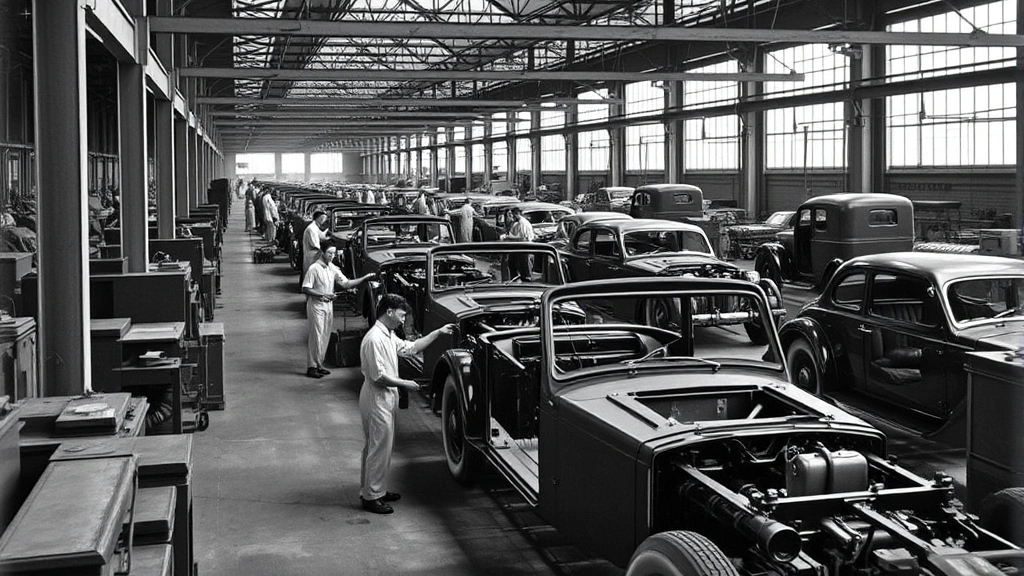
The 1930s Depression era tested Nash’s business model severely. However, the company’s emphasis on durability and value resonated with economically constrained consumers, and Nash actually gained market share during the early Depression years. The company’s ability to maintain profitability while competitors struggled demonstrated the strength of its fundamental business strategy and operational efficiency. Charles Nash’s leadership during this period proved crucial, as his manufacturing expertise and financial conservatism prevented the company from overextending itself despite industry-wide pressures.
Post-War Strategy and the Rambler Revolution
Following World War II, Nash faced a transformed automotive landscape. The company had contributed to war production efforts, and like all automakers, it needed to transition back to civilian vehicle manufacturing. However, Nash’s post-war strategy distinguished itself through a focus on compact, fuel-efficient vehicles at a time when American manufacturers were prioritizing larger, more powerful cars that reflected post-war prosperity and optimism.
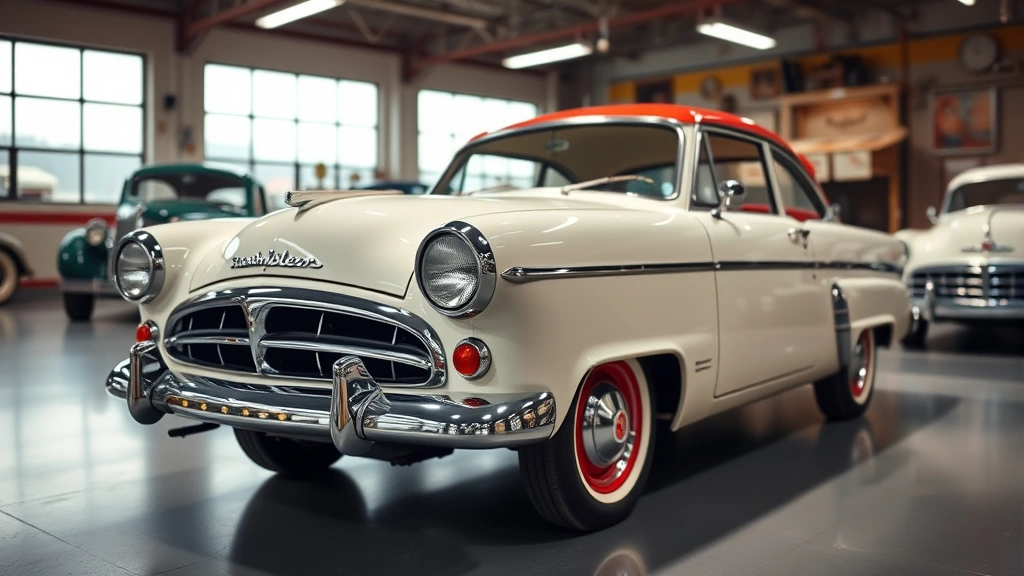
The introduction of the Nash Rambler in 1950 proved to be one of the most significant decisions in company history. The Rambler represented a dramatic departure from industry trends—it was smaller, more economical, and emphasized practicality over luxury appointments. While initially dismissed by competitors and industry analysts as a niche product, the Rambler’s sales demonstrated that a substantial market segment valued efficiency and affordability, particularly among younger buyers and families with budget constraints.
The Rambler’s success validated Nash’s long-standing philosophy about consumer preferences and manufacturing strategy. The company recognized that market positioning and strategic differentiation mattered more than simply following industry trends. This insight proved prescient—decades later, when fuel prices spiked in the 1970s and Japanese manufacturers flooded the American market with fuel-efficient vehicles, the Rambler’s concept would vindicate Nash’s strategic vision.
Under the leadership of George W. Mason and later George Romney, Nash pursued aggressive marketing of the Rambler, positioning it as the sensible choice for practical Americans. The company’s advertising campaigns emphasized reliability, economy, and value—themes that resonated with post-war consumers who had experienced economic scarcity and remained mindful of expenditures. This marketing approach, combined with genuine product advantages, drove sales growth and market share gains throughout the early 1950s.
Market Challenges and Competitive Pressures
Despite the Rambler’s success, Nash faced increasingly difficult competitive circumstances. The “Big Three” automakers—General Motors, Ford, and Chrysler—possessed vastly superior financial resources, manufacturing capacity, and distribution networks. These advantages allowed them to offer diverse product lines, invest in technology and marketing, and weather economic downturns more effectively than independent manufacturers.
By the early 1950s, Nash’s management recognized that independent survival in the automobile industry faced structural challenges. The company lacked the scale necessary to compete effectively across all market segments and geographic regions. Manufacturing costs per unit remained higher than larger competitors, and the company struggled to justify the capital investments necessary to modernize facilities and develop new models while competing against giants with superior financial resources.
The merger between Nash and Hudson Motor Car Company in 1954 represented a strategic response to these competitive pressures. The newly formed American Motors Corporation (AMC) attempted to create a viable third force in American automobile manufacturing by combining the resources and product lines of two independent manufacturers. While the merger initially appeared promising, it failed to overcome the fundamental scale disadvantages that independent manufacturers faced against the Big Three.
Several factors limited AMC’s competitive effectiveness. First, the merger created organizational complexity and cultural integration challenges that diverted management attention from product development and market competition. Second, the combined company still lacked the financial resources necessary to compete across all market segments simultaneously. Third, the broader automotive industry was consolidating, making it increasingly difficult for smaller manufacturers to maintain profitability without achieving massive scale.
The rise of Japanese automobile manufacturers in the 1960s and 1970s further eroded AMC’s competitive position. Companies like Toyota and Honda entered the American market with vehicles that embodied the very principles Nash had championed—reliability, efficiency, and affordability—but with manufacturing advantages derived from lower labor costs and newer facilities. Ironically, the Japanese manufacturers’ success validated Nash’s strategic vision about market preferences while simultaneously demonstrating that competitive advantage required more than correct product strategy.
The Merger and Legacy
The 1954 merger that created American Motors Corporation represented both a triumph and an acknowledgment of defeat for Nash as an independent manufacturer. The company had survived and thrived for nearly four decades in an industry characterized by consolidation and intense competition, but ultimately, scale economics and financial resources proved decisive factors in automotive manufacturing success.
Nash’s legacy extends far beyond its eventual absorption into AMC and later Chrysler. The company’s innovations influenced automotive design and engineering for decades. More significantly, Nash’s strategic philosophy about market positioning, customer preferences, and manufacturing efficiency established principles that remain relevant to contemporary business strategy. The company demonstrated that effective business leadership and strategic thinking could sustain competitive advantage even in industries with significant scale advantages for larger competitors.
The Rambler concept proved particularly enduring. After the merger, AMC continued developing and marketing the Rambler, which remained competitive throughout the 1960s and early 1970s. When fuel prices spiked during the 1973 oil embargo, the Rambler’s fuel-efficient design positioned AMC more favorably than Detroit’s Big Three, which had invested heavily in large, powerful vehicles. This temporary competitive advantage vindicated Nash’s decades-old strategic insights about consumer preferences and manufacturing priorities.
Modern business strategists studying Nash Car Company often focus on lessons about competitive positioning, innovation, and the limitations of strategy when facing structural industry disadvantages. The company’s history illustrates that excellent execution and strategic vision cannot always overcome fundamental differences in scale, financial resources, and market dynamics. However, it also demonstrates that companies can achieve sustained success by identifying underserved market segments, developing genuine product advantages, and maintaining customer loyalty through reliable performance and practical value.
The principles that Charles Nash established—manufacturing efficiency, customer-focused engineering, and practical value proposition—represent timeless business concepts applicable across industries. Companies seeking to compete against larger, better-resourced competitors often employ Nash’s strategic template: identify a market segment underserved by larger players, develop genuine product advantages that address customer needs, and build brand loyalty through consistent delivery of promised value. While this strategy cannot guarantee success against structural industry disadvantages, it offers the best path forward for smaller competitors in consolidated industries.
Additionally, Nash’s experience with quality management and manufacturing standards established benchmarks that influenced how American manufacturers approached production efficiency and product reliability. The company’s emphasis on durability and practical engineering represented an alternative to both luxury-focused and cost-cutting approaches, demonstrating that middle-market positioning could support sustainable profitability when executed with discipline and consistency.
FAQ
When was the Nash Car Company founded?
The Nash Motor Company was founded in 1916 by Charles W. Nash in Kenosha, Wisconsin. The company began production with the Nash 680 in 1917 and quickly established itself as a significant American automobile manufacturer.
What was Nash Car Company most famous for?
Nash is most famous for introducing innovative features including factory-installed heaters, sealed beam headlights, all-steel unibody construction, and the Rambler compact car. The company gained recognition as an engineering-focused manufacturer that prioritized reliability and practical value over luxury or cost-cutting.
Why did Nash Car Company fail?
Nash did not technically “fail”—the company merged with Hudson Motor Car Company in 1954 to form American Motors Corporation. The merger resulted from structural competitive pressures facing independent automobile manufacturers. The Big Three automakers possessed superior financial resources, manufacturing capacity, and distribution networks that made long-term independent competition increasingly difficult.
What happened to Nash vehicles?
After the 1954 merger, Nash vehicles continued to be produced under the American Motors Corporation banner. The Rambler became AMC’s primary focus and remained competitive throughout the 1960s and early 1970s. AMC was eventually acquired by Chrysler Corporation in 1987, ending independent American Motors Corporation operations.
Were Nash cars reliable?
Yes, Nash cars developed a strong reputation for reliability and durability. The company’s emphasis on quality manufacturing and practical engineering resulted in vehicles that held up well over time. This reputation contributed significantly to customer loyalty and supported the company’s competitive positioning in the affordable automobile segment.
How does Nash’s strategy relate to modern business competition?
Nash’s strategic approach—identifying underserved market segments, developing genuine product advantages, and building customer loyalty through reliable performance—remains relevant to contemporary business strategy. The company’s experience demonstrates that smaller competitors can achieve sustained success against larger rivals by focusing on specific market segments and delivering superior value, though structural industry advantages ultimately proved decisive in automotive manufacturing.


