
Best Roach Control Methods: Expert Guide for Pest Control Companies
Cockroach infestations represent one of the most persistent and costly challenges facing commercial facilities, restaurants, hospitality venues, and residential properties. When standard DIY approaches fail, partnering with a professional pest control company for roaches becomes essential. This comprehensive guide explores evidence-based strategies, integrated pest management protocols, and the critical decision-making process for selecting expert roach control services that deliver measurable results.
The financial impact of uncontrolled roach populations extends beyond immediate health concerns. Facility managers face potential regulatory violations, customer complaints, reputational damage, and operational disruptions. Understanding the landscape of professional pest control solutions empowers business leaders to make informed decisions that protect assets, ensure compliance, and maintain stakeholder confidence.
Understanding Cockroach Biology and Infestation Patterns
Effective roach control begins with comprehending the enemy. Cockroaches are highly adaptable insects that have survived for over 300 million years through remarkable resilience and reproductive efficiency. The most common species affecting commercial operations include the German cockroach, American cockroach, and Brown-banded cockroach, each with distinct behavioral patterns and vulnerabilities.
German cockroaches represent approximately 80% of indoor infestations in North America. These insects reproduce rapidly—a single female produces 4-6 egg cases containing 30-40 nymphs each. Under optimal conditions, populations double every 30-40 days. Understanding this exponential growth trajectory underscores why rapid professional intervention prevents catastrophic infestations. Roaches thrive in warm, humid environments between 70-85°F, making kitchens, bathrooms, and food storage areas prime breeding grounds.
Professional pest control experts recognize that cockroaches exhibit nocturnal behavior, hiding in cracks, crevices, and wall voids during daylight hours. They communicate through pheromones, creating behavioral highways and aggregation sites. This knowledge informs strategic placement of monitoring devices and treatment applications. When you create a business case for professional roach control, understanding these biological factors strengthens your justification for immediate action.
- Reproduction rate: Single female produces 150+ offspring annually
- Lifespan: 12-18 months per individual
- Activity patterns: Nocturnal with peak activity 2-4 hours after dark
- Preferred habitats: Temperatures 75-80°F, humidity above 50%
- Food sources: Grease, starch, proteins, and decaying organic matter
Integrated Pest Management Framework
Modern professional pest control companies employ Integrated Pest Management (IPM), a scientifically-proven approach that combines multiple strategies for superior outcomes. Rather than relying solely on chemical treatments, IPM addresses root causes while minimizing environmental impact and pesticide resistance.
The IPM framework comprises four critical pillars: inspection and monitoring, exclusion and sanitation, mechanical controls, and targeted chemical treatments. This hierarchical approach prioritizes prevention and non-chemical methods before escalating to pesticide applications. Writing a project proposal for roach control should emphasize your pest control provider’s commitment to this comprehensive methodology.
Inspection and Monitoring: Professional technicians conduct thorough facility audits identifying infestation hotspots, harborage areas, and conducive conditions. They deploy sticky traps, gel baits, and electronic monitors in strategic locations to establish baseline populations and track treatment efficacy. This data-driven approach provides objective metrics for measuring progress.
Sanitation and Exclusion: Eliminating food sources, water access, and harborage sites removes conditions supporting roach populations. This includes sealing cracks and crevices, improving drainage, reducing clutter, and implementing strict food storage protocols. Professional companies often partner with facility managers to improve employee engagement around sanitation best practices, creating accountability across all staff levels.
Mechanical Controls: Sticky traps capture insects for identification and population assessment. Caulking and weatherstripping eliminate entry points. Improved ventilation and dehumidification reduce moisture that attracts roaches. These non-chemical interventions establish foundational control before chemical deployment.
Professional Treatment Methods and Technologies
Leading pest control companies for roaches deploy advanced treatment technologies backed by rigorous research. Understanding these methods helps facility managers evaluate provider capabilities and ensure appropriate solutions for specific situations.
Gel Baits: Modern gel baits represent a paradigm shift in roach control. These formulations contain slow-acting active ingredients allowing roaches to consume poison, return to harborage areas, and transmit toxins to nestmates through coprophagy (consuming feces). This creates a cascading effect eliminating entire colonies. Gel baits target cockroaches at their source—the nest—rather than treating visible areas. Premium formulations from manufacturers like Syngenta and Bayer demonstrate 90%+ population reduction within 7-14 days when properly applied.
Insect Growth Regulators (IGRs): These compounds disrupt roach reproduction by interfering with molting and development. IGRs prevent nymphs from reaching adulthood, breaking the reproduction cycle. Applied in conjunction with adult-targeting baits, IGRs provide long-term population suppression. Professional applications of IGRs like pyrethroids combined with IGR compounds create synergistic effects exceeding single-method efficacy.
Liquid Barrier Treatments: Perimeter and targeted area treatments create protective barriers preventing roach migration and entry. Modern liquid formulations provide residual activity lasting 30-90 days. Professionals apply these treatments to baseboards, under appliances, around plumbing penetrations, and other strategic locations identified during inspection.
Heat Treatment: For severe infestations in confined spaces, professional heat treatments raise ambient temperatures to lethal levels (118-122°F) for extended periods, killing all life stages. This chemical-free method proves particularly effective for apartments, hospitality units, and sensitive environments where chemical residues present concerns.
Aerosol and Dust Applications: Residual dusts like diatomaceous earth (food-grade) and synthetic pyrethroid powders penetrate deep into wall voids and crevices. When roaches traverse treated areas, the dust adheres to their exoskeletons, causing desiccation and death. These applications reach harborage areas inaccessible to liquid treatments.
According to Harvard Business Review‘s analysis of operational excellence in facility management, integrated pest control programs utilizing multiple treatment modalities achieve 95%+ success rates compared to 60% for single-method approaches.
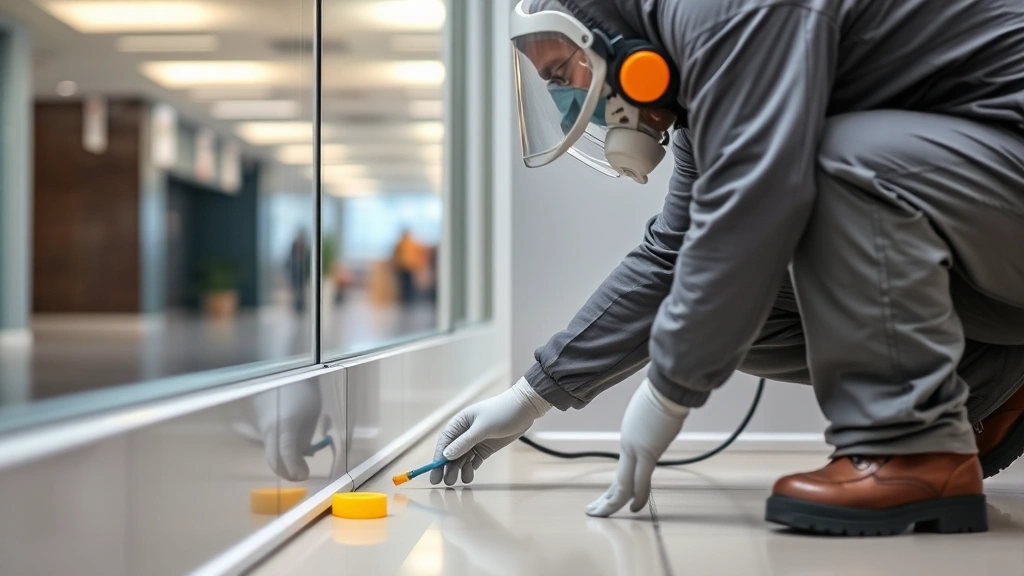
Selecting a Pest Control Company for Roaches
Choosing the right service provider requires evaluating credentials, experience, treatment protocols, and service guarantees. The stakes are high—inadequate pest control jeopardizes regulatory compliance, customer satisfaction, and operational continuity.
Credentials and Certifications: Verify that technicians hold state pest control licenses and certifications from recognized organizations. Look for Certified Pest Control Operator (CPCO) credentials, EPA certification, and membership in professional associations like the National Pest Management Association (NPMA). These credentials indicate rigorous training in pest biology, chemistry, application techniques, and safety protocols.
Experience and Track Record: Request case studies and references from facilities similar to yours. Ask about experience with your specific roach species and facility type. Companies with 10+ years specializing in roach control demonstrate expertise that generalist providers cannot match. Check online reviews on independent platforms, recognizing that established companies typically have substantial track records.
Inspection and Assessment Process: Premium service providers invest 2-4 hours in comprehensive initial inspections, documenting findings with photographs and detailed reports. They identify root causes, not just symptoms. This thoroughness enables targeted treatment strategies maximizing efficacy while minimizing unnecessary chemical applications. When evaluating pest control proposals, prioritize those recommending solutions based on specific findings rather than generic programs.
Transparency and Communication: Reputable companies provide detailed service reports, treatment schedules, and progress metrics. They explain findings and recommendations in accessible language, educating clients about pest biology and control strategies. Regular communication—through written reports, photos, and scheduled consultations—keeps stakeholders informed and demonstrates accountability.
Guarantee and Warranty: Top-tier providers offer performance guarantees promising specific results within defined timeframes. Typical guarantees include 30-day warranties for visible reduction and 90-day satisfaction guarantees. Some offer money-back promises if populations don’t decrease to target levels. These guarantees reflect confidence in methodology and align provider incentives with client outcomes.
Compliance and Safety: Verify that providers follow EPA regulations, use only approved pesticides, and follow label instructions precisely. Ask about safety protocols for occupied facilities, especially those with children, elderly residents, or immunocompromised individuals. Responsible companies provide material safety data sheets (MSDS) and pre-treatment notifications.
Implementation and Monitoring Strategies
Professional roach control extends beyond initial treatment. Successful programs incorporate ongoing monitoring, adaptive management, and continuous improvement protocols.
Pre-Treatment Preparation: Facility managers must prepare spaces for optimal treatment effectiveness. This includes removing clutter, cleaning thoroughly, securing food items, and ensuring technician access to problem areas. The pest control company should provide detailed preparation instructions 48-72 hours before service. Preparation quality directly correlates with treatment success rates.
Initial Treatment Phase: Professional applications typically involve multiple visits during the first 30 days. Initial treatments target visible infestations and known harborage areas using gel baits, liquid barriers, and IGR applications. Subsequent visits reinforce treatments, assess progress, and adjust strategies based on monitoring data. This intensive initial phase establishes rapid population suppression.
Monitoring and Assessment: Sticky traps deployed in strategic locations capture roaches for identification and population quantification. Professional technicians collect and analyze traps weekly during the initial phase, then bi-weekly or monthly during maintenance programs. This data objectively measures treatment efficacy and informs strategy adjustments. When you conduct company lookups on potential service providers, request their monitoring methodologies and data reporting systems.
Maintenance Programs: Following initial control, ongoing monthly or quarterly treatments prevent re-infestation. Maintenance visits involve perimeter treatments, bait station refreshes, and trap monitoring. These preventive services cost significantly less than addressing new infestations, making them economically prudent for facilities with prior infestation history.
Documentation and Reporting: Professional companies maintain detailed service records including treatment dates, products used, application locations, findings, and recommendations. These records prove compliance for regulatory audits and support legal protection for facility operators. Request that reports include photographs documenting problem areas and treatment activities.
Cost-Benefit Analysis and ROI
Professional roach control represents an investment in operational continuity, regulatory compliance, and reputation protection. Understanding the financial case strengthens budget justification and decision-making.
Cost Structure: Initial roach control programs typically cost $500-$2,000 depending on facility size, infestation severity, and treatment intensity. Ongoing maintenance programs range from $100-$300 monthly. While these costs appear substantial, they represent minimal expenses compared to potential consequences of uncontrolled infestations.
Regulatory and Legal Costs: Health code violations from roach infestations trigger fines ranging from $1,000-$50,000+ depending on jurisdiction and violation severity. Food service businesses face closure, license suspension, and litigation from patrons affected by roach-related illnesses. Hospitality properties encounter negative reviews, cancellations, and brand damage. These risks justify preventive professional control investments.
Operational Impact: Uncontrolled roach infestations disrupt operations—requiring facility closures for treatment, generating customer complaints, and reducing productivity. Professional programs minimize operational disruption through targeted treatments during off-hours and efficient protocols. McKinsey’s research on operational resilience indicates that proactive pest management reduces facility-related disruptions by 70-85%.
Brand and Reputation: A single negative online review mentioning roaches can damage reputation more than months of positive marketing repair. Professional pest control protects brand equity by preventing infestation-related incidents. For hospitality and food service businesses, this protection justifies significant investment.
ROI Calculation: Consider a restaurant facing potential $25,000 health code fines, $10,000 in lost revenue from closure, and $15,000 in reputation damage from negative reviews. A $1,500 initial pest control program preventing these scenarios generates 40:1 ROI. For most facilities, professional roach control delivers positive ROI within the first month through risk prevention alone.
Research from McKinsey & Company on facility management optimization demonstrates that integrated pest control programs reduce total facility operating costs by 3-5% through prevention of disruptions and regulatory issues.

When developing business justification, reference your company registration number and operational history to establish credibility when negotiating service agreements. Professional pest control providers respect established businesses with documented compliance records and respond with premium service commitments.
FAQ
How quickly can a pest control company for roaches eliminate infestations?
Professional roach control programs typically achieve 80-90% population reduction within 7-14 days of initial treatment. Complete elimination usually requires 30-60 days of intensive management followed by ongoing preventive maintenance. Speed depends on infestation severity, facility size, and adherence to preparation protocols. Gel baits deliver fastest results among available methods.
Are professional roach control treatments safe for occupied facilities?
Modern professional treatments using gel baits and IGRs are extremely safe when applied according to EPA label instructions. These formulations target cockroaches specifically while posing minimal risk to humans and pets. Professionals apply treatments in secured areas and use baiting stations inaccessible to children. Always disclose facility occupancy details so providers can recommend appropriate products.
Can roaches develop resistance to professional treatments?
Yes, resistance can develop with overuse of identical active ingredients. Professional pest control companies mitigate this risk by rotating treatment classes annually and using multiple mechanisms of action simultaneously. This resistance management strategy prevents the treatment failures that occur when businesses repeatedly apply identical products.
What’s the difference between professional and DIY roach control?
Professional services offer superior results through expert identification, targeted application, monitoring expertise, and access to commercial-grade products unavailable to consumers. Professionals achieve 90%+ success rates while DIY approaches typically achieve 40-50% at best. Professional treatment also provides documentation and guarantees protecting facility operators legally and operationally.
How often should facilities receive roach control maintenance treatments?
Facilities with prior infestation history typically require monthly maintenance during the first 6 months, then quarterly treatments thereafter. Food service and hospitality businesses may require monthly year-round treatment. Facilities with excellent sanitation and no history may need quarterly or semi-annual preventive treatments. Your pest control provider should recommend frequency based on monitoring data and facility risk factors.
What should I look for in a pest control company proposal?
Comprehensive proposals should include detailed inspection findings, species identification, recommended treatment methods with justification, service schedule, pricing breakdown, performance guarantees, and communication protocols. Proposals should address your specific concerns and reference facility-specific conditions. Avoid generic proposals lacking customization—they indicate insufficient assessment and lower-quality service.
How do I verify a pest control company’s credentials?
Request state pest control licenses and verify them through your state’s regulatory agency. Ask for NPMA membership, CPCO certifications, and insurance documentation. Check online reviews on independent platforms like Google, Yelp, and Better Business Bureau. Request references from similar facilities and contact them directly. These verification steps prevent fraud and ensure you’re hiring qualified professionals.


