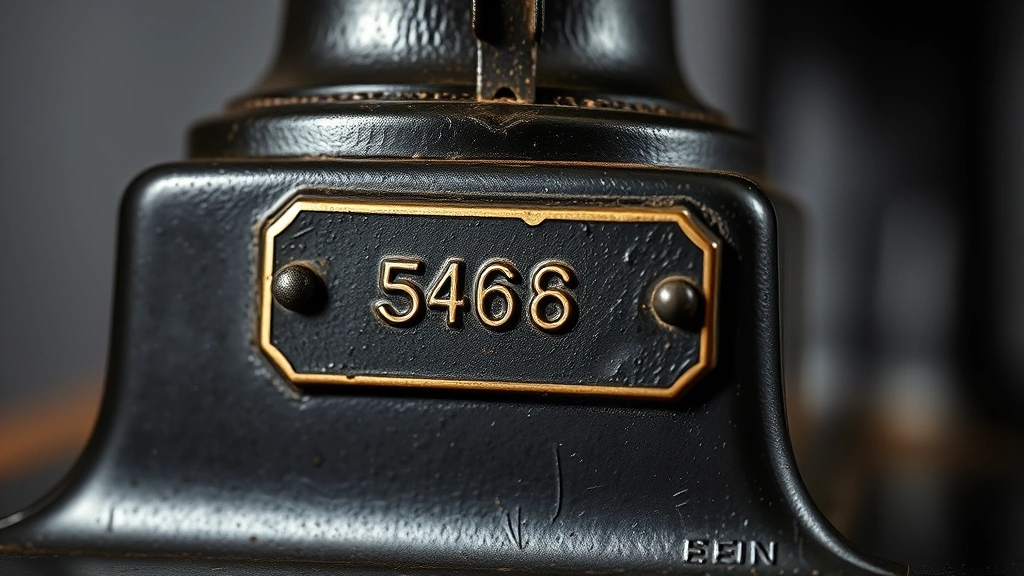
The Singer Manufacturing Company stands as one of the most iconic industrial enterprises in history, revolutionizing household sewing and establishing manufacturing standards that influenced global business operations. Understanding Singer serial numbers unlocks valuable insights into machine provenance, manufacturing periods, and collectible value—critical knowledge for enthusiasts, restorers, and business historians examining industrial manufacturing excellence.
Serial numbers represent far more than identification markers; they constitute a systematic documentation of manufacturing processes, quality control measures, and organizational leadership decisions spanning over 180 years. Each number tells a story of production capacity, market expansion, and operational strategy. Decoding these sequences requires understanding the company’s manufacturing philosophy, global distribution networks, and strategic pivots across distinct historical periods.
This comprehensive guide examines Singer’s serial numbering systems, regional manufacturing variations, and practical applications for dating machines. Whether you’re assessing vintage equipment value, researching industrial heritage, or managing a collection, mastering serial number interpretation provides competitive advantage in specialized markets and authentic historical documentation.
Singer Manufacturing History and Production Evolution
Founded in 1851 by Isaac Merritt Singer, the Singer Manufacturing Company transformed from a modest New York workshop into the world’s largest sewing machine manufacturer. The company’s strategic approach to mass production, distribution, and consumer marketing established blueprints that modern staffing and organizational structures still reference today.
Singer’s manufacturing philosophy emphasized standardization and interchangeable parts—revolutionary concepts during the 19th century. By 1860, the company had established production facilities across multiple continents, recognizing that localized manufacturing reduced shipping costs and aligned with regional demand patterns. This decentralized yet coordinated approach became a model for multinational industrial operations.
The company maintained meticulous production records, implementing serial numbering systems that reflected manufacturing capacity, quality control protocols, and market segmentation strategies. Each production era introduced modifications to numbering systems, creating distinct categories that historians and collectors use for authentication and valuation purposes.
Throughout the 20th century, Singer navigated significant business transitions including technological innovation, competitive pressures, and shifting consumer preferences. The company’s commitment to documentation and traceability remained constant, ensuring that machines produced across different eras and locations could be accurately identified and contextualized within broader manufacturing narratives.
Understanding Serial Number Systems
Singer employed multiple serial numbering methodologies throughout different production periods, each reflecting contemporary manufacturing practices and organizational capabilities. Understanding these systems requires familiarity with the company’s operational structure and strategic shifts.
Early Era Numbering (1851-1900)
Initial Singer machines featured simple sequential numbering systems, often stamped directly onto cast iron frames. These early numbers typically ranged from 1 to approximately 500,000, with production concentrated in Newark, New Jersey facilities. The straightforward sequential approach reflected manufacturing simplicity and limited global distribution networks.
Early machines bore numbers on the base of the machine and sometimes on the presser bar. Documentation from this period indicates that Singer produced approximately 500,000 machines annually by 1880, making serial number tracking increasingly complex as production volumes expanded exponentially.
Transition Period Systems (1900-1950)
As Singer expanded international operations, the company introduced letter prefixes and suffixes to serial numbers, indicating manufacturing location and production batch. This system provided critical information about where machines were manufactured and during which quarterly or annual period production occurred.
During this era, Singer utilized combinations such as “A” for American production, “G” for Glasgow manufacturing, “H” for Hamburg facilities, and regional indicators for other production centers. The prefix-suffix system allowed supervisors and managers to track production across dispersed manufacturing locations while maintaining quality control standards.
Modern Era Coding (1950-Present)
Contemporary Singer machines feature more sophisticated serial number formats incorporating numerical codes that specify production year, manufacturing location, and sequential batch information. Modern systems often include 6-12 digit combinations with embedded data regarding production decade, month, and facility-specific identifiers.
Current Singer numbering reflects sophisticated inventory management systems and supply chain coordination. The format typically follows patterns like “ABC123456,” where letters denote manufacturing location codes and numbers indicate production sequence and temporal information.
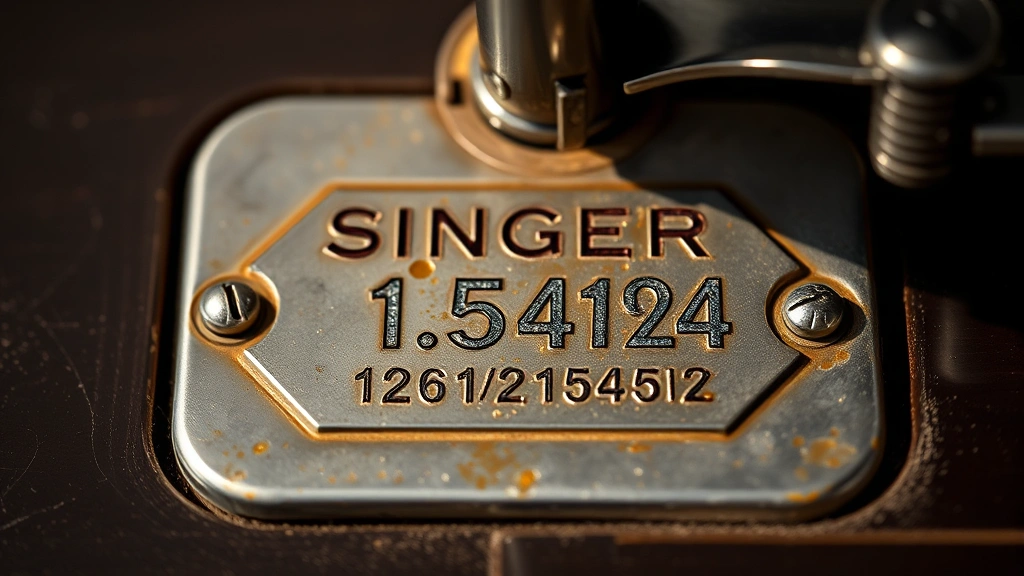
” alt=”Close-up of vintage Singer sewing machine serial number plate showing engraved identification marks on metal base, professional product photography lighting”>
Dating Your Singer Machine
Accurately dating Singer machines requires systematic analysis of multiple identification markers beyond serial numbers alone. Serial numbers provide primary information, but combining this data with physical characteristics, design elements, and documented production records yields definitive results.
Serial Number Location and Format Analysis
Locate the serial number on your Singer machine by examining the cast iron base, presser bar, or decorative plates. Photograph the number clearly and document its exact location. The number’s format—whether purely numerical, alphanumeric, or featuring specific letter combinations—immediately suggests the production era.
Cross-reference your serial number with established Singer chronologies maintained by collector organizations and museum archives. Reputable sources like the International Sewing Machine Collector’s Society maintain comprehensive databases correlating serial numbers with production years and manufacturing locations.
Physical Design Characteristics
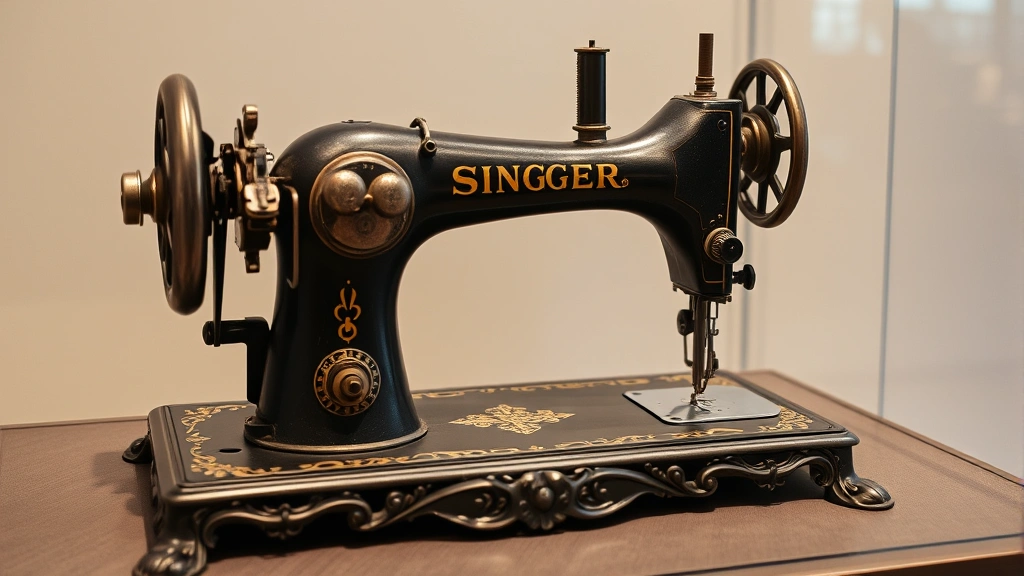
Machine design evolved significantly throughout Singer’s production history. Early treadle machines featured ornate cast iron bases with decorative scrollwork. Mid-century models introduced streamlined aesthetics reflecting art deco and modernist design movements. Contemporary machines display minimalist industrial design with plastic components and electronic controls.
Examine the machine’s overall construction quality, material composition, and decorative elements. Highly ornate machines typically date to pre-1920 production. Machines with art deco styling generally originate from 1920-1940 periods. Post-1950 machines increasingly incorporated plastic housings and simplified mechanical designs.
Technical Specifications and Patent Information
Singer machines often featured patent dates stamped or embossed on mechanical components. These dates provide valuable temporal references, though machines may have been produced years after patent issuance. Document all visible patent information and cross-reference with United States Patent Office records.
The machine’s stitch capability, mechanical complexity, and feed mechanism design indicate technological generation. Early machines featured basic lockstitch mechanisms. Mid-period machines introduced multiple stitch patterns and adjustable tension systems. Modern machines incorporate computerized controls and automated functions.
Documentation and Original Paperwork
Original instruction manuals, warranty cards, or sales documentation provide authoritative dating information. These materials often include manufacturing dates, model numbers, and serial number ranges. Collector communities actively share digitized documentation, creating accessible reference libraries for authentication purposes.
Global Manufacturing Locations and Codes
Singer maintained manufacturing facilities across multiple continents, each location utilizing distinctive serial number prefixes and production methodologies. Understanding these geographic codes clarifies machine origins and production contexts.
North American Manufacturing
The Newark, New Jersey facility served as Singer’s primary North American production center from 1851 through the late 20th century. Machines manufactured here typically bore “A” designations or simple numerical sequences without geographic indicators during early periods.
The company established secondary facilities in Elizabeth, New Jersey, and later expanded to additional locations including Chicago and western industrial centers. Each facility maintained separate serial number sequences, though coordinated management ensured no duplication across locations.
European Manufacturing Centers
Glasgow, Scotland emerged as Singer’s largest non-American facility, producing machines for European and international markets beginning in 1867. Glasgow production machines frequently featured “G” prefixes or specific Glasgow-coded designations.
Hamburg, Germany housed significant manufacturing operations serving Central European markets. The Hamburg facility operated from 1885 until World War II disruptions. Hamburg machines typically incorporated “H” designations or German-language manufacturing information.
Additional European facilities in France and other locations produced machines with region-specific codes. Singer’s European network reflected sophisticated strategic positioning within continental markets and demonstrated the company’s commitment to localized real estate and facility management decisions.
Asian and International Expansion
Singer established manufacturing capabilities in Japan, India, and other Asian markets during the 20th century, reflecting expanding global reach and market penetration strategies. Asian production facilities incorporated distinctive serial number systems reflecting local manufacturing protocols and quality standards.
Machines produced in these facilities often featured location-specific codes and language-appropriate documentation. Understanding these regional variations provides crucial context for understanding how major corporations managed distributed operations across culturally and economically diverse markets.
” alt=”Antique Singer sewing machine displayed in museum setting showing ornate cast iron base and mechanical components, professional archival photography with neutral background”>
Practical Applications and Market Value
Accurate serial number interpretation directly impacts market valuation, authentication processes, and historical documentation. Collectors, dealers, and restoration specialists rely on this expertise for business operations and professional credibility.
Valuation and Market Assessment
Machine condition, rarity, and production era significantly influence market value. Machines manufactured during specific limited-production periods command premium prices among collectors. Understanding your machine’s production year and location through serial number analysis provides essential valuation data.
Rare manufacturing locations, early production periods, and machines featuring distinctive design elements typically appreciate in value. Conversely, machines manufactured during high-production periods in major facilities may command lower prices despite excellent mechanical condition.
Restoration and Authenticity Verification
Restorers use serial number information to source appropriate replacement parts, identify original specifications, and ensure restoration authenticity. Replacing components with parts manufactured during the same production era maintains machine integrity and historical accuracy.
Authentication specialists reference serial numbers when evaluating machine authenticity and detecting reproductions or fraudulent claims. Comprehensive serial number documentation helps prevent misrepresentation in commercial transactions and museum acquisitions.
Historical Research and Documentation
Researchers examining Singer’s manufacturing history, labor practices, and technological innovation rely on serial number data for identifying specific machines referenced in historical records. Serial numbers connect individual machines to broader corporate narratives and provide tangible artifacts for scholarly examination.
Museum curators utilize serial number information when cataloging collections, creating exhibition narratives, and contextualizing individual machines within manufacturing history frameworks. Accurate dating and location identification enhance scholarly value and public educational impact.
Singer’s systematic documentation practices established standards that influenced how subsequent manufacturers approached traceability and quality assurance. Understanding Singer serial numbers illuminates broader industrial history and demonstrates how systematic organization created lasting competitive advantage.
FAQ
How do I find the serial number on my Singer machine?
Serial numbers typically appear on the cast iron base, presser bar, or decorative metal plates. Examine all metal components carefully, using proper lighting to reveal stamped or engraved numbers. Consult your machine’s instruction manual if available, as it often specifies serial number location for your specific model.
Can I determine exact production year from serial number alone?
Serial numbers provide approximate production timeframes rather than precise years. Combined with physical characteristics, design elements, and patent information, serial numbers enable accurate dating within 1-5 year ranges. Comprehensive analysis using multiple sources yields the most reliable results.
What do letter prefixes in Singer serial numbers indicate?
Letter prefixes typically denote manufacturing location. Common codes include “A” for American facilities, “G” for Glasgow, and “H” for Hamburg. However, coding systems varied across production eras, so consulting comprehensive reference guides ensures accurate interpretation.
Are machines from specific manufacturing locations more valuable?
Market value depends on multiple factors including rarity, condition, and collector demand. Machines from specific limited-production facilities or early manufacturing periods often command premium prices. Glasgow and early Newark production machines frequently attract collector interest and higher valuations.
How reliable are online serial number databases?
Reputable databases maintained by collector organizations and museums provide generally accurate information, though discrepancies occasionally occur. Cross-reference multiple authoritative sources and consult museum specialists when making significant financial decisions based on serial number data.
What should I do if my machine’s serial number is illegible?
Document the machine’s physical characteristics, design elements, patent information, and any visible manufacturing marks. Consult specialist forums and museum experts who can provide dating estimates based on comprehensive analysis. Professional authentication services can examine machines in person when serial numbers prove unreadable.
Do all Singer machines have serial numbers?
Most Singer machines manufactured after 1860 feature serial numbers, though some early or specialized machines may lack visible identification. Machines produced before standardized numbering systems were implemented may require expert analysis using alternative identification methods.
Can I verify my machine’s authenticity using serial numbers?
Serial number analysis forms part of comprehensive authenticity verification but shouldn’t constitute the sole authentication method. Combine serial number research with physical inspection, mechanical evaluation, and expert consultation for definitive authenticity assessment.


