
Cerreta Candy’s Sweet Success Story: A Case Study in Family Business Excellence
Cerreta Candy Company stands as a testament to the power of tradition, innovation, and family-driven entrepreneurship in the competitive confectionery industry. Founded in 1946 by Nuccio Cerreta, this Arizona-based candy manufacturer has evolved from a modest operation into a thriving business that generates millions in annual revenue while maintaining its core values and commitment to quality. The company’s journey reflects broader lessons about business sustainability, generational succession, and the importance of balancing heritage with modern market demands.
What makes Cerreta Candy particularly noteworthy is how the company has navigated significant industry challenges while remaining independently owned and operated. In an era of corporate consolidation and mass-market homogenization, Cerreta has carved out a distinctive niche by emphasizing artisanal craftsmanship, locally-sourced ingredients, and authentic storytelling. Their success offers valuable insights for entrepreneurs seeking to build lasting enterprises that transcend a single generation.

The Founding Vision and Early Years
Nuccio Cerreta’s decision to establish Cerreta Candy Company in 1946 emerged from a deep-rooted passion for confectionery craftsmanship and a commitment to quality that reflected his Italian heritage. The company began as a small operation focused on producing handmade chocolates and candies using traditional recipes and techniques. This emphasis on artisanal production became the foundation for everything the company would accomplish in subsequent decades.
The post-World War II period presented both challenges and opportunities for a fledgling candy manufacturer. Consumer demand for sweets was high, yet competition from established national brands was fierce. Cerreta differentiated itself through unwavering commitment to ingredient quality and production methods that prioritized taste and craftsmanship over cost minimization. This strategic positioning allowed the company to build a loyal customer base despite limited resources and marketing budgets.
During these formative years, the company operated from modest facilities in Phoenix, Arizona, where it remains headquartered today. The local market became the testing ground for new products and flavors, allowing the Cerreta team to gather real-time feedback and refine their offerings. This direct customer engagement proved invaluable for understanding market preferences and building brand loyalty that would sustain the business through competitive pressures.
Understanding your company’s origin story and core mission is essential for long-term success. When seeking guidance on maintaining this vision while growing your business, resources like how to find business mentors can provide valuable direction for navigating complex decisions.
Family Business Transition and Leadership Evolution
One of the most critical junctures in Cerreta Candy’s history occurred when the second generation assumed leadership responsibilities. Unlike many family businesses that struggle with succession planning, Cerreta executed a relatively smooth transition that preserved the company’s values while introducing fresh perspectives and modern management practices. This generational handoff illustrates the importance of thoughtful business transition planning that considers both operational continuity and strategic evolution.
The Cerreta family recognized early that maintaining family control did not require resistance to professional management practices. By bringing in experienced executives and implementing structured decision-making processes, they created an organizational culture that honored tradition while embracing change. This balance proved crucial for competing effectively against larger corporations with more sophisticated operational systems.
Family businesses often face unique challenges related to succession, role clarity, and governance. Diversity in the workplace became increasingly important as Cerreta expanded, with the company deliberately recruiting talent from outside the family while maintaining family members in key leadership positions. This hybrid approach strengthened decision-making and prevented the insularity that undermines many family enterprises.
The company also invested in professional development and training for family members entering the business, treating them with the same expectations and accountability standards applied to non-family executives. This meritocratic approach enhanced credibility throughout the organization and ensured that leadership positions were filled by individuals with both genuine capability and commitment to the company’s mission.
Product Innovation and Market Positioning
Cerreta Candy’s product portfolio reflects a sophisticated understanding of market segmentation and consumer preferences across different demographic groups. Rather than attempting to compete directly with mass-market brands on price, the company positioned itself in the premium and specialty candy segments where quality, uniqueness, and storytelling command price premiums.
The company’s innovation strategy balanced respect for classic formulations with openness to contemporary flavor combinations and product formats. Seasonal offerings, limited-edition releases, and collaborations with local artisans created excitement and urgency among consumers. This approach generated word-of-mouth marketing and social media engagement that would have been impossible to achieve through traditional advertising alone.
Product development at Cerreta involved rigorous testing and refinement, with consumer feedback informing decisions about which innovations to scale and which to retire. The company maintained detailed records of ingredient sourcing, production processes, and quality metrics, enabling consistency that built consumer trust. This commitment to operational rigor distinguished Cerreta from competitors who prioritized speed to market over quality assurance.
The company also recognized opportunities to expand beyond traditional candy categories into adjacent products that leveraged their brand reputation and production expertise. This diversification reduced dependence on any single product line and provided multiple revenue streams that could weather market fluctuations in specific segments.
Retail Strategy and Customer Experience
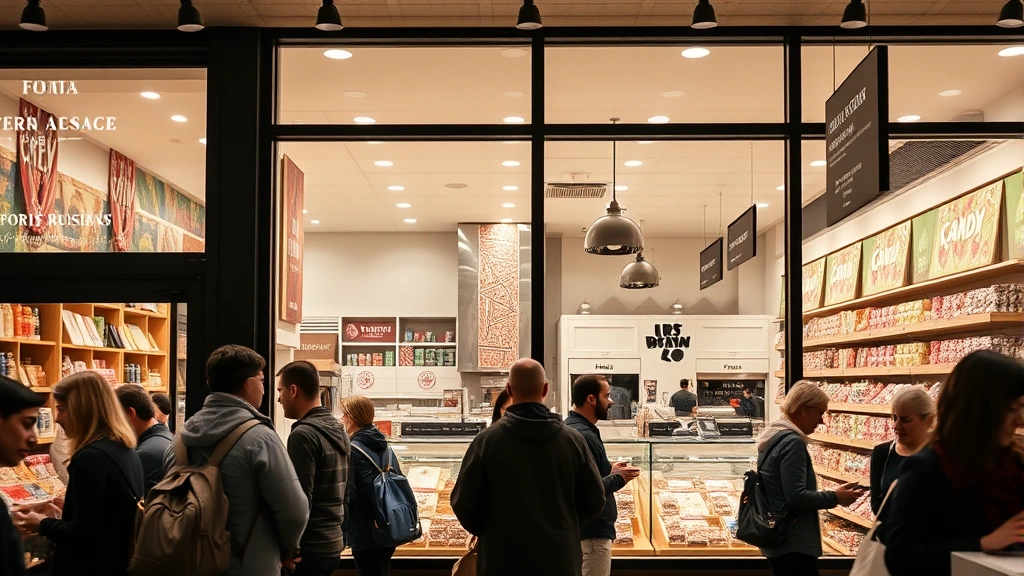
Cerreta Candy’s retail approach evolved significantly over the decades, reflecting broader shifts in consumer shopping behavior and channel preferences. The company operated company-owned retail locations that functioned as experiential destinations rather than mere transactional venues. These stores featured production windows where customers could observe candy-making processes, creating memorable experiences that deepened emotional connections to the brand.
The retail locations also served as research laboratories where the company tested new products, gathered consumer feedback, and built relationships with loyal customers. Staff training emphasized product knowledge and storytelling, transforming retail associates into brand ambassadors who could articulate the company’s values and heritage. This investment in customer experience differentiated Cerreta from competitors and justified premium pricing.
Beyond company-owned stores, Cerreta pursued selective partnerships with specialty retailers, gift shops, and online marketplaces that aligned with the brand’s positioning. The company avoided mass-market distribution channels that would dilute brand prestige and compromise quality control. This disciplined approach to channel management required resisting revenue opportunities that conflicted with long-term brand strategy.
The company’s website and digital presence evolved to provide seamless omnichannel experiences, allowing customers to purchase online, access product information, and engage with the brand story. Investment in cloud computing infrastructure enabled Cerreta to scale digital operations while maintaining the personalized service that characterized their physical locations.
Operational Excellence and Supply Chain Management
Behind Cerreta Candy’s premium products lies a sophisticated operational infrastructure that ensures consistent quality while managing costs effectively. The company invested in modern manufacturing equipment that complemented rather than replaced artisanal techniques, creating a hybrid production model that combined efficiency with craftsmanship.
Supply chain management became increasingly important as the company expanded beyond local markets. Cerreta developed long-term relationships with ingredient suppliers who shared their commitment to quality and sustainability. These partnerships often involved collaborative problem-solving and joint investment in quality improvements that benefited both parties.
The company implemented inventory management systems that balanced the need for fresh products with the realities of demand forecasting and seasonal fluctuations. This operational discipline prevented the costly waste that undermines many food manufacturers while ensuring product availability that met customer expectations.
Quality control processes were embedded throughout the production system, with multiple checkpoints and testing protocols that verified ingredient quality and finished product specifications. This commitment to quality assurance reduced returns and complaints while building reputation for reliability that justified premium pricing.
Marketing and Brand Building in the Digital Age
Cerreta Candy’s marketing strategy evolved from traditional local advertising to a sophisticated digital approach that leveraged social media, content marketing, and influencer partnerships. The company recognized that their authentic story and commitment to quality provided compelling narrative material that resonated with consumers increasingly skeptical of corporate marketing messages.
Content marketing initiatives focused on behind-the-scenes production stories, employee profiles, and educational content about candy-making techniques. This approach positioned Cerreta as a thought leader in the confectionery industry while building emotional connections with consumers who appreciated transparency and authenticity.
The company also embraced experiential marketing, hosting factory tours, conducting tasting events, and sponsoring community activities that provided direct engagement opportunities. These initiatives generated organic word-of-mouth marketing and social media content that amplified reach far beyond paid advertising investments.
Email marketing and customer relationship management systems enabled Cerreta to maintain ongoing dialogue with loyal customers, informing them about new products, special offers, and company news. This direct-to-consumer communication channel provided valuable data about customer preferences and purchasing behavior that informed product development and inventory decisions.
For businesses seeking to optimize their online presence and customer engagement strategies, understanding how to effectively gather company information and market research can provide competitive advantages similar to those Cerreta has leveraged.
Challenges and Strategic Adaptations
Despite its success, Cerreta Candy faced significant challenges that tested the company’s resilience and strategic agility. Rising commodity prices, particularly for cocoa and sugar, compressed margins and forced difficult decisions about pricing, product formulation, and operational efficiency. The company navigated these pressures by investing in process improvements while selectively raising prices in ways that customers accepted based on demonstrated quality.
Changing consumer preferences toward healthier snacking options presented another challenge. Rather than ignoring this trend, Cerreta developed products that addressed health-conscious consumer preferences while maintaining the quality and taste standards that defined the brand. This adaptive approach allowed the company to serve evolving customer needs without compromising brand integrity.
The rise of e-commerce and direct-to-consumer business models disrupted traditional retail channels and forced Cerreta to reconsider distribution strategy. The company invested in digital capabilities and online retail presence, learning to compete effectively in channels where geographic location provided no inherent advantage. Understanding business lead generation approaches helped Cerreta identify and reach new customer segments through digital channels.
Competition from international candy manufacturers and private-label brands intensified pressure on margins and market share. Cerreta responded by emphasizing its unique positioning as an authentic American brand with heritage and local roots, qualities that resonated with consumers seeking alternatives to mass-produced commodities.
The COVID-19 pandemic presented unprecedented operational and market challenges, forcing rapid adaptations in production, distribution, and customer engagement. Cerreta’s investments in digital infrastructure and supply chain resilience enabled the company to navigate disruptions more effectively than less-prepared competitors.
The Path Forward: Future Growth Opportunities
Looking forward, Cerreta Candy has multiple avenues for sustainable growth that leverage existing strengths while addressing evolving market opportunities. Geographic expansion beyond Arizona presents significant potential, particularly in markets where premium confectionery products command strong demand and consumers value authentic brands with compelling stories.
Direct-to-consumer expansion through e-commerce and subscription services offers opportunities to deepen customer relationships while capturing higher margins. Cerreta’s digital marketing capabilities and brand reputation position the company to build loyal online communities that generate recurring revenue and valuable customer data.
Product innovation focused on emerging consumer preferences—including plant-based options, functional ingredients, and sustainable packaging—provides avenues for market expansion while addressing environmental and health-conscious consumer segments. The company’s commitment to quality and ingredient transparency aligns naturally with these emerging preferences.
Licensing opportunities and strategic partnerships with complementary brands could extend the Cerreta brand into adjacent categories while generating licensing revenue with limited operational risk. The company’s reputation for quality and authenticity provides valuable brand equity that could enhance partner offerings.
International expansion represents a longer-term opportunity, particularly in markets where American heritage brands command premium positioning and consumers appreciate artisanal confectionery products. The company’s production expertise and supply chain capabilities would require adaptation for international markets, but the fundamental business model translates effectively across geographies.
Industry research from organizations like McKinsey’s Consumer Packaged Goods insights provides valuable perspective on market trends and strategic opportunities in the confectionery sector. Similarly, Harvard Business Review’s family business content offers frameworks for addressing governance and succession challenges that remain relevant as Cerreta evolves.
The company’s success also reflects broader insights about building sustainable competitive advantages in mature industries. Forbes insights on business strategy and leadership reinforce many principles that Cerreta has embodied throughout its history. Academic perspectives from Harvard Business School on family business management and NYU Stern’s research on consumer behavior provide theoretical frameworks that validate Cerreta’s practical approaches.
FAQ
What makes Cerreta Candy different from mass-market candy manufacturers?
Cerreta differentiates through commitment to artisanal craftsmanship, premium ingredients, and authentic storytelling. Rather than competing on price, the company positions itself in the premium and specialty segments where quality and heritage command price premiums. Their company-owned retail locations provide experiential engagement that builds emotional connections with consumers.
How has Cerreta Candy managed generational succession?
The company executed smooth leadership transitions by combining family involvement with professional management practices. Rather than resisting outside expertise, Cerreta brought in experienced executives while maintaining family members in key roles based on merit and capability. This hybrid approach preserved company values while introducing modern management disciplines.
What role has innovation played in Cerreta’s success?
Product innovation has been carefully balanced between respecting classic formulations and exploring contemporary flavor combinations. Seasonal offerings and limited-edition releases create excitement and word-of-mouth marketing. The company also invests in process innovation to improve efficiency while maintaining artisanal quality standards.
How does Cerreta approach digital marketing and customer engagement?
The company leverages content marketing, social media, and experiential marketing to build authentic connections with consumers. Behind-the-scenes production stories, factory tours, and community engagement generate organic word-of-mouth marketing. Email marketing and customer relationship management systems enable ongoing dialogue with loyal customers.
What challenges has Cerreta faced and how has the company adapted?
Rising commodity prices, changing consumer preferences toward healthier options, and increased e-commerce competition have required strategic adaptations. Cerreta has invested in process improvements, developed health-conscious products, and built digital capabilities. The company’s fundamental commitment to quality and authentic positioning has enabled successful navigation of these challenges.
What are Cerreta’s growth opportunities moving forward?
Geographic expansion, direct-to-consumer e-commerce, product innovation addressing emerging preferences, licensing partnerships, and international expansion all represent viable growth avenues. The company’s premium positioning, brand reputation, and operational expertise provide foundations for sustainable expansion into these opportunities.


