Company Stores: Are They Still Relevant Today?
Company stores have a complex history in the business world, representing both paternalistic employee benefits and controversial labor practices. From the coal mines of Appalachia to the tech campuses of Silicon Valley, employer-operated retail spaces have evolved dramatically over the past century. Today, the question of whether company stores remain relevant requires examining their modern applications, economic viability, and strategic value in contemporary business operations.
The resurgence of company stores in new forms—from employee merchandise outlets to branded cafeterias and wellness centers—suggests they’re experiencing a renaissance, albeit one vastly different from their historical predecessors. Understanding this evolution is critical for executives considering whether to implement or expand company store operations as part of their employee benefits strategy or retail expansion plans.
Historical Context and Evolution
Company stores originated during the Industrial Revolution as a practical solution to supply remote workers with necessary goods. Mining companies, textile manufacturers, and railroad operators established these retail outlets in isolated communities where commercial alternatives didn’t exist. While this addressed genuine logistical challenges, the system frequently evolved into exploitative arrangements where workers purchased goods at inflated prices using company-issued currency or credit systems.
The “truck system” or “scrip system” became notorious for trapping workers in cycles of debt, where wages were paid in company credit redeemable only at company stores. This practice generated significant labor unrest and eventually prompted regulatory intervention. By the mid-20th century, most jurisdictions had implemented legislation restricting such practices, fundamentally changing how company stores operated.
The decline of traditional company stores coincided with suburban expansion, improved transportation infrastructure, and the rise of discount retailers. However, the underlying concept—leveraging employer-employee relationships for retail purposes—never entirely disappeared. Modern iterations have shed the exploitative elements while retaining the convenience and brand-building advantages.
Modern Applications in Contemporary Business
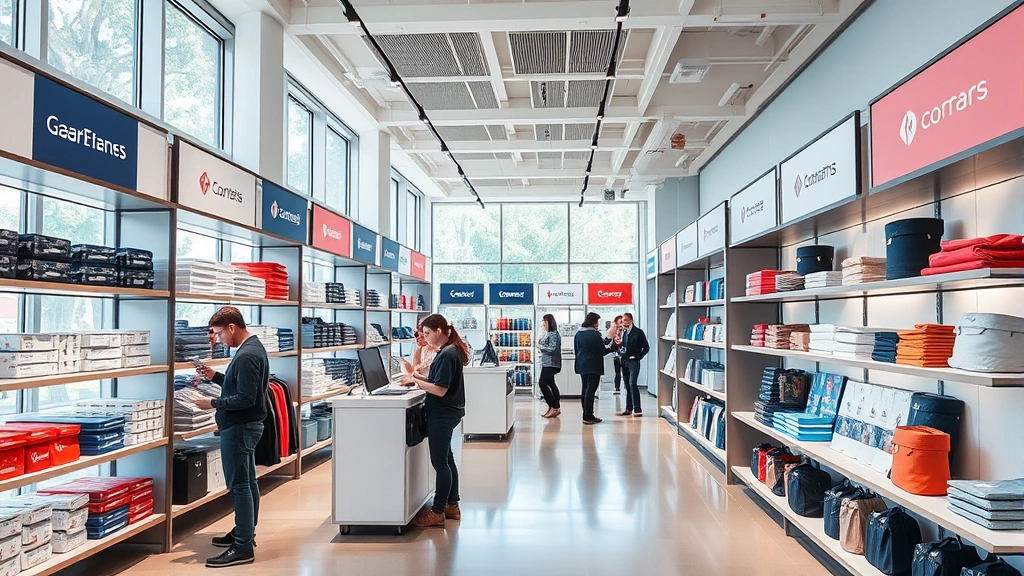
Today’s company stores look dramatically different from their historical counterparts. Contemporary applications range from branded merchandise outlets to comprehensive employee amenity centers. Tech companies like Google and Meta have pioneered integrated campus stores offering curated products, from company apparel to wellness items, creating lifestyle ecosystems rather than mere retail transactions.
Luxury brands have adopted company stores as premium retail experiences, with employees receiving preferential access or discounts. Fashion houses, automotive manufacturers, and consumer goods companies use these spaces to showcase products, reinforce brand identity, and gather market intelligence. The experience becomes as important as the transaction itself.
Specialty retailers have discovered that company stores serve as testing grounds for new concepts, product lines, and customer service innovations. Without the rent pressures of traditional retail locations, companies can experiment with formats, pricing strategies, and merchandising approaches. This aligns with broader trends in merchandising companies adopting omnichannel strategies.
Employee wellness centers represent another significant evolution, integrating retail with health services, fitness facilities, and mental health resources. These comprehensive spaces acknowledge that modern employees value convenience and holistic wellness support, making company stores a vehicle for delivering integrated benefits.
Financial and Operational Considerations
The economics of company stores have shifted substantially. Historical models relied on margin extraction and captive customer bases. Modern iterations succeed through different mechanisms: operational efficiency, brand control, customer data collection, and employee satisfaction metrics that drive retention and productivity.
Operating costs remain significant, encompassing inventory management, staffing, facility maintenance, and technology infrastructure. However, companies increasingly view these expenses as investments in employer branding and employee experience rather than pure profit centers. This perspective aligns with contemporary how to create a business case methodologies that emphasize total value creation beyond immediate financial returns.
Inventory management presents particular challenges. Companies must balance stock availability with carrying costs and obsolescence risks. Seasonal fluctuations, employee preference variations, and unpredictable demand patterns require sophisticated forecasting systems. Technology solutions—from AI-powered inventory systems to real-time demand analytics—have made this significantly more manageable than in previous decades.
Pricing strategy significantly impacts relevance and employee perception. Companies offering substantial discounts (typically 20-40% below retail) generate goodwill and drive utilization. However, this strategy requires careful financial modeling to ensure sustainability. Some organizations implement tiered pricing based on employee tenure or seniority, creating additional engagement incentives.
The financial case strengthens when companies consider indirect benefits: reduced employee turnover costs, improved morale metrics, enhanced recruitment appeal, and valuable market research data. A comprehensive business risk management framework should incorporate these multi-dimensional value drivers rather than focusing exclusively on direct profit margins.
Employee Engagement and Retention Benefits
Modern employees increasingly value convenience, community, and holistic workplace experiences. Company stores contribute meaningfully to all three dimensions. The ability to purchase quality merchandise at discounted prices during work hours addresses practical employee needs while reinforcing organizational care and investment.
Beyond transactional benefits, company stores create social spaces that strengthen workplace community. Employees gather, interact informally, and experience tangible expressions of company culture. This community-building function proves particularly valuable for remote or hybrid work environments, where physical touchpoints become more significant.
Employee merchandise—branded apparel, accessories, and gifts—serves as walking advertisement and badge of belonging. Employees wearing company branded items experience enhanced psychological connection and organizational identification. Research from organizational psychology demonstrates that such visible affiliation strengthens commitment and team cohesion.
Retention research increasingly demonstrates that employees value comprehensive benefits ecosystems over isolated perks. Company stores, particularly when integrated with wellness centers and other amenities, contribute to holistic employee value propositions that compete effectively for talent. This becomes especially critical in competitive labor markets where recruitment and retention costs escalate rapidly.
Wellness-focused company stores directly support employee health objectives, reducing healthcare costs and improving productivity. Companies offering subsidized health products, fitness equipment, and wellness services through company stores report measurable improvements in employee health metrics and reduced absenteeism.
Challenges and Risk Management
Despite renewed relevance, company stores present legitimate operational and strategic challenges. Regulatory compliance remains paramount—companies must ensure pricing structures, employee compensation, and retail practices don’t violate labor laws or wage regulations. Historical abuses created a regulatory framework that, while protecting workers, constrains company store operations.
Reputational risks emerge when company stores are perceived as exploitative, overpriced, or coercive. Public perception matters significantly; any suggestion of returning to historical practices generates backlash. Companies must communicate clearly that employee purchases remain entirely voluntary and competitively priced relative to external alternatives.
Operational complexity increases substantially when company stores integrate with technology systems, inventory management, and employee compensation platforms. System failures, inventory discrepancies, or access problems create frustration and undermine benefits. Robust technology infrastructure becomes essential.
Equity concerns arise when company store access or benefits vary across employee categories. Remote workers, contractors, or international employees may experience limitations that create perceived unfairness. Designing inclusive company store models that serve diverse employee populations requires thoughtful planning and execution.
Market saturation and changing consumer preferences present ongoing challenges. If company stores fail to offer compelling merchandise, competitive pricing, or convenient access, employees simply shop elsewhere. Relevance requires constant curation, merchandising excellence, and responsiveness to employee preferences.
A comprehensive business risk management framework should address these challenges through clear governance, regular compliance audits, employee feedback mechanisms, and continuous improvement processes.
Strategic Implementation Framework
Organizations considering company stores should begin with clear strategic objectives. Are you primarily seeking employee satisfaction improvements, brand reinforcement, revenue generation, or market research capabilities? Clarity on primary objectives shapes all subsequent decisions regarding format, merchandise selection, and operational investment.
Conducting thorough employee research precedes implementation. Surveys, focus groups, and interviews should explore employee interest, preferred merchandise categories, desired price points, and preferred access mechanisms. This research prevents investing in company stores that fail to meet actual employee needs.
Pilot programs minimize risk while gathering operational intelligence. Starting with limited merchandise categories, restricted hours, or single-location tests allows refinement before broader rollout. Pilot results inform scaling decisions and budget allocations.
Technology infrastructure requires substantial upfront investment. Modern company stores integrate with HR systems, payroll platforms, inventory management software, and customer data analytics. Cloud-based solutions reduce capital requirements while improving scalability and flexibility.
Staffing decisions significantly impact success. Dedicated, knowledgeable staff who understand company culture and employee preferences create superior experiences. Training programs should emphasize customer service, product knowledge, and cultural representation.
Pricing strategy deserves careful deliberation. While discounts drive utilization, sustainable models require margins sufficient to cover operations. Most successful contemporary company stores implement 15-30% employee discounts while maintaining healthy operational margins.
Merchandise curation separates successful company stores from mediocre ones. Thoughtful selection reflecting employee demographics, preferences, and lifestyle aspirations outperforms generic assortments. Regular feedback loops and sales analysis guide continuous assortment refinement.
Integration with broader employee benefits strategy amplifies impact. Company stores aligned with wellness initiatives, professional development, and team-building activities create reinforcing value propositions that drive engagement and retention.
Measurement frameworks should track multiple success metrics: employee utilization rates, customer satisfaction scores, retention correlations, recruitment impact, and financial performance. This multi-dimensional approach captures the full value proposition beyond simple profit calculations.
FAQ
Are company stores legal today?
Yes, company stores operate legally in most jurisdictions, provided they comply with wage regulations, pricing transparency, and employee choice protections. Historical exploitative practices are prohibited, but legitimate retail operations serving employees are permitted and increasingly common.
How do modern company stores differ from historical ones?
Historical company stores often trapped workers in debt cycles through inflated pricing and scrip currency systems. Modern versions operate as voluntary employee benefits with competitive pricing, transparent transactions, and integration with contemporary technology and wellness initiatives. They emphasize convenience and community rather than profit extraction.
What merchandise do contemporary company stores typically offer?
Modern company stores range from branded apparel and accessories to comprehensive wellness products, tech gadgets, home goods, and specialty items. Some integrate cafeterias, fitness centers, and health services. Merchandise selection reflects employee demographics and organizational culture.
Do company stores significantly impact employee retention?
Research suggests company stores contribute modestly but meaningfully to retention when integrated with broader benefits ecosystems. While not a primary retention driver independently, they reinforce employee satisfaction and organizational commitment, particularly when combined with competitive compensation and career development opportunities.
What are the primary challenges in operating company stores?
Key challenges include inventory management complexity, ensuring regulatory compliance, maintaining competitive pricing while achieving operational sustainability, serving diverse employee populations equitably, and continuously curating relevant merchandise. Technology infrastructure and staff training significantly influence success.
Can remote employees benefit from company stores?
Yes, modern company stores increasingly serve remote employees through online platforms, home delivery, or pickup locations. This requires robust technology infrastructure and logistics capabilities but extends the benefits to distributed workforces that lack physical campus access.
How do company stores generate value beyond direct sales?
Beyond merchandise sales, company stores provide valuable market research data, reinforce brand identity, strengthen workplace community, support recruitment and retention, integrate wellness benefits, and create physical expressions of company culture that enhance employee connection and organizational commitment.