
Santa Cruz Guitars: Why Artisans Choose Them
The Santa Cruz guitar company stands as a beacon of craftsmanship in an industry increasingly dominated by mass production. Founded in 1976 by Richard Hoover in Santa Cruz, California, this boutique manufacturer has cultivated a legendary reputation among professional musicians, luthiers, and serious enthusiasts worldwide. What began as a small workshop has evolved into a testament to the enduring value of handcrafted instruments, where each guitar represents years of accumulated expertise and an unwavering commitment to sonic excellence.
In a landscape where offshore manufacturing and cost-cutting have become standard practice, Santa Cruz Guitars maintains an almost defiant stance: every instrument is built by hand, using premium tonewoods, and subjected to rigorous quality control. This approach isn’t merely nostalgic—it’s a deliberate business philosophy that has resonated with discerning musicians who understand that true value transcends price tags. The company’s success demonstrates that artisanal excellence, when executed with precision and integrity, creates a sustainable competitive advantage that mass-market competitors simply cannot replicate.
The Artisan Philosophy Behind Santa Cruz Guitars
Richard Hoover’s founding vision for the Santa Cruz guitar company was revolutionary for its time and remains distinctive today. Rather than pursuing rapid scaling and market share expansion, Hoover established a business model centered on mastery, experimentation, and continuous refinement. This philosophy directly influences how the company operates, from hiring decisions to production capacity management to customer relationships.
The artisan approach at Santa Cruz represents a calculated rejection of conventional business wisdom. While most guitar manufacturers pursue economies of scale, Santa Cruz intentionally limits production to approximately 2,000 instruments annually—a fraction of what their facilities could theoretically produce. This constraint isn’t a limitation; it’s a feature. By maintaining this production ceiling, the company ensures that every guitar receives the attention of experienced builders who have spent decades perfecting their craft. This commitment to quality over quantity has become the company’s most powerful competitive differentiator.
The philosophy extends to workforce development. Santa Cruz maintains an apprenticeship program that trains the next generation of luthiers, ensuring that institutional knowledge remains within the organization. Builders spend years learning the intricacies of wood selection, joinery, finishing, and setup before they independently craft instruments. This investment in human capital creates a sustainable advantage: the company’s reputation for excellence becomes self-reinforcing as experienced craftspeople mentor newcomers to maintain exacting standards.
Handcrafted Excellence and Quality Control
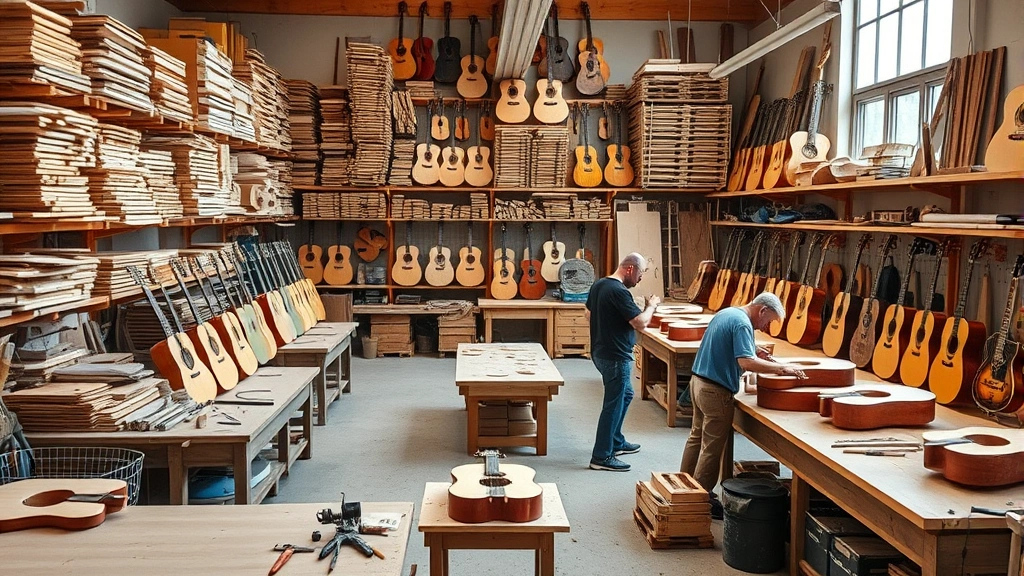
Every Santa Cruz guitar is handmade from start to finish—a statement that carries genuine weight in modern manufacturing. Unlike competitors that employ CNC machinery for body shaping or assembly line techniques for construction, Santa Cruz builders use traditional hand tools, knowledge accumulated through thousands of hours of practice, and an intuitive understanding of wood behavior that no machine can replicate.
The quality control process at Santa Cruz is equally rigorous. Each instrument undergoes multiple inspection stages, with experienced builders evaluating every aspect: wood grain integrity, joinery precision, finish quality, and most importantly, acoustic performance. Instruments that fail to meet exacting standards are either rebuilt or, in rare cases, set aside rather than released to customers. This zero-compromise approach occasionally results in production delays, but it reinforces the brand promise that every Santa Cruz guitar represents genuine excellence.
The handcrafted nature of production also creates traceability and accountability that mass manufacturers cannot provide. Many Santa Cruz guitars include builder signatures, creating a direct connection between craftsperson and owner. This personalization transforms a transaction into a relationship, which has profound psychological and economic implications. Customers don’t simply purchase guitars; they acquire instruments connected to specific artisans whose reputation and livelihood depend on their work quality.
Tonewood Selection and Acoustic Engineering
The sonic character of a guitar depends fundamentally on wood selection, and Santa Cruz approaches this dimension with scientific rigor combined with artisanal intuition. The company maintains relationships with specialty suppliers who provide premium tonewoods—Sitka spruce for soundboards, Indian rosewood for backs and sides, mahogany for necks—sourced from sustainable sources with careful attention to grain characteristics and acoustic properties.
Wood selection at Santa Cruz transcends simple procurement. Builders evaluate each piece for specific acoustic qualities: responsiveness, sustain characteristics, frequency response distribution, and how different woods interact within the guitar’s overall design. Two pieces of Indian rosewood from the same forest can have substantially different acoustic properties; experienced Santa Cruz builders can identify these variations through visual inspection and tactile assessment.
The company’s approach to acoustic engineering reflects decades of experimentation and refinement. Santa Cruz guitars employ proven bracing patterns—the internal support structure that shapes acoustic response—that have been tested and optimized across thousands of instruments. Rather than pursuing novel designs for marketing purposes, the company refines existing designs based on accumulated knowledge. This conservative approach to innovation prioritizes sonic reliability and consistency, ensuring that customers purchasing Santa Cruz guitars know exactly what acoustic characteristics to expect.
This commitment to acoustic excellence has created a secondary market where used Santa Cruz guitars often appreciate in value. Professional musicians recognize that a well-maintained Santa Cruz instrument from decades past remains competitive with current production models, a rarity in the instrument market. This durability and timeless quality transforms Santa Cruz guitars into functional assets rather than mere consumables.
Why Professional Musicians Prefer Santa Cruz
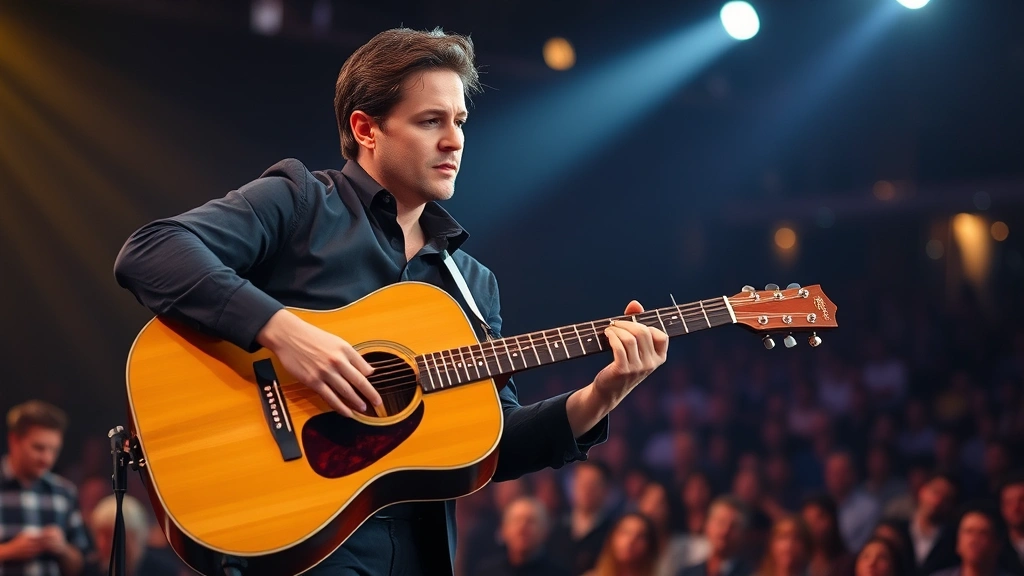
The professional musician community represents Santa Cruz’s most influential constituency. Artists who depend on their instruments for performances, recordings, and touring have the expertise to evaluate acoustic quality objectively and the financial means to select from any manufacturer. The overwhelming preference among touring professionals for Santa Cruz instruments serves as powerful third-party validation.
Professional endorsements carry particular weight because they emerge from practical necessity rather than marketing relationships. Musicians choose Santa Cruz guitars because they perform reliably across diverse acoustic environments—concert halls, recording studios, outdoor venues—and maintain consistency across multiple instruments. A touring artist might own several Santa Cruz guitars specifically because the acoustic characteristics between instruments remain sufficiently similar to prevent jarring transitions during performances.
The reliability factor deserves emphasis. Professional musicians cannot afford instruments that require constant adjustment or exhibit tonal inconsistencies. Santa Cruz’s reputation for delivering guitars that remain stable across temperature and humidity variations—common challenges in touring—creates tremendous practical value. This reliability directly impacts career success, making the investment in premium instruments economically rational from a professional perspective.
Beyond acoustic performance, the prestige associated with Santa Cruz instruments carries professional significance. When audiences and peers observe a musician performing on a Santa Cruz guitar, it communicates a commitment to quality and craftsmanship. This symbolic dimension, while less tangible than acoustic properties, influences professional reputation and career trajectory. The Santa Cruz guitar company has effectively cultivated brand prestige that extends beyond the instrument itself to encompass broader artistic values and professional standards.
Business Model Innovation in Luxury Instruments
While Santa Cruz maintains traditional craft methods, the company has innovated substantially in business model dimensions. The approach to customer relationship management and direct sales has created competitive advantages that complement the artisanal production philosophy.
Santa Cruz maintains direct relationships with customers through a carefully curated dealer network and direct sales channels. Rather than pursuing mass distribution through large retailers, the company partners with specialty dealers who understand the instruments and can provide informed guidance to customers. This selective distribution strategy maintains brand positioning and ensures that customers receive expert consultation rather than transactional sales experiences.
The company has also implemented sophisticated business process automation in areas that don’t compromise craftsmanship. Order management, inventory tracking, and customer communication systems leverage technology to enhance efficiency while production remains entirely handcrafted. This hybrid approach balances artisanal values with operational scalability.
Pricing strategy at Santa Cruz reflects the actual economics of handcrafted production rather than attempting artificial cost reduction. Entry-level Santa Cruz models begin around $2,500, with premium instruments reaching $5,000 or beyond. These prices accurately reflect the labor costs, material expenses, and overhead associated with producing instruments in a high-wage California location. Rather than competing on price, Santa Cruz competes on value—the relationship between cost and acoustic/build quality—where the company maintains substantial advantages over competitors.
Sustainability and Ethical Sourcing
The Santa Cruz guitar company has positioned environmental stewardship and ethical sourcing as core business values rather than marketing initiatives. This commitment reflects both genuine organizational values and recognition that discerning customers increasingly expect such practices from premium brands.
Tonewood sourcing exemplifies this commitment. Santa Cruz maintains long-term relationships with suppliers who provide documentation of sustainable forestry practices. The company has supported reforestation initiatives and maintains transparency about supply chain origins. This approach differs markedly from manufacturers that pursue the lowest-cost wood sources regardless of environmental implications.
The handcrafted production model itself carries sustainability benefits. By producing durable instruments designed for multi-decade lifespans, Santa Cruz reduces the resource consumption associated with instrument replacement cycles. A musician who purchases a Santa Cruz guitar at age twenty-five and plays it for fifty years consumes far fewer resources than a customer who replaces instruments every five to ten years. This longevity represents genuine environmental stewardship at scale.
The company’s commitment to ethical practices extends to workforce treatment and community relationships. Santa Cruz maintains employment practices that provide competitive compensation, benefits, and career development opportunities—substantially above minimum industry standards. This investment in workforce quality creates stability and reduces turnover, which further reinforces the quality advantages associated with experienced craftspeople.
The Investment Value of Santa Cruz Instruments
An often-overlooked dimension of Santa Cruz guitars is their investment characteristics. Unlike most musical instruments that depreciate substantially upon purchase, Santa Cruz guitars frequently maintain or appreciate in value, creating economic dynamics that influence purchasing decisions.
This investment value emerges from multiple factors. First, the limited production creates scarcity; Santa Cruz produces approximately one-tenth the instruments of major competitors, making used models increasingly difficult to locate. Second, the proven longevity and acoustic consistency mean that vintage Santa Cruz instruments remain competitive with current production models. A 1985 Santa Cruz guitar from the company’s early years performs comparably to contemporary instruments, an unusual characteristic in instrumental markets where newer designs typically offer performance advantages.
Third, the brand prestige and professional musician endorsements create stable demand that supports secondary market values. A musician who purchases a Santa Cruz guitar can confidently expect to recover 60-80% of the purchase price if circumstances require resale—a recovery rate far exceeding typical musical instruments. This economic characteristic transforms the purchase from pure consumption into a quasi-investment, making the premium pricing more palatable to financially sophisticated customers.
The investment dimension also reflects broader economic principles about quality and durability. Academic research on luxury goods and consumer behavior, documented by institutions like Harvard Business School, demonstrates that premium-quality products with strong brand positioning maintain value more effectively than lower-cost alternatives. Santa Cruz guitars exemplify this principle in the musical instrument market.
FAQ
What makes Santa Cruz guitars different from other handmade guitar manufacturers?
Santa Cruz combines several distinctive elements: limited production capacity (approximately 2,000 instruments annually), rigorous quality control that sometimes results in instruments being rebuilt rather than released, direct involvement of experienced luthiers in every production stage, and a business model that prioritizes long-term reputation over short-term profitability. Additionally, the company’s commitment to acoustic excellence and consistent quality across multiple instruments distinguishes it from smaller one-person shops that may offer inconsistent results.
Are Santa Cruz guitars worth the premium price?
The value proposition depends on individual priorities. For professional musicians, recording artists, and serious enthusiasts who require consistent acoustic performance and reliability, Santa Cruz guitars typically offer superior value relative to price. The investment characteristics—strong secondary market values and durability—also improve the cost-benefit analysis. For casual players, less expensive alternatives may provide adequate functionality. However, the economics of quality generally support the premium pricing when acoustic performance and longevity are priorities.
How long does it take to receive a Santa Cruz guitar?
Production timelines vary based on current order backlogs and customization requests. Standard models typically involve waiting periods of six months to one year, reflecting the handcrafted production process and limited annual capacity. Custom orders with specific wood selections or design variations may require longer timeframes. This extended timeline is intentional, ensuring that builders maintain quality standards rather than accelerating production to meet artificial deadlines.
Do Santa Cruz guitars appreciate in value?
Used Santa Cruz guitars frequently maintain 60-80% of original purchase price, and some vintage models have appreciated substantially. This value retention reflects limited production, strong brand prestige, and the instruments’ proven longevity. However, appreciation is not guaranteed; condition, specific model, and market demand influence secondary market values. Nevertheless, Santa Cruz guitars typically depreciate far less than comparable instruments from other manufacturers.
What wood species does Santa Cruz use?
Santa Cruz employs premium tonewoods including Sitka spruce for soundboards (the primary wood affecting acoustic character), Indian rosewood for backs and sides, and mahogany for necks. The company sources these materials from sustainable suppliers with careful attention to acoustic properties and environmental impact. Specific wood selections vary across different guitar models and custom orders.
Can I customize a Santa Cruz guitar?
Yes, Santa Cruz offers customization options including wood selections, finish colors, and specific design modifications. Custom orders require direct communication with the company and typically involve extended production timelines (potentially 12-18 months) and premium pricing reflecting the additional labor and material costs. The customization process allows customers to create instruments tailored to specific preferences and requirements.


