Table of Contents
Introduction
Running a business without understanding where you stand? That’s like driving blindfolded. And let’s be honest—most business owners have felt that way at some point. You know you need direction, but with so many moving parts, how do you figure out what’s actually working and what isn’t? Enter SWOT analysis. This simple yet powerful framework gives you the clarity you’ve been searching for by helping you identify your Strengths, Weaknesses, Opportunities, and Threats.
Think of SWOT analysis as your business reality check. It’s not just another corporate buzzword or checkbox exercise. This tool actually works—whether you’re launching your first startup or you’ve been in business for decades. For new entrepreneurs, understanding the advantages of a sole proprietorship, such as simplicity and control, can help you identify key strengths right from the start. And if you’re exploring growth opportunities, insights from business incubators and how they accelerate startup growth might reveal external opportunities you hadn’t considered. The beauty of SWOT? It helps you spot risks before they become problems while ensuring you don’t miss golden opportunities sitting right in front of you.
Here’s what’s happening right now: businesses are getting hit from all directions. Technology changes overnight. Customer expectations shift constantly. One day you’re on top, the next day you’re scrambling to keep up. That’s exactly why understanding the importance of business continuity planning matters so much—it’s all about being prepared. But here’s the cool part: you can turn this chaos into opportunity. By leveraging tools like business communication platforms and smart CRM systems, you can actually transform weaknesses into strengths. SWOT analysis shows you exactly how to do this.
Now, don’t forget about the external game. Your internal assessment is only half the picture. You need to understand what’s happening outside your four walls too. That’s where marketing strategy essentials come into play. When you combine solid marketing strategies with your internal SWOT insights, magic happens. You start seeing connections between your capabilities and market opportunities that you completely missed before.
What You’ll Learn in This Guide
Ready to master SWOT analysis for your business? Here’s exactly what we’re going to cover together:
- Understanding the Basics: We’ll break down what SWOT analysis really is and why it’s become the go-to framework for smart business owners who want to assess both their internal capabilities and external market conditions.
- Detailed Examples: You’ll see real-world examples for each SWOT quadrant—strengths, weaknesses, opportunities, and threats—so you can understand how actual businesses use this analysis in practice.
- Effective Steps for Conducting SWOT: Learn the exact process for gathering data, getting the right people involved, organizing your findings, and turning your analysis into actionable strategies that actually move the needle.
- Common Pitfalls to Avoid: We’ll show you the biggest mistakes people make (like being too optimistic or failing to follow through) and give you practical tips to ensure your SWOT analysis leads to real business improvements.
As we dig deeper, you’ll discover how a well-executed SWOT analysis can completely transform your business strategy. Whether you’re just starting out or you’ve been in the game for years, understanding different business leadership styles and how to adopt the right approach will help you navigate the strengths and weaknesses you uncover. Plus, we’ll explore how effective networking strategies can unlock new opportunities that strengthen your external SWOT factors.
We’ll also look at how integrating business sustainability strategies can boost your opportunity quadrant while reducing potential threats. And because we’re living in a digital world, we’ll show you how modern business management software can help you monitor and refine your SWOT action plans over time. By the time we’re done, you’ll have everything you need to conduct SWOT analysis like a pro.
Ready to get started? By the end of this guide, you’ll know exactly how to conduct your own thorough SWOT analysis, sidestep the common traps, and turn your insights into strategic action. Let’s take your business evaluation skills to the next level and give you the competitive edge that comes from making informed, strategic decisions.
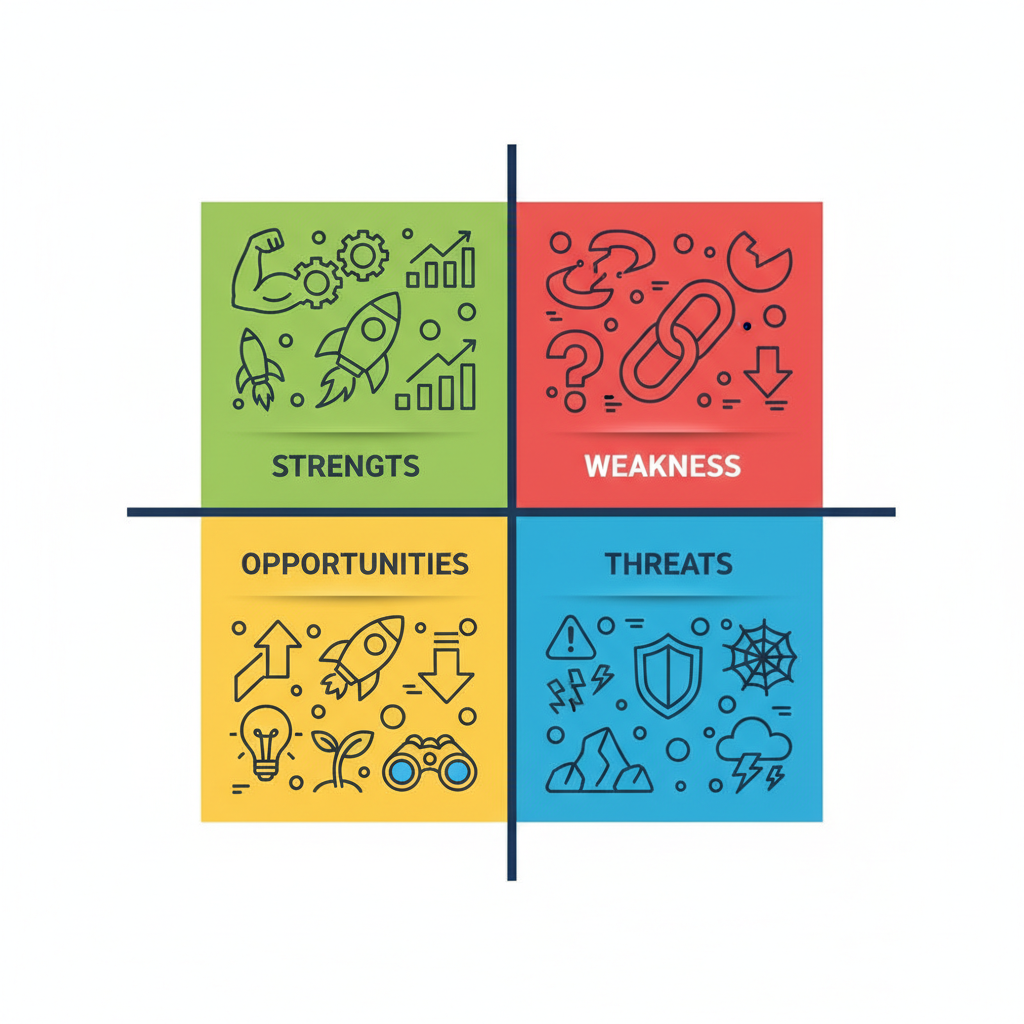
Now that we’ve covered what SWOT analysis is and why it matters, let’s get practical. How do you actually use this framework to make real business decisions? That’s where things get interesting. A solid SWOT analysis helps you see both sides of your business—what’s working internally and what’s happening in the world around you. When done right, it becomes your roadmap for building on strengths, fixing weak spots, and staying ahead of whatever the market throws your way. We’re going to break down the four key parts of SWOT with real examples you can relate to, then walk through exactly how to run your own analysis step by step.
Exploring the Four Quadrants of SWOT Analysis with Practical Business Examples
Think of SWOT as four windows into your business. Two look inward (strengths and weaknesses), and two look outward (opportunities and threats). Together, they give you the complete picture. Your internal strengths might be things like a customer base that loves you, a brand people recognize, or some cool technology nobody else has. These are your secret weapons. Weaknesses? Maybe you’re short on cash, behind on digital trends, or missing key skills on your team. The thing is, you can actually do something about these since they’re inside your control. External opportunities could be new market trends, potential partnerships, or changes that open doors you didn’t see before. And threats—well, those are the curveballs like new competitors, economic shifts, or regulations that could mess with your plans. Want to see how business structure affects these internal factors? Check out the advantages of a sole proprietorship to understand how your setup impacts your strengths and weaknesses.
Here’s where it gets real. Let’s say you’re a tech startup with killer cloud computing skills—that’s your strength, and you can use it to break into new markets. Or maybe you’re a retail company realizing your online game is weak. That weakness just became your priority for investment. Opportunities pop up when industries shift or customers change their habits. Miss them, and your competitors won’t. Threats like supply chain meltdowns or economic downturns? They’re coming whether you’re ready or not. That’s why understanding the importance of business continuity planning makes perfect sense—it’s all about staying prepared when external threats hit.
Key Aspects of SWOT Quadrants
Each piece of the SWOT puzzle needs its own attention. You can’t just skim the surface and expect magic to happen.
- Strengths: These are internal assets and capabilities that a business excels in, such as a reputable brand name, patented technology, efficient processes, or skilled workforce. For example, a company’s strong customer relationships can foster repeat business and enhance market loyalty.
- Weaknesses: These refer to internal limitations or deficiencies that may constrain a company’s performance, including gaps in expertise, outdated technology, or insufficient capital. Recognizing these allows leaders to prioritize areas for improvement and invest resources wisely.
- Opportunities: External chances to expand or improve market position, often driven by trends like digital innovation, untapped demographics, or regulatory changes favoring the industry. Identifying opportunities early helps businesses stay ahead of competitors and innovate successfully.
- Threats: External challenges that may hinder business success, including competitor actions, economic shifts, changing consumer preferences, or legal regulations. Proactive mitigation and risk management ensure preparedness for these impacts.
The magic happens when you connect the dots between all four areas. Your strengths can help you grab opportunities. Your weaknesses might make certain threats scarier. It’s all connected. Once you get this big-picture view, you’re ready to actually run a SWOT analysis that produces results you can act on.
Step-by-Step Guide to Conducting an Effective SWOT Analysis for Your Business
Running a SWOT analysis isn’t just about filling in four boxes and calling it done. You need a game plan. Start with good preparation, dig deep into each area, and most importantly—actually do something with what you find. The best SWOT sessions bring together people from different parts of your business. Why? Because the marketing person sees things the operations person misses, and vice versa. Before you dive in, make sure you understand how to use customer relationship management since customer insights often feed directly into your SWOT findings.
But here’s what separates the pros from everyone else: they don’t just complete the analysis and file it away. They turn insights into action plans with real deadlines and measurable goals. They revisit and update their SWOT regularly because markets change, competitors evolve, and what was a strength last year might be table stakes today. Speaking of staying prepared for the long haul, learning about business sustainability strategies can help you build resilience right into your planning process.
Key Aspects of Conducting SWOT Analysis
Getting SWOT right means following a process that actually works. Here’s how the best companies do it:
- Preparation: This initial step focuses on gathering relevant data and involving the right team members who bring varied expertise and perspectives. Collecting market research, financial data, customer feedback, and competitor insights equips the group with necessary information for meaningful evaluation.
- Analysis: Categorizing factors into the four SWOT quadrants requires open discussion and critical thinking. Here, the aim is to identify real strengths and weaknesses internally, while recognizing genuine external opportunities and threats based on market intelligence and environmental scanning.
- Action Planning: Using the insights gained, businesses then create strategic initiatives that leverage strengths and opportunities, while addressing weaknesses and guarding against threats. This phase includes setting clear goals, defining responsibilities, and establishing monitoring mechanisms to track progress and adapt as needed.
- Continuous Review: SWOT analysis isn’t a one-time exercise. Regular updates reflecting changing internal conditions and market environments ensure strategies remain relevant and effective, helping businesses stay agile in dynamic competitive landscapes.

So here we are—you’ve just walked through everything you need to know about SWOT analysis. And honestly? It’s one of those business tools that actually lives up to the hype. Here’s the thing: your business’s internal strengths and weaknesses matter just as much as what’s happening outside your walls. Those opportunities and threats aren’t going anywhere. But when you understand how all four pieces work together? That’s when you can start leveraging what you do best, fix what’s broken, jump on growth opportunities, and navigate challenges without breaking a sweat.
The real-world examples we covered weren’t just for show—they demonstrate how SWOT transforms from theory into action. Whether you’re running a startup from your garage or managing an established company, the insights are the same. You get to make decisions based on actual data, not gut feelings or wishful thinking.
Now, let’s be real about something: doing SWOT right takes effort. You can’t just throw together a quick brainstorm and call it good. The process we outlined—proper preparation, getting your team involved, sorting factors into the right buckets, and (this is crucial) actually turning findings into strategic moves—that’s what separates companies that grow from those that stagnate. Keep reviewing your analysis regularly too. Markets shift. Competition evolves. Your SWOT should evolve with them.
And those common mistakes we talked about? They’re not theoretical. Bias creeps in when you’re not careful. People ignore external factors because they’re harder to control. Teams create beautiful SWOT matrices that never leave the conference room. Don’t be that business. Make your analysis work for you, not against you.
Think of SWOT as your business GPS. It shows you where you are, where you can go, and what roadblocks might pop up along the way. You’re now equipped to assess your business landscape with clear eyes—no rose-colored glasses, no doom-and-gloom pessimism. Just honest evaluation that sharpens your competitive edge and fuels innovation. Regular SWOT insights build resilience and keep you ready for whatever comes next. Instead of confusion and uncertainty, you get clarity and confident action.
Ready to take the next step? Since you’ve got strategy planning down, let’s talk about execution. Customer relationships are where strategies either succeed or fail, and our detailed guide on how to use customer relationship management shows you how to leverage technology for better interactions and stronger client retention. Want to think bigger picture? Check out our resource on business sustainability strategies—because balancing profit with purpose isn’t just trendy, it’s smart business. And when you’re ready to bulletproof your operations, understanding the importance of business continuity planning gives you the playbook for handling disruptions before they derail your progress.
SWOT analysis isn’t a one-and-done exercise—it’s a mindset. Use it consistently, and you’ll have a robust toolkit for navigating today’s complex business environment. Don’t just survive the competition and market changes. Thrive in them. With solid analysis, strategic planning, and continuous improvement, your business isn’t just ready for growth—it’s positioned for innovation and long-term success. Confidence comes from informed decisions. You’ve got the knowledge now. Time to put it to work and turn your business vision into reality.
Frequently Asked Questions
-
What types of businesses can benefit from SWOT analysis?
- All types and sizes of businesses can benefit from the insights SWOT analysis provides, whether you’re a startup, SME, or large corporation.
-
How often should a business conduct a SWOT analysis?
- It is recommended to conduct a SWOT analysis at least annually or whenever significant internal or external changes occur to stay aligned with market realities.
-
Can SWOT analysis be used for personal career planning?
- Yes, SWOT analysis can be adapted for personal use to evaluate career opportunities, strengths, weaknesses, and external challenges, helping with decision-making.