Who Owns Kia? Industry Overview
Kia Corporation stands as one of the world’s most recognizable automotive manufacturers, yet many consumers remain unclear about its ownership structure and parent company relationships. Understanding who owns Kia requires examining the complex web of South Korean corporate conglomerates, strategic partnerships, and global market positioning that defines the modern automotive industry. The company’s ownership and governance model reflects decades of evolution, strategic consolidation, and the unique characteristics of South Korean business structures known as chaebols.
The question of Kia’s ownership is not as straightforward as identifying a single proprietor. Instead, Kia operates within a sophisticated corporate ecosystem that involves majority stakeholder relationships, institutional investors, and strategic alliances that collectively shape the company’s direction and operational philosophy. This ownership structure has profound implications for how Kia develops vehicles, invests in emerging technologies, and positions itself within the competitive global automotive landscape.
Hyundai Motor Group: The Parent Structure
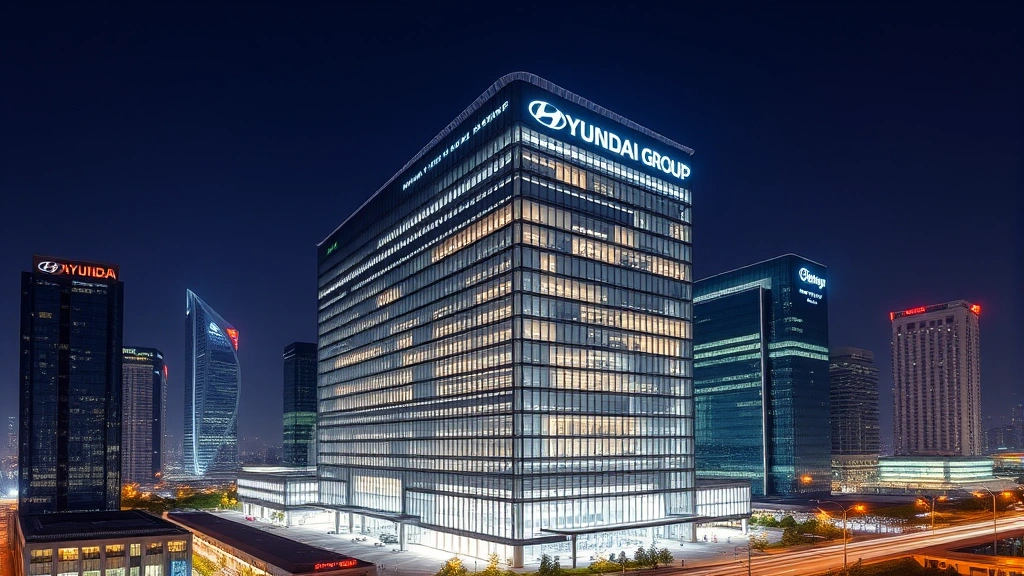
Kia is primarily owned and controlled by Hyundai Motor Group, one of South Korea’s largest and most influential business conglomerates. Hyundai Motor Group maintains a controlling stake in Kia Corporation through its flagship subsidiary, Hyundai Motor Company. This relationship positions Kia as a critical component within a much larger automotive and industrial ecosystem that generates hundreds of billions of dollars in annual revenue.
The Hyundai Motor Group structure is characteristic of South Korean chaebols—family-controlled conglomerates that dominate the nation’s economy. The group’s ownership traces back to the founding Chung family, whose patriarch Chung Ju-yung established Hyundai Engineering and Construction in 1947. Over subsequent decades, the Chung family’s various business divisions consolidated into what is now Hyundai Motor Group, making it one of Asia’s most powerful industrial organizations.
Hyundai Motor Company, the group’s automotive flagship, owns approximately 51% of Kia Corporation’s shares, making it the dominant shareholder and primary decision-maker regarding Kia’s strategic direction. This majority stake provides Hyundai Motor Company with board representation, strategic planning authority, and operational oversight capabilities that fundamentally shape how Kia functions as a distinct brand within the larger group portfolio.
Ownership Hierarchy and Stakeholder Breakdown
Understanding Kia’s complete ownership picture requires examining the distribution of shares among various stakeholder categories. While Hyundai Motor Company holds the controlling interest, Kia’s publicly traded status means that institutional investors, individual shareholders, and employee stock ownership plans collectively represent the remaining shares.
The breakdown of Kia’s ownership includes:
- Hyundai Motor Company – Approximately 51% controlling stake, exercised through the parent company’s board-level influence and strategic directives
- Institutional Investors – Global asset managers, pension funds, and investment firms collectively hold substantial minority positions, particularly among international shareholders
- Individual Shareholders – Retail investors and Korean domestic shareholders maintain equity stakes acquired through public markets
- Employee Stock Ownership Plans – Worker-shareholders hold portions of company equity through various employee benefit programs and compensation structures
This multi-stakeholder structure creates interesting dynamics within corporate governance. While Hyundai Motor Company maintains operational control through its majority stake, the presence of significant institutional investors—particularly large Western asset management firms—introduces pressure for enhanced transparency, environmental sustainability commitments, and governance standards that reflect global best practices.
The relationship between parent company oversight and subsidiary autonomy represents a critical tension within the Hyundai Motor Group structure. Kia maintains distinct brand identity, separate design philosophies, and independent product lines that differentiate it from Hyundai-branded vehicles. This separation, while operationally managed by common ownership, allows Kia to compete effectively in market segments where Hyundai might cannibalizes sales or where distinct brand positioning provides strategic advantage.
Historical Development and Acquisition
Kia’s journey to becoming part of the Hyundai Motor Group involved several transformative phases that fundamentally altered the company’s trajectory. Originally established in 1944 as Kyungsung Precision Industry, Kia evolved from a bicycle and motorcycle manufacturer into one of South Korea’s major automotive producers during the rapid industrialization of the 1960s through 1980s.
The company faced severe financial distress during the 1997 Asian financial crisis, which devastated South Korean conglomerates and forced massive corporate restructuring. Hyundai Motor Company acquired controlling interest in the struggling Kia Motors in 1998 through a complex transaction that involved government intervention and creditor negotiations. This acquisition represented a strategic consolidation move that strengthened Hyundai’s competitive position while preserving Kia as an independent brand with distinct market positioning.
The acquisition was not merely a financial transaction but rather a strategic partnership agreement that required establishing new operational frameworks, management structures, and investment protocols. Rather than absorbing Kia entirely into Hyundai operations, the parent company recognized that maintaining Kia’s brand identity, separate design language, and independent product development capabilities would maximize shareholder value by serving distinct market segments and customer preferences.
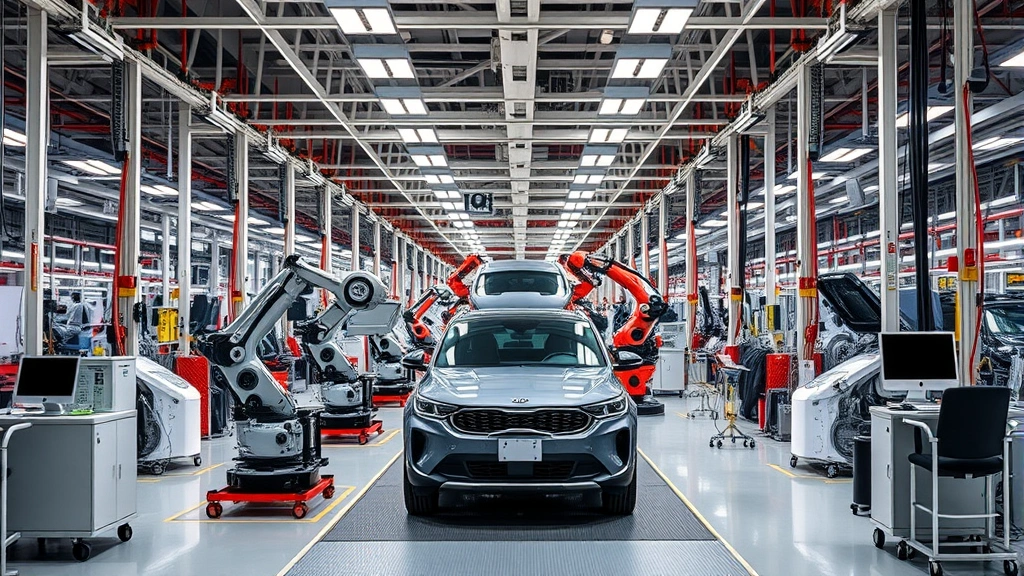
Throughout the 2000s and 2010s, Hyundai Motor Group invested billions into modernizing Kia’s manufacturing facilities, developing new product lines, and establishing global distribution networks. These capital investments, funded through the parent company’s financial resources and access to international capital markets, enabled Kia to expand from a regional Korean manufacturer into a truly global automotive competitor with significant market presence across North America, Europe, and Asia-Pacific regions.
Strategic Implications of Current Ownership
The ownership structure under Hyundai Motor Group creates several strategic advantages and operational implications that directly influence how Kia competes in global markets. Understanding these implications provides insight into why the current ownership arrangement has proven durable and mutually beneficial.
Shared Technology and Platform Development
Parent company ownership enables Kia to leverage Hyundai Motor Group’s substantial research and development investments, manufacturing expertise, and technology platforms. The group invests over $5 billion annually in automotive technology development, including electric vehicle propulsion systems, autonomous driving capabilities, and advanced manufacturing processes. Kia benefits from these investments through platform sharing agreements, technology licensing arrangements, and collaborative product development initiatives.
The E-GMP (Electric-Global Modular Platform) exemplifies this benefit—a collaborative development between Hyundai and Kia that provides both brands with cutting-edge electric vehicle architecture while maintaining distinct design and feature differentiation. This shared platform approach reduces individual development costs while accelerating time-to-market for new electric models.
Financial Stability and Capital Access
Ownership by Hyundai Motor Group provides Kia with financial stability and preferential access to capital markets that would be unavailable to an independent competitor of similar size. The parent company’s investment-grade credit rating, substantial cash reserves, and demonstrated ability to service debt enables Kia to fund massive capital expenditure programs necessary for manufacturing facility modernization, product development, and electric vehicle transition investments.
Operational Synergies
Parent company ownership facilitates operational synergies across manufacturing, procurement, and supply chain management. Consolidated purchasing power enables both Hyundai and Kia to negotiate favorable pricing with component suppliers, achieving cost advantages that improve competitive positioning. Manufacturing expertise flows bidirectionally, with Kia’s innovations in certain areas informing Hyundai’s practices and vice versa.
Brand Portfolio Strategy
The Hyundai Motor Group structure treats Hyundai and Kia as distinct brands serving different market segments and customer demographics. Hyundai typically positions as a value-oriented brand emphasizing reliability and affordability, while Kia has increasingly moved upmarket, emphasizing design, technology, and premium features. This multi-brand strategy allows the parent company to compete across a broader range of market segments and price points than would be possible with a single brand.
Global Operations and Regional Subsidiaries
Kia’s global expansion under Hyundai Motor Group ownership has created complex subsidiary structures across major automotive markets. Understanding regional ownership and operational arrangements provides clarity on how the company executes its worldwide strategy while maintaining parent company oversight.
Kia operates major manufacturing facilities in South Korea, the United States, Mexico, India, Slovakia, and China, with each regional operation maintaining distinct governance structures that balance local market requirements with parent company strategic direction. The North American operations, including substantial manufacturing capacity in Georgia, operate under Kia Motors Manufacturing Georgia, a subsidiary that maintains operational autonomy while reporting to parent company leadership.
Regional subsidiaries implement business continuity planning frameworks that address local market conditions, regulatory requirements, and supply chain vulnerabilities. This regional approach, coordinated through parent company oversight, enables Kia to respond effectively to local market dynamics while maintaining global strategic coherence.
The company’s Chinese operations, managed through joint ventures with local partners, represent a particularly sophisticated ownership arrangement. Rather than maintaining majority control, Kia operates through 50-50 partnerships with Chinese automotive companies, reflecting regulatory requirements and strategic considerations specific to the Chinese market. These arrangements demonstrate how parent company ownership accommodates complex regional requirements while pursuing global objectives.
Future Ownership Outlook
The automotive industry’s transformation toward electrification, autonomous driving, and mobility services creates uncertainty regarding long-term ownership structures. Hyundai Motor Group faces strategic questions about whether maintaining separate Hyundai and Kia brands remains optimal as the industry consolidates around electric vehicles and new business models.
Industry analysts from McKinsey & Company suggest that automotive industry consolidation will likely accelerate, with fewer but larger companies dominating global markets. The parent company ownership structure positions both Hyundai and Kia favorably for this consolidation, as the group possesses the capital, technology, and operational scale to compete with global competitors like Volkswagen Group and Geely-Volvo.
Electric vehicle transition investments represent the most significant capital requirement facing Kia in coming decades. The Harvard Business Review has extensively documented how automotive manufacturers must invest $10-20 billion annually to develop competitive electric vehicle lineups and manufacturing capacity. Kia’s ownership by Hyundai Motor Group ensures access to the capital and technology necessary for this transition, whereas independent competitors face substantially greater financial constraints.
The company’s recent announcement of plans to invest over $25 billion in electrification and autonomous vehicle development through 2030 reflects parent company confidence in Kia’s strategic positioning. These investments, funded through the parent company’s financial resources and capital market access, demonstrate that current ownership arrangements continue providing strategic benefits that justify maintaining the status quo.
Potential future scenarios regarding Kia’s ownership include:
- Continued Independent Operation – Maintaining current ownership structure with Hyundai Motor Company as majority shareholder, allowing both brands to compete distinctly while sharing technology and resources
- Increased Integration – Gradual consolidation of Hyundai and Kia operations into unified manufacturing, supply chain, and development functions while maintaining separate brand identities
- Strategic Partnerships – Potential joint ventures or equity partnerships with technology companies, battery manufacturers, or other automotive groups to fund electric vehicle transition and autonomous driving development
- Partial Divestiture – Sale of minority stakes to strategic investors or technology partners to fund transformation initiatives while maintaining parent company control
Current indications suggest that Hyundai Motor Group intends to maintain Kia as a distinct brand within the corporate portfolio, recognizing that the multi-brand strategy continues providing competitive advantages in fragmented global markets. The parent company’s recent investments in Kia’s design capabilities, manufacturing modernization, and technology development indicate confidence in the brand’s long-term viability and strategic importance.
FAQ
Does Hyundai own Kia completely?
Hyundai Motor Company owns approximately 51% of Kia Corporation, making it the majority shareholder and primary decision-maker. The remaining shares are held by institutional investors, individual shareholders, and employee stock ownership plans. This majority stake provides controlling influence while Kia maintains operational and brand autonomy within the Hyundai Motor Group structure.
Can Kia operate independently from Hyundai?
While Kia maintains distinct brand identity, separate product lines, and independent design philosophy, it cannot operate completely independently from Hyundai Motor Company due to the majority ownership stake. However, the parent company allows substantial operational autonomy, enabling Kia to compete effectively as a distinct brand serving different market segments than Hyundai-branded vehicles.
Who are Kia’s other shareholders besides Hyundai?
Beyond Hyundai Motor Company’s 51% stake, Kia’s shareholders include major institutional investors such as global asset management firms, pension funds, and investment companies. Significant international shareholders include Western investment institutions that collectively hold substantial minority positions. Employee stock ownership programs and retail investors also maintain equity stakes in the company.
How does Kia’s ownership affect vehicle quality and pricing?
Parent company ownership provides Kia with access to substantial capital for manufacturing modernization, quality control improvements, and technology development. This ownership structure enables competitive pricing through economies of scale, shared platform development, and consolidated supply chain management. Hyundai Motor Group’s investment in Kia’s quality initiatives has contributed to the brand’s improved reputation for reliability and customer satisfaction over the past two decades.
What is a chaebol, and how does it relate to Kia’s ownership?
A chaebol is a South Korean family-controlled business conglomerate that operates across multiple industries. Hyundai Motor Group exemplifies the chaebol model, with the Chung family maintaining controlling influence through complex ownership structures. This model enables coordinated strategy across automotive, manufacturing, construction, and financial services divisions. Understanding the business case for maintaining chaebol structures requires recognizing how these consolidated groups achieve operational synergies and capital efficiency that independent competitors cannot match.
Is Kia planning to become independent from Hyundai?
There are no credible indications that Kia plans to separate from Hyundai Motor Group ownership. The parent company relationship continues providing strategic advantages in technology development, capital access, and operational efficiency that benefit both brands. Industry analysts expect the current ownership structure to remain stable, with potential evolution toward greater or lesser integration based on market conditions and strategic priorities.
How does Kia’s ownership compare to other automotive manufacturers?
Kia’s ownership structure under Hyundai Motor Group is comparable to other major automotive groups with multiple brands, such as Volkswagen Group (which owns Volkswagen, Audi, Porsche, and Bentley) or Geely-Volvo (which owns Volvo, Polestar, and Geometry). Like these competitors, Kia benefits from parent company resources while maintaining distinct brand positioning. This multi-brand strategy is increasingly common among global automotive manufacturers competing across diverse market segments.


