
Boost Salon Revenue: Hair Expert Tips for Sustainable Growth
The hair salon industry generates over $64 billion annually in the United States alone, yet many salon owners struggle to maximize profitability. Whether you operate a boutique hair studio or manage multiple locations for the hair company, revenue optimization requires strategic planning, operational excellence, and customer-centric innovation. This comprehensive guide explores proven strategies that salon owners and managers use to increase revenue, improve client retention, and build a thriving beauty business.
The competitive landscape of the salon industry demands more than just skilled stylists and quality products. Today’s successful salons leverage technology, data-driven decision-making, and sophisticated marketing to stand out. From implementing dynamic pricing strategies to creating exclusive membership programs, the opportunities for revenue growth are substantial. We’ll examine actionable tactics that address both service delivery and business operations, helping you transform your salon into a revenue-generating powerhouse.
Implement Advanced Booking and Pricing Systems
Modern salon management begins with sophisticated booking systems that maximize chair utilization and revenue per appointment. Traditional walk-in models leave significant money on the table, as they create scheduling gaps and underutilize prime time slots. Implementing an integrated booking management system allows you to capture client preferences, optimize appointment duration, and implement dynamic pricing strategies.
Dynamic pricing is a game-changer for salon revenue. By analyzing demand patterns, seasonal trends, and stylist expertise levels, you can adjust service pricing in real-time. Premium stylists command higher rates, and peak hours warrant premium pricing. A 15-minute consultation becomes a $30 value-add service. Color correction services increase from $120 to $150 during high-demand seasons. This approach generates an additional 18-25% revenue increase without reducing client satisfaction, according to industry data.
Consider implementing tiered pricing based on stylist seniority and specialization. Junior stylists offer services at competitive rates, mid-level professionals charge standard pricing, and master stylists with specialized expertise (balayage specialists, cutting-edge color technicians) command premium rates. Clients understand this model and appreciate the transparency. Many salons report that 40% of clients willingly upgrade to senior stylists when presented with clear service tier options.
Online booking systems with reminder notifications reduce no-shows by 30-40%, directly impacting your revenue consistency. Automated SMS and email confirmations prompt clients to reschedule cancellations immediately, ensuring your schedule remains optimized. Additionally, these systems provide invaluable data about peak booking times, client preferences, and stylist demand patterns—information essential for strategic decision-making.
Master Client Retention and Loyalty Programs
Acquiring new clients costs 5-7 times more than retaining existing ones. Yet many salon owners invest disproportionately in new customer acquisition while neglecting retention strategies. Building a robust loyalty program transforms one-time visitors into lifetime revenue generators. The most successful salons implement multi-tiered loyalty systems that reward frequency, increase average transaction value, and create emotional connections with the brand.
Membership-based models generate predictable recurring revenue and increase client lifetime value significantly. A $199 monthly membership that includes four services (typically valued at $280-320) incentivizes regular visits while providing clients with clear value. Members book appointments more frequently—averaging 6-8 visits annually versus 3-4 for non-members. This increased frequency drives product sales, referrals, and service upsells. Salons with membership programs report 35-45% higher annual revenue per member client compared to non-members.
Points-based loyalty programs create behavioral incentives aligned with your revenue goals. Award points not just for service purchases but for product purchases, referrals, and social media engagement. One point per dollar spent on services, two points per dollar on retail products, and 50-point bonuses for referrals that convert create a powerful engagement mechanism. Members accumulate points toward free services, product discounts, or exclusive experiences like VIP styling sessions or masterclasses with renowned stylists.
Personalization drives loyalty program success. Use your booking system data to identify client preferences—favorite stylists, preferred services, typical spend patterns—and create targeted offers. Text a regular client who hasn’t booked in 6 weeks with a personalized message: “We miss you! Here’s $25 off your next appointment.” This targeted approach generates 3-4x higher redemption rates than generic promotions.
VIP tiers elevate the loyalty experience. Platinum members (clients spending $3,000+ annually) receive priority booking, complimentary consultations, exclusive product previews, and invitation-only events. This tier recognition creates aspirational goals for other clients while deepening relationships with your highest-value customers. The psychological impact of exclusive status drives increased spending and powerful word-of-mouth marketing.
Expand Service Offerings Strategically
Revenue growth requires expanding beyond traditional hair services. Successful salons strategically introduce complementary services that leverage existing client relationships and facility infrastructure. Before adding services, analyze your client base, assess facility capacity, and ensure qualified staffing. Random service expansion dilutes focus and strains resources; strategic expansion multiplies revenue opportunities.
Nail services represent a natural expansion for hair salons, with minimal infrastructure investment. Since clients often visit salons monthly for hair services, adding nail services captures additional revenue during the same visit. A client booking a $150 hair service combined with a $35 manicure generates $185 revenue instead of $150. Over 100 monthly clients, this represents $3,500 in additional monthly revenue. Salon data shows that 30-40% of hair clients add nail services when available.
Skin care services including facials, microdermabrasion, and chemical peels appeal to your existing clientele. These services complement hair services—clients often schedule appointments together—and command premium pricing ($75-150 per service). Estheticians typically have lower labor costs than stylists while generating comparable revenue. Many salons report that adding skincare increases average transaction value by 25-35%.
Wellness services including massage, threading, and waxing create comprehensive beauty destinations. Threading services require minimal training and equipment while generating $15-25 per service with high margins. Waxing services ($30-60 per service) serve clients seeking convenience and comprehensive beauty solutions. These services fill appointment gaps, maximize facility utilization, and increase client visit frequency.
Educational offerings create premium revenue streams while establishing expertise. Master classes taught by renowned stylists or specialists command $50-150 per participant. A Saturday afternoon balayage technique class with 12 participants generates $1,200 in revenue while building community and deepening client relationships. These events also drive product sales, as attendees often purchase featured products.
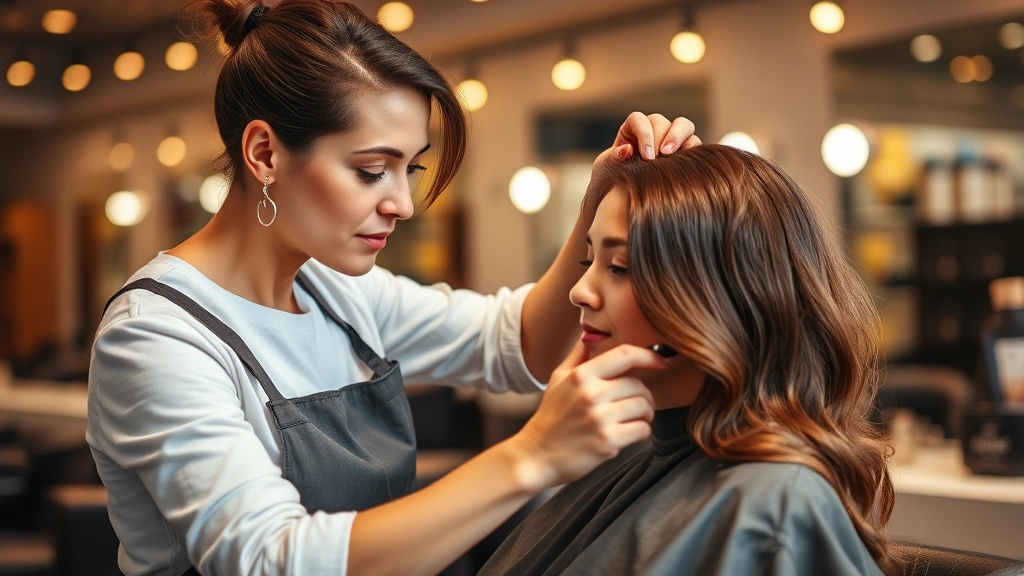
” alt=”Professional salon owner consulting with stylists about business strategy and revenue growth plans” style=”width: 100%; height: auto; border-radius: 8px;”>
Leverage Digital Marketing and Social Proof
In 2024, digital presence directly impacts salon revenue. Clients research salons online, read reviews, and follow social media before booking. A strong digital strategy drives discovery, builds credibility, and generates consistent appointment bookings. The most successful salons treat digital marketing as a core business function, not an afterthought.
Instagram serves as the primary marketing channel for salons. High-quality before-and-after photos, transformation videos, and behind-the-scenes content showcase stylist expertise while providing social proof. Salons posting consistently (4-5 times weekly) with strategic hashtags generate 40-60% more appointment inquiries than inactive accounts. Video content—particularly transformation reels showing the coloring or cutting process—generates 3-5x higher engagement than static photos.
User-generated content multiplies marketing impact. Encourage clients to tag your salon in posts featuring their new styles. Repost client photos with permission, creating authentic testimonials that resonate with potential clients. This approach builds community while providing continuous marketing content. Salons with active user-generated content strategies report 50% higher booking rates from social media referrals.
Google reviews and rating management directly influence local search rankings and client decisions. Actively encourage satisfied clients to leave reviews through post-appointment emails and text messages. Respond professionally to all reviews—positive and negative—demonstrating your commitment to client satisfaction. Salons with 4.7+ star ratings and 100+ reviews generate 35% more appointment inquiries from local search compared to lower-rated competitors.
Email marketing remains one of the highest-ROI marketing channels for salons. Build your email list through your booking system and loyalty program. Send weekly newsletters featuring style tips, product recommendations, and exclusive offers. Segment your list based on service preferences and purchase history. Clients who prefer color services receive color-focused content; those interested in cutting receive cutting techniques. Personalized email campaigns generate 40-50% higher open rates and 3x higher conversion rates than generic broadcasts.
Influencer partnerships amplify your reach cost-effectively. Partner with local micro-influencers (5,000-50,000 followers) who align with your brand aesthetic. Offer complimentary services in exchange for authentic content and reviews. A micro-influencer with 20,000 engaged followers can drive 50-100 high-quality appointment bookings through a single well-crafted post. These partnerships cost significantly less than traditional advertising while generating superior ROI.
Optimize Staffing and Productivity Metrics
Labor typically represents 40-50% of salon operating costs. Optimizing staffing efficiency directly impacts profitability and revenue capacity. Implementing effective communication and management systems ensures your team operates at peak productivity while maintaining service quality and client satisfaction.
Track key performance indicators (KPIs) for every stylist: average service price, client retention rate, retail product sales, and appointment utilization rate. This data-driven approach identifies top performers while highlighting opportunities for skill development. Stylists generating $800+ weekly revenue deserve premium commission structures and additional support, while underperformers need targeted coaching or potential reassignment.
Commission structures significantly influence stylist motivation and revenue generation. Rather than flat hourly wages, implement tiered commission models rewarding productivity. A stylist earning $20 hourly generates minimal incentive to book back-to-back appointments or upsell services. Commission-based compensation (30-40% of service revenue) directly aligns stylist interests with salon profitability. Many salons report 25-35% revenue increases after implementing commission structures.
Product sales training transforms stylists into revenue generators. Many stylists feel uncomfortable recommending products, missing opportunities for 15-25% additional revenue per client. Implement mandatory product knowledge training, establish clear retail recommendations for different hair types, and tie product sales to performance bonuses. Salons with robust product sales programs report that stylists generate $2,000-3,000 monthly in retail revenue versus $500-800 for untrained stylists.
Schedule optimization maximizes stylist productivity and client satisfaction. Analyze booking data to identify optimal appointment durations for different services. A 45-minute hair cut might realistically require 50 minutes including consultation and styling. Padding schedules accurately prevents rushed appointments and overtime costs. Additionally, strategically schedule high-revenue services during peak demand periods with your top stylists. This approach increases revenue per chair hour by 15-20%.
Cross-training creates staffing flexibility and revenue opportunities. When stylists can perform multiple services—color, cutting, styling, extensions—you maximize resource utilization. A stylist trained in extensions generates additional $300-500 weekly revenue during slow periods. Cross-training also improves staff retention by providing career development opportunities and preventing monotony.
Create Premium Product Revenue Streams
Retail product sales represent pure profit opportunities—typically generating 50-70% margins compared to 30-40% for services. Yet many salons treat retail as an afterthought. Building a strategic product program transforms your salon into a revenue-generating retail destination while improving client results through professional-grade at-home care.
Curate product selections based on client needs and stylist expertise. Rather than stocking 50 generic products, select 15-20 premium products strategically addressing common client concerns: volumizing shampoos for fine hair, moisture-intensive treatments for color-treated hair, heat protectants for styling-focused clients. This focused approach allows staff to develop deep product knowledge and provide confident recommendations.
Professional beauty brands generate higher margins and perceived value compared to mass-market products. Salon-exclusive brands like Olaplex, K18, and Moroccanoil command premium pricing while offering products unavailable in drugstores. Clients purchasing $40-60 professional shampoos generate $480-720 annually in retail revenue per client. Salons with robust professional product programs report that 60-70% of clients purchase retail products versus 20-30% for salons with generic offerings.
Bundle offerings increase average transaction value. Create value bundles pairing complementary products—shampoo, conditioner, and treatment mask—at slight discounts versus individual purchases. A client purchasing individual products spends $85; the same bundle priced at $75 feels like a bargain while increasing retail transaction value. Bundling increases average retail transaction value by 30-40%.
At-home treatment protocols create recurring revenue and improve client satisfaction. Recommend a specific regimen—weekly deep conditioning treatments, bi-weekly color-safe shampoos, daily leave-in conditioners—for color-treated hair. Clients following professional protocols experience superior results, driving referrals and loyalty. Additionally, these protocols create predictable monthly product purchases of $40-60 per client.
Subscription services generate predictable recurring revenue. Offer monthly product boxes curated by stylists ($40-75 monthly) featuring new products, exclusive items, and personalized recommendations. Subscribers receive convenience, discovery, and VIP status. Salons with 50-100 active subscribers generate $2,000-7,500 monthly recurring revenue from this single program.
Build a Referral-Driven Growth Engine
Word-of-mouth referrals generate the highest-quality clients with the lowest acquisition cost. Yet most salons leave referral generation to chance rather than implementing systematic programs. Building a deliberate referral strategy transforms satisfied clients into active brand ambassadors, creating exponential growth.
Referral incentive programs must benefit both the referrer and the referred client. Offer $25-50 credits for successful referrals, with matching incentives for the referred client. A client referring three friends generates $75 in salon credit while bringing in three new clients. This low-cost acquisition method generates clients with 25% higher retention rates and 30% higher lifetime value compared to other acquisition channels.
Make referrals effortless through digital sharing. Include referral links in appointment confirmation emails, loyalty program communications, and post-appointment thank you messages. Clients should share referrals with one click, not through complicated processes. QR codes displayed in salon spaces make referrals accessible—a client waiting for an appointment can scan a code and share with contacts instantly.
Celebrate and recognize referral advocates. Feature top referrers in monthly newsletters, offer exclusive perks like priority booking or complimentary services, and create a “referral champions” tier in your loyalty program. Public recognition motivates continued advocacy while demonstrating to other clients that referrals are valued.
Strategic partnership referrals expand your reach into complementary markets. Partner with local wedding planners, event coordinators, and photography studios to exchange referrals. Brides referred from wedding planners typically spend $300-600 on hair services and often bring bridesmaids (5-10 additional clients). These partnership referrals cost nothing while generating high-value clients.
Encourage online reviews and testimonials as social proof that drives referrals. Clients reading 50+ positive reviews feel confident booking appointments. After positive experiences, text clients: “Would you mind sharing your experience? Leave a Google review and we’ll credit your loyalty account with 25 points.” This simple request generates 30-40% review completion rates, significantly boosting your online credibility and local search rankings.
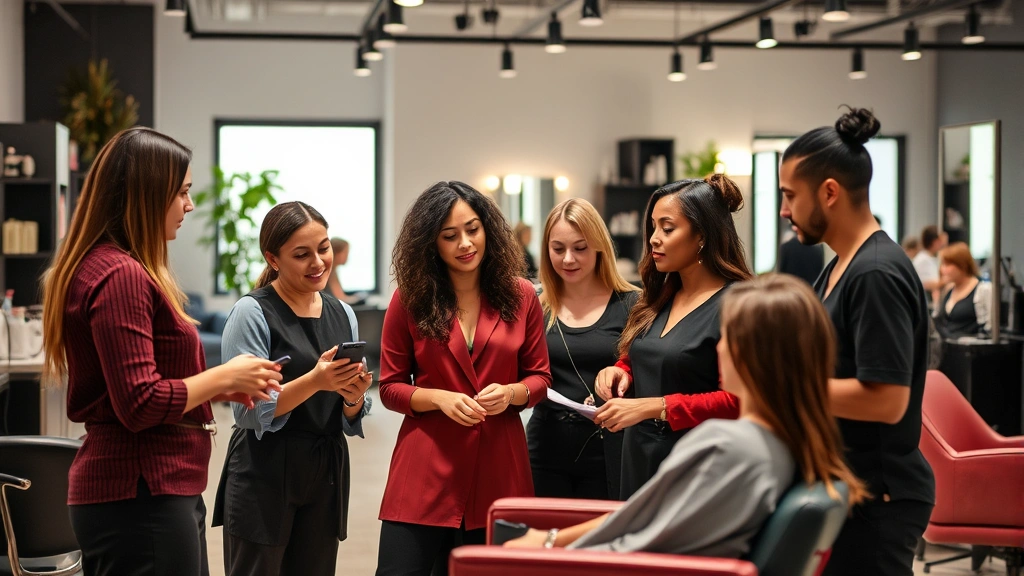
” alt=”Diverse team of salon professionals collaborating and discussing client care strategies in modern salon environment” style=”width: 100%; height: auto; border-radius: 8px;”>
FAQ
How much can I realistically increase salon revenue with these strategies?
Conservative implementation of 3-4 strategies typically generates 20-30% revenue increases within 6 months. Comprehensive implementation addressing booking systems, loyalty programs, service expansion, and marketing can drive 50-100% revenue growth within 12 months. Results vary based on starting point, market conditions, and execution quality.
What’s the best starting point for salon revenue optimization?
Begin with your booking and pricing system, as this addresses immediate revenue leakage. Next, implement a loyalty program to increase client retention and lifetime value. These two initiatives typically generate 15-25% revenue increases within 90 days. Subsequently, expand service offerings and digital marketing based on your specific market and client base.
How do I implement these changes without overwhelming my team?
Change management requires clear communication and phased implementation. Introduce one major initiative monthly—month one focuses on booking system optimization, month two on loyalty programs, month three on product training. This approach allows your team to adapt while preventing overwhelm. Additionally, finding business mentors in the salon industry provides invaluable guidance for smooth implementation.
Should I raise prices to increase revenue?
Price increases should align with value perception and market conditions. Rather than broad price increases, implement strategic pricing through dynamic pricing, tiered service levels, and premium add-ons. This approach increases revenue without alienating price-sensitive clients. Many salons successfully raise prices 8-12% annually through value-added services and improved positioning.
How do I measure success with these revenue strategies?
Track key metrics including average transaction value, client lifetime value, retention rate, retail product sales, and revenue per stylist. Compare month-over-month and year-over-year metrics to quantify strategy impact. Additionally, monitor client satisfaction through surveys and reviews—revenue growth should never come at the expense of service quality or client experience.
What role does staff training play in revenue growth?
Staff training directly impacts revenue generation. Stylists trained in advanced techniques command premium pricing. Teams trained in consultative selling increase service and product sales by 30-50%. Clear communication of your business mission and values aligns staff with revenue goals. Invest 2-4 hours monthly in training addressing product knowledge, upselling techniques, and customer service excellence.
How important is technology for salon revenue growth?
Technology enables the strategies discussed throughout this guide. Booking systems optimize scheduling, loyalty programs automate customer engagement, email marketing reaches clients at scale, and analytics provide performance insights. While technology isn’t a substitute for excellent service, it multiplies the impact of quality work. Budget 3-5% of revenue for technology investments supporting growth.
Can these strategies work for small independent salons?
Absolutely. In fact, independent salons often have advantages over chains—deeper client relationships, personalized service, and operational flexibility. Start with high-impact, low-cost initiatives like loyalty programs and referral systems. Gradually invest in technology and service expansion as revenue grows. Many successful independent salons generate $500,000-$1,000,000+ annual revenue through strategic optimization.
How do I maintain service quality while pursuing revenue growth?
Service quality and revenue growth are complementary, not contradictory. Satisfied clients spend more, refer more, and remain loyal longer. Never sacrifice service quality for short-term revenue gains. Focus on efficiency improvements (better scheduling, streamlined processes) rather than rushing appointments. Additionally, invest in continuous staff development ensuring your team delivers excellent service across expanded offerings.
What resources help salon owners implement these strategies?
Industry associations like the Professional Beauty Association provide training and best practices. McKinsey publishes research on retail and service industry optimization. Harvard Business Review offers articles on business strategy and revenue growth. Additionally, building professional networks with other salon owners provides peer learning opportunities and shared insights.


