
Top Real Estate Companies: Industry Rankings and Market Leaders
The real estate industry represents one of the most dynamic and competitive sectors of the global economy, generating trillions of dollars in annual transactions. Understanding which companies dominate this landscape is essential for investors, professionals, and stakeholders seeking to identify market leaders and emerging trends. From residential development to commercial properties and industrial assets, the top real estate companies demonstrate exceptional operational excellence, innovative business models, and sustainable growth strategies.
This comprehensive analysis examines the industry’s most influential players, their market positioning, revenue performance, and strategic initiatives that set them apart from competitors. Whether you’re evaluating partnership opportunities, career prospects, or investment potential, this guide provides actionable insights into the companies reshaping the real estate sector.
Global Real Estate Market Overview
The real estate sector continues to experience significant transformation driven by demographic shifts, urbanization trends, and technological innovation. McKinsey’s real estate research indicates that global real estate value exceeds $280 trillion, making it the world’s largest asset class. The top real estate companies leverage this massive market opportunity through diversified portfolios spanning residential, commercial, industrial, and hospitality segments.
Market consolidation remains a defining characteristic of the industry, with mega-mergers and strategic acquisitions reshaping competitive dynamics. Leading firms expand their geographic footprint across emerging markets while strengthening positions in mature developed economies. Digital transformation, sustainability commitments, and ESG (Environmental, Social, Governance) initiatives increasingly influence investor decisions and company valuations.
Understanding market fundamentals is crucial for evaluating real estate companies. Key metrics include assets under management, transaction volumes, profit margins, market capitalization, and return on equity. The most successful organizations demonstrate resilience through economic cycles while maintaining disciplined capital allocation and innovative development strategies.
Top Residential Real Estate Companies
Residential real estate remains the largest segment by transaction volume and market value. Leading residential developers and agents shape housing markets across North America, Europe, and Asia-Pacific regions. These companies excel in land acquisition, design innovation, and buyer experience optimization.
China Evergrande Group historically dominated residential development by volume, though recent financial challenges have altered market dynamics. The company’s scale in Chinese homebuilding demonstrated how massive residential portfolios generate substantial revenues and market influence.
Berkshire Hathaway through its HomeServices division operates as one of America’s largest residential real estate brokerage networks. The conglomerate’s investment in real estate services reflects confidence in residential market fundamentals and the value of integrated service platforms.
Lennar Corporation ranks among the largest homebuilders in the United States, with diversified operations across 32 states. The company’s financial performance, innovation in home design, and digital customer engagement strategies position it as an industry leader.
D.R. Horton maintains significant market share in U.S. residential construction, emphasizing affordability and mass-market appeal. Their operational efficiency and consistent dividend payments attract institutional investors seeking stable real estate exposure.
Building business networking groups near me connections within residential real estate enables professionals to access market intelligence and partnership opportunities that drive career advancement and business growth.
Leading Commercial Real Estate Firms
Commercial real estate encompasses office buildings, retail properties, and mixed-use developments that anchor urban economies. The top commercial real estate companies manage iconic properties and shape skylines in major global cities.
CBRE Group operates as the world’s largest commercial real estate services firm, providing advisory, leasing, and investment services across 100+ countries. Their comprehensive platform integrates property management, valuation, and transaction expertise that clients depend upon for strategic decisions.
JLL (Jones Lang LaSalle) competes as a global real estate services powerhouse, delivering valuations, occupier services, and capital markets solutions. The firm’s research capabilities and market analysis inform corporate real estate strategies for Fortune 500 companies.
Cushman & Wakefield maintains prominence in commercial brokerage and property management, with particular strength in capital markets and investment services. Their agent network and local market expertise enable clients to execute complex transactions efficiently.
Savills brings European and Asia-Pacific strength to the global commercial real estate landscape. The company’s integrated services model connects institutional investors with prime development opportunities and income-producing assets.
Commercial real estate professionals benefit from finding business mentors with commercial real estate expertise who provide market perspective and strategic guidance for navigating competitive bidding environments and complex deal structures.
Implementing best business management software enables commercial real estate firms to streamline lease administration, tenant communications, and financial reporting across geographically dispersed properties.
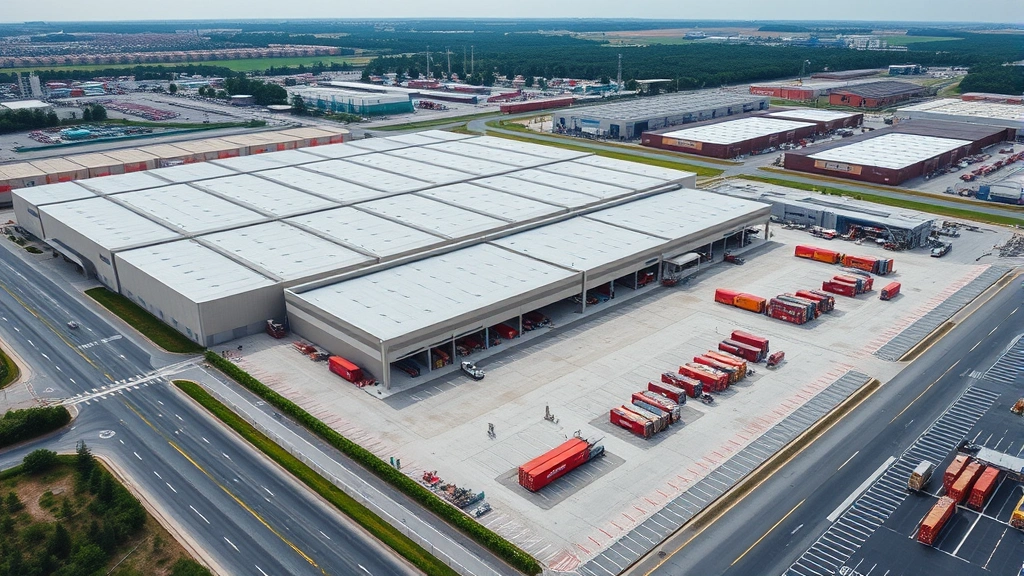
Industrial and Logistics Real Estate Giants
Industrial real estate experienced explosive growth driven by e-commerce expansion and supply chain modernization. The top logistics real estate companies own and manage fulfillment centers, distribution hubs, and manufacturing facilities that power global commerce.
Prologis dominates industrial real estate with a global portfolio exceeding 1 billion square feet. The company’s focus on logistics facilities supporting e-commerce creates resilient revenue streams as omnichannel retail continues reshaping consumer shopping patterns.
DPL (Duke Realty) ranks among North America’s largest industrial REIT operators, with significant holdings in light manufacturing and warehouse facilities. Their strategic positioning in high-growth logistics corridors generates consistent occupancy and rental rate appreciation.
Rexford Industrial Realty specializes in last-mile logistics properties in Southern California, capturing premium rental rates from companies requiring proximity to major population centers. Their focused geographic strategy demonstrates how specialized market expertise drives superior returns.
Alexandria Real Estate Equities leads in life science and biotech real estate, addressing specialized facility requirements for pharmaceutical research and development. This niche focus reflects how top real estate companies identify high-growth sectors requiring unique property characteristics.
Industrial real estate professionals should consider digital marketing for small businesses strategies to establish thought leadership and attract clients seeking specialized logistics property expertise and market insights.
Real Estate Investment Trusts (REITs)
REITs provide investors with liquid access to real estate returns while offering companies tax-efficient capital structures. The top REIT operators manage billions in assets and generate predictable distributions for shareholders.
Realty Income Corporation maintains one of the longest dividend payment streaks in the REIT industry, distributing monthly income to shareholders. Their diversified tenant base across retail, industrial, and office reduces concentration risk while supporting consistent performance.
American Tower Corporation operates a critical infrastructure model through cell tower ownership and leasing. Wireless carriers’ perpetual need for network expansion creates reliable revenue growth independent of traditional real estate cycles.
Crown Castle International similarly benefits from wireless infrastructure demand, owning 40,000+ towers and fiber network assets. Their strategic positioning in 5G deployment supports long-term growth as carriers invest in network modernization.
Equinix addresses digital infrastructure demand through data center ownership and development. As cloud computing and artificial intelligence drive data processing requirements, data center REITs capture secular growth trends.
Forbes Real Estate Council provides valuable insights into REIT performance, emerging investment trends, and capital market dynamics affecting real estate valuations and investor returns.
Technology-Driven Real Estate Platforms
Digital transformation fundamentally reshapes how real estate transactions occur. Leading technology platforms disrupt traditional brokerage models while improving efficiency, transparency, and customer experience.
Zillow Group revolutionized residential real estate through comprehensive property databases, valuation tools, and marketplace connectivity. Their iBuying segment (Zillow Offers) demonstrates how technology enables companies to purchase homes directly, streamlining transactions.
Redfin combines technology with agent services, offering consumers technology-enabled brokerage at reduced commission rates. Their data analytics capabilities and customer-first positioning attract younger homebuyers preferring digital-first experiences.
Opendoor pioneered instant home-buying platforms, leveraging AI and data science to rapidly evaluate properties and make immediate purchase offers. This business model reduces selling friction for homeowners while creating inventory opportunities.
CoStar Group provides commercial real estate professionals with market data, analytics, and transaction platforms. Their comprehensive information advantage helps institutional investors identify opportunities across markets and asset types.
Technology-focused real estate companies benefit from business team building activities that strengthen collaboration between engineering, product, and business teams required for successful platform development.
Criteria for Industry Rankings
Evaluating real estate companies requires analyzing multiple performance indicators reflecting financial strength, operational excellence, and strategic positioning:
- Revenue and Profitability: Total revenue, net income, and margin trends indicate financial health and operational efficiency. Top companies demonstrate consistent revenue growth and improving profitability through scale economies.
- Assets Under Management: Total property portfolio value reflects company scale and market influence. Larger portfolios provide diversification benefits and revenue stability across market cycles.
- Geographic Diversification: Companies with properties across multiple regions and countries reduce exposure to localized market downturns. Global presence enables access to emerging growth markets.
- Sector Specialization: Expertise in specific property types (residential, commercial, industrial) creates competitive advantages. Specialized focus often generates superior returns through deep market knowledge.
- Dividend Yield and Total Return: For publicly traded companies, dividend payments and share price appreciation demonstrate investor confidence. Consistent dividend growth indicates sustainable business models.
- ESG Performance: Environmental sustainability, social responsibility, and governance practices increasingly influence institutional investment decisions. Harvard Business Review governance research emphasizes how strong ESG performance correlates with long-term value creation.
- Innovation and Technology Investment: Companies investing in digital platforms, data analytics, and operational technology maintain competitive advantages. Technology adoption improves efficiency and customer experiences.
- Market Capitalization and Liquidity: Public companies’ market values reflect investor sentiment regarding growth prospects and financial stability. Larger market capitalizations provide capital for acquisitions and development.
Market leaders consistently rank highly across these criteria, demonstrating balanced excellence rather than excelling in isolated areas. Diversified strength across financial performance, operational execution, and strategic positioning separates industry leaders from regional competitors.

Real estate companies seeking to enhance market positioning should examine how business incubators support entrepreneurial ventures developing innovative real estate technology solutions and business models that disrupt traditional industry practices.
FAQ
What factors determine a real estate company’s ranking?
Real estate company rankings reflect revenue size, profitability, asset portfolio value, geographic diversification, sector expertise, dividend performance, ESG practices, and technological innovation. Top-ranked companies excel across multiple dimensions rather than dominating single categories.
How do REITs differ from traditional real estate companies?
REITs are legally required to distribute 90% of taxable income to shareholders as dividends, providing regular income streams. Traditional real estate companies retain profits for reinvestment and growth. REITs offer liquidity through public trading, while traditional companies may be private or public with different dividend policies.
Which real estate sector offers the best investment returns?
Industrial and logistics real estate currently generates strong returns driven by e-commerce growth. Life sciences properties command premium rents for biotech research facilities. Returns vary by market cycle, location, and property condition. Investors should diversify across sectors to manage risk.
How is technology transforming real estate companies?
Technology enables data-driven decision-making, improves operational efficiency, and enhances customer experiences through digital platforms. AI and machine learning optimize property valuations, tenant matching, and maintenance. Virtual tours and online transactions reduce friction in buying and selling processes.
What role does sustainability play in real estate rankings?
ESG performance increasingly influences investor capital allocation and company valuations. Green buildings reduce operating costs through energy efficiency while attracting tenants prioritizing sustainability. Companies demonstrating strong environmental practices achieve premium property values and tenant retention.
How do economic cycles affect real estate company performance?
Real estate is cyclical, with performance correlating to interest rates, employment, and consumer confidence. Companies with diversified portfolios and strong balance sheets weather downturns better. Industrial and essential services real estate prove more resilient than discretionary retail properties.
What opportunities exist for real estate professionals?
Career opportunities span brokerage, property management, development, investment analysis, and technology roles. Professionals should develop specialized expertise in high-growth sectors like industrial logistics and life sciences. Obtaining relevant certifications (CPM, SIOR, CCIM) enhances career prospects and earning potential.


