
Why IBM is Called ‘Big Blue’: The Origin Story Behind Tech’s Most Iconic Nickname
International Business Machines Corporation, universally known as IBM, carries one of the most recognizable nicknames in corporate history: ‘Big Blue.’ This moniker has become so embedded in technology culture that many assume it originated from the company’s founding or early innovations. However, the true story behind this nickname reveals fascinating insights into IBM’s corporate identity, market dominance, and the creative ways businesses build their brand legacies. Understanding the origins of ‘Big Blue’ provides valuable lessons for modern enterprises about how nicknames can transcend marketing efforts to become genuine cultural artifacts.
The nickname ‘Big Blue’ represents more than just a catchy label—it symbolizes IBM’s tremendous influence on the computing industry, its corporate conservatism, and its position as the dominant force in enterprise technology for decades. Unlike many corporate nicknames that fade with time, ‘Big Blue’ has endured and evolved, becoming a testament to IBM’s lasting impact on business and technology. This exploration of the company’s iconic moniker offers insights into corporate branding, historical context, and the intersection of business culture and popular terminology.
The Origin of IBM’s ‘Big Blue’ Nickname
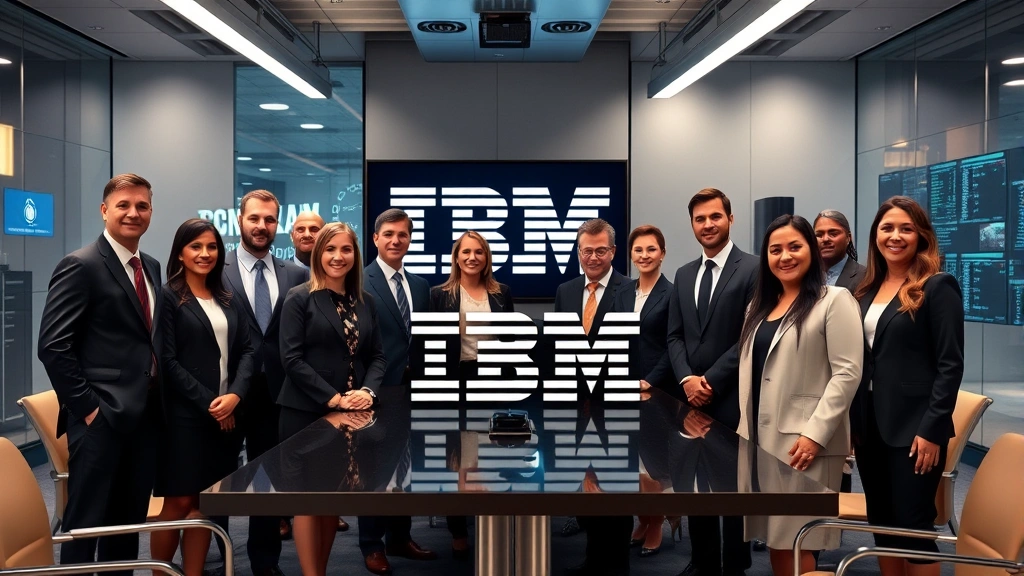
The nickname ‘Big Blue’ emerged during the 1960s and 1970s, though its exact genesis remains somewhat debated among technology historians. The most widely accepted explanation traces the nickname to IBM’s corporate dress code and visual identity. During this era, IBM cultivated a distinctive corporate culture where employees, particularly in sales and management positions, were expected to wear dark blue suits as part of the company’s professional standard. This strict dress code became so synonymous with IBM that competitors and industry observers began referring to the company as ‘Big Blue’—a reference that was both descriptive and, at times, slightly derisive.
The ‘big’ component of the nickname reflected IBM’s commanding market position. By the 1960s, IBM had established itself as the undisputed leader in the computing industry, controlling approximately 70% of the global mainframe market. The company’s dominance was so pronounced that competitors were often referred to in relation to IBM—the term ‘IBM and the seven dwarfs’ became common industry parlance when describing IBM’s competitors. The combination of ‘big’ and ‘blue’ created a powerful, memorable descriptor that captured both the company’s size and its distinctive corporate aesthetic.
Some technology historians also point to IBM’s logo and branding materials as contributing factors to the nickname’s adoption. The company’s visual identity prominently featured blue coloring, and the IBM logotype itself became iconic. However, the dress code explanation remains the most credible and widely documented origin story, supported by multiple business historians and former IBM executives who have discussed the company’s rigorous corporate culture during this period.
IBM’s Corporate Culture and the Blue Suit Era
Understanding ‘Big Blue’ requires examining IBM’s corporate culture under the leadership of Thomas J. Watson Sr. and later Thomas J. Watson Jr. IBM was renowned for maintaining one of the most structured and formal corporate environments in American business. The company’s culture emphasized conformity, loyalty, and professional presentation—values that were visually reinforced through the mandatory dark blue suit requirement. This dress code was not merely a suggestion; it was an expectation that defined IBM’s corporate identity and distinguished its employees from those at other technology companies.
The blue suit culture at IBM represented a broader philosophy about corporate professionalism and brand consistency. IBM management believed that uniform professional appearance conveyed trustworthiness and competence to clients, particularly large corporations and government agencies that represented the company’s primary customer base. When IBM salespeople visited Fortune 500 companies, they arrived in identical dark blue suits, creating a cohesive, authoritative presence that reinforced the company’s market leadership and stability. This strategy proved remarkably effective, as IBM’s sales force became instantly recognizable and associated with technological expertise and corporate reliability.
The strictness of IBM’s corporate culture extended beyond clothing to behavior, communication styles, and even personal conduct outside the office. IBM employees understood that they represented the company at all times, and this sense of corporate identity fostered remarkable loyalty. Many IBM employees spent entire careers with the company, and the culture of business partnership agreements and corporate commitment created a workforce that was deeply invested in the company’s success. This corporate culture, while sometimes criticized as stifling creativity, proved extraordinarily effective at maintaining IBM’s market dominance and brand identity throughout the latter half of the twentieth century.
How ‘Big Blue’ Became Industry Vernacular
The transformation of ‘Big Blue’ from internal observation to industry-standard terminology occurred gradually but inevitably. As IBM’s market dominance became increasingly apparent during the 1960s and 1970s, industry analysts, competitors, and technology journalists began using ‘Big Blue’ as shorthand when discussing IBM’s market activities, competitive strategies, and industry influence. The nickname appeared with increasing frequency in business publications, including publications like Harvard Business Review, where it became accepted terminology among business scholars and practitioners.
What makes ‘Big Blue’ particularly interesting from a branding perspective is that IBM never officially adopted or promoted the nickname through formal marketing campaigns. Instead, the nickname achieved widespread adoption organically, emerging from the business community’s need for a convenient, memorable way to reference the company. This organic adoption lent authenticity to the nickname that formal marketing efforts could never achieve. When industry insiders used ‘Big Blue,’ they were simultaneously acknowledging IBM’s dominance and creating an informal language that bonded the business community together through shared understanding.
The nickname gained additional traction as IBM faced increasing competition from companies like other technology firms documented by McKinsey research, particularly during the personal computer revolution of the 1980s. Ironically, even as IBM’s market dominance began to erode in certain segments, ‘Big Blue’ became even more entrenched in business vocabulary. The nickname had transcended its original descriptive function to become a cultural marker—a way of identifying a company that had fundamentally shaped the technology industry and corporate America itself.
The Strategic Value of Corporate Nicknames
The case of ‘Big Blue’ offers valuable lessons about corporate branding and the strategic importance of memorable identifiers. While many companies invest millions in developing brand names and marketing campaigns, some of the most powerful corporate identities emerge organically from the market and business community. ‘Big Blue’ succeeded precisely because it was authentic, memorable, and descriptive—it communicated something true about IBM’s market position and corporate culture in just two words.
Corporate nicknames serve several strategic functions that formal branding cannot always achieve. First, they create emotional connections and cultural resonance. ‘Big Blue’ evokes not just IBM but an entire era of computing, corporate professionalism, and American technological dominance. Second, nicknames often communicate more nuance than official brand names. While ‘International Business Machines’ is descriptive but bland, ‘Big Blue’ conveys size, distinctiveness, and market dominance. Third, organic nicknames demonstrate market acceptance and cultural integration—they prove that a company has achieved sufficient prominence to warrant informal naming by the broader business community.
Understanding the power of corporate nicknames becomes particularly relevant when considering modern business case development and strategic positioning. Companies that achieve ‘Big Blue’ status in their industries gain significant competitive advantages, including enhanced brand recognition, customer loyalty, and market influence. The nickname becomes a form of free marketing, as every mention reinforces the company’s market position and cultural significance. For enterprises seeking to build lasting brands, the IBM example demonstrates that strategic consistency, market dominance, and cultural authenticity matter far more than clever marketing slogans.
IBM’s Evolution: From Mainframes to Modern Computing
IBM’s journey from the company that earned the ‘Big Blue’ nickname to a modern technology enterprise reveals how corporate identities persist even as business models transform. During the 1960s and 1970s, when ‘Big Blue’ emerged as the dominant nickname, IBM’s primary business was mainframe computers—massive machines that served as the computing backbone for corporations and government agencies worldwide. IBM’s dominance in this market was nearly absolute, with the company controlling the vast majority of installed mainframe capacity globally.
The personal computer revolution of the 1980s presented an existential challenge to IBM’s mainframe-centric business model. However, IBM’s entry into the PC market, while ultimately less successful than competitors like Apple and Microsoft, demonstrated the company’s ability to recognize market shifts and adapt its business strategy. Throughout this period, ‘Big Blue’ remained the company’s dominant nickname, even as its market position shifted. The nickname’s persistence reflects the power of established corporate identities—once a company achieves ‘Big Blue’ status, the identity persists regardless of specific product or market changes.
In subsequent decades, IBM transformed itself into a services and software company, acquiring numerous technology firms and reorienting its business strategy toward enterprise solutions, cloud computing, and artificial intelligence. Despite these dramatic changes, ‘Big Blue’ remained the company’s most recognizable nickname. This persistence demonstrates how powerful corporate identities become embedded in business culture. Even as IBM’s business model evolved beyond recognition from the 1960s, the ‘Big Blue’ identity continued to provide market recognition and historical continuity. For modern enterprises considering business incubator strategies or significant business model transformations, IBM’s example shows that strong historical brands can provide stability and market recognition even during periods of dramatic change.
Competitive Dynamics and the ‘Big Blue’ Mystique
The ‘Big Blue’ nickname also reveals important dynamics about competition and market perception in technology industries. Competitors often used the nickname as a way to acknowledge IBM’s dominance while simultaneously positioning themselves as alternatives. When companies like Digital Equipment Corporation, Data General, or later Apple Computer and Microsoft referenced ‘Big Blue,’ they were implicitly arguing that they represented something different—more innovative, more nimble, or more customer-focused than IBM’s bureaucratic, mainframe-focused approach.
The mystique surrounding ‘Big Blue’ created both advantages and disadvantages for IBM. On one hand, the nickname reinforced IBM’s market leadership and conveyed stability and reliability to corporate customers. On the other hand, the nickname sometimes carried connotations of inflexibility, conformity, and resistance to innovation—particularly as the technology industry evolved toward more creative, less hierarchical corporate cultures. Competitors effectively leveraged these connotations, positioning their companies as alternatives to ‘Big Blue’s’ perceived corporate conservatism.
This competitive dynamic highlights an important principle in business strategy: powerful market positions can become liabilities if market conditions change. IBM’s dominance as ‘Big Blue’ in mainframes did not automatically translate to dominance in personal computers, workstations, or later technology segments. Competitors who understood that ‘Big Blue’ represented an older paradigm successfully captured market share by positioning themselves as the future rather than the past. This competitive lesson remains relevant for modern enterprises that have achieved dominant market positions in specific segments—market leadership in one domain does not guarantee success in emerging segments or business models.

Modern Relevance of the Big Blue Brand
In the twenty-first century, ‘Big Blue’ remains IBM’s most recognizable nickname, even as the company has transformed itself repeatedly to remain relevant in evolving technology markets. The nickname now represents historical significance and corporate longevity as much as current market dominance. When business historians, technology journalists, and industry analysts reference ‘Big Blue,’ they invoke an entire era of computing history and American corporate achievement. The nickname has become a historical marker, identifying a company that fundamentally shaped how modern organizations operate and compete.
IBM’s ability to maintain relevance while retaining its ‘Big Blue’ identity offers valuable lessons for established enterprises navigating digital transformation and market disruption. The company successfully transitioned from hardware to services, from mainframes to distributed computing, and from traditional enterprise software to cloud and artificial intelligence solutions. Throughout these transformations, ‘Big Blue’ provided brand continuity and historical legitimacy. Customers and partners who had trusted IBM for decades could continue that relationship even as the company’s specific offerings changed dramatically.
Modern business strategy increasingly emphasizes the importance of building strong, recognizable corporate identities that can persist across market cycles and business model changes. IBM’s ‘Big Blue’ represents a case study in how such identities develop and endure. Unlike companies that rebrand every few years in pursuit of contemporary relevance, IBM has maintained consistent brand identity while evolving its business model. This approach has proved remarkably effective, as Forbes research on IBM demonstrates the company’s continued market significance despite intense competition from younger, more agile technology firms.
For modern enterprises considering their own long-term brand strategy, IBM’s experience with ‘Big Blue’ suggests that consistency, authenticity, and market recognition matter more than constant reinvention. The most powerful corporate identities often emerge organically from market perception rather than formal marketing campaigns. Companies that achieve ‘Big Blue’ status in their industries gain substantial competitive advantages that persist even through periods of market disruption and business model transformation. Understanding this principle helps explain why ‘Big Blue’ has remained IBM’s dominant identifier for more than fifty years.
FAQ
Why is IBM called Big Blue?
IBM is called ‘Big Blue’ primarily because of the company’s strict corporate dress code requiring employees to wear dark blue suits, combined with the company’s dominant market position as the ‘big’ player in the computing industry. The nickname emerged during the 1960s and 1970s when IBM controlled approximately 70% of the global mainframe market.
When did the nickname ‘Big Blue’ originate?
The nickname ‘Big Blue’ emerged during the 1960s and 1970s, though it became increasingly prevalent as IBM’s market dominance became more apparent. The nickname was never officially promoted by IBM but instead achieved widespread adoption organically through industry use.
Did IBM officially adopt the ‘Big Blue’ nickname?
No, IBM never formally adopted or promoted the ‘Big Blue’ nickname through official marketing campaigns. The nickname emerged organically from the business community and industry observers, and this organic adoption actually enhanced its authenticity and cultural significance. IBM has acknowledged the nickname but did not create or actively market it.
Is ‘Big Blue’ still used to describe IBM today?
Yes, ‘Big Blue’ remains IBM’s most recognizable nickname in 2024. The nickname has evolved from describing IBM’s current market dominance to representing the company’s historical significance and role in shaping the computing industry. Business journalists, industry analysts, and technology historians continue to use ‘Big Blue’ when referencing IBM.
What does the dress code have to do with the nickname?
IBM’s strict corporate culture required employees, particularly salespeople and managers, to wear dark blue suits as part of the company’s professional standard. This distinctive dress code became so associated with IBM that competitors and industry observers began using ‘Blue’ to identify the company, which combined with ‘Big’ to reference IBM’s market dominance.
How did ‘Big Blue’ compare to IBM’s official marketing efforts?
Interestingly, ‘Big Blue’ achieved greater cultural penetration and longevity than most of IBM’s formal marketing campaigns. The nickname succeeded because it was authentic, memorable, and descriptive rather than cleverly invented. This demonstrates that organic corporate identities often prove more powerful than carefully crafted marketing slogans.
What can modern companies learn from IBM’s ‘Big Blue’ branding?
IBM’s ‘Big Blue’ demonstrates that the most powerful corporate identities often emerge organically from market perception rather than formal marketing efforts. Companies that achieve strong market positions, maintain consistent corporate culture, and build genuine customer relationships develop nicknames and identities that persist across market cycles and business model changes. Modern enterprises should focus on authenticity and market recognition rather than constant rebranding.
How did ‘Big Blue’ influence IBM’s competitive position?
The ‘Big Blue’ nickname simultaneously reinforced IBM’s market leadership while sometimes conveying connotations of corporate conservatism and inflexibility. Competitors effectively leveraged this perception, positioning themselves as more innovative alternatives to ‘Big Blue’s’ perceived bureaucratic approach. This dynamic illustrates how powerful market identities can become liabilities if market conditions change and new competitors successfully position themselves as representing the future rather than the past.