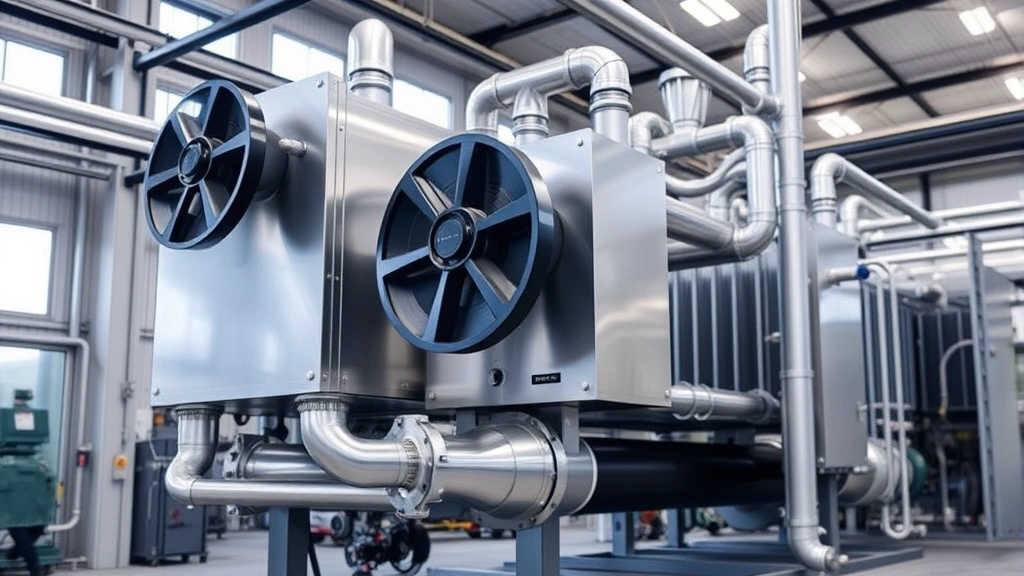
Baltimore Aircoil’s Eco-Friendly Innovations: Leading Industrial Cooling Sustainability
Baltimore Aircoil Company has established itself as a pioneering force in sustainable industrial cooling solutions, transforming how organizations approach environmental responsibility while maintaining operational efficiency. With decades of expertise in heat transfer technology, the company continues to innovate beyond traditional cooling methods, embedding sustainability into every product line and service offering. Their commitment to reducing carbon footprints across commercial and industrial sectors demonstrates how legacy manufacturers can evolve into environmental leaders.
The industrial cooling sector accounts for approximately 15% of global energy consumption, making innovations in this space critical for global climate objectives. Baltimore Aircoil recognizes this responsibility and has invested substantially in research and development to create cooling solutions that deliver superior performance while minimizing environmental impact. Their eco-friendly innovations span from advanced materials to intelligent control systems that optimize energy usage in real-time.
Understanding Baltimore Aircoil’s Environmental Mission
Baltimore Aircoil Company’s environmental commitment extends beyond compliance—it represents a fundamental business philosophy that sustainability and profitability are mutually reinforcing. The company has integrated environmental stewardship into its corporate strategy, recognizing that sustainable business practices increasingly drive competitive advantage and stakeholder value. Their mission focuses on creating cooling solutions that reduce operational costs while diminishing environmental footprints across diverse industries including data centers, HVAC systems, and industrial refrigeration.
The company’s approach aligns with global environmental standards and forward-thinking regulations. By proactively developing technologies that exceed current regulatory requirements, Baltimore Aircoil positions itself advantageously as environmental standards inevitably tighten. This strategic foresight has enabled the organization to maintain leadership in markets where sustainability requirements continue escalating.
Understanding Baltimore Aircoil’s innovations requires context about their core competency: heat transfer technology. Their expertise in cooling systems—whether for massive industrial applications or precision climate control—provides the technical foundation for sustainable innovations. The company operates across multiple business segments, each with distinct sustainability challenges and opportunities.
Advanced Cooling Technologies and Energy Efficiency
Energy efficiency represents the cornerstone of Baltimore Aircoil’s eco-friendly strategy. Their advanced cooling technologies dramatically reduce electricity consumption compared to conventional systems. One significant innovation involves hybrid cooling systems that intelligently alternate between air-cooled and water-cooled operation based on ambient conditions, weather patterns, and real-time demand fluctuations.
These hybrid systems can achieve energy reductions of 30-50% compared to traditional fixed-configuration cooling towers. The technology recognizes that cooling requirements vary dramatically throughout seasons and operational cycles. Rather than operating at constant capacity, intelligent systems modulate performance to match actual demand, eliminating the substantial energy waste inherent in conventional approaches.
Baltimore Aircoil has also pioneered advances in heat exchanger design that improve thermal transfer efficiency. Enhanced surface geometries and material compositions enable more effective heat exchange with less fluid circulation, reducing pump energy requirements. These incremental improvements compound across thousands of operating hours, generating substantial energy and cost savings.
The company’s focus on sustainable business planning includes detailed lifecycle assessments demonstrating how energy efficiency investments deliver rapid payback periods. Organizations implementing Baltimore Aircoil solutions frequently recover capital investments within 3-5 years through reduced utility expenses, making sustainability economically compelling rather than merely aspirational.
Sustainable Materials and Manufacturing Practices
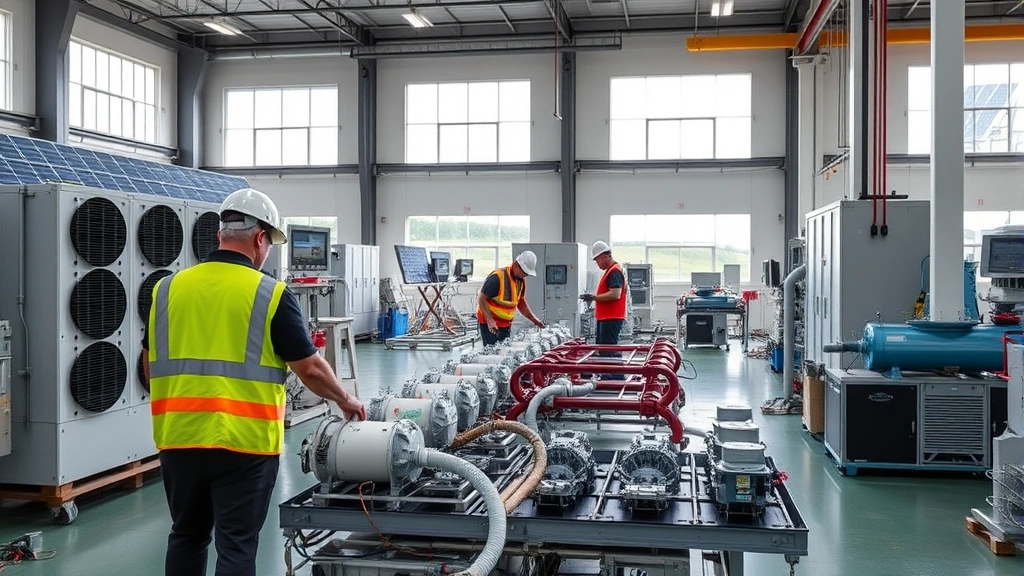
Beyond operational efficiency, Baltimore Aircoil has transformed manufacturing processes to minimize environmental impact. The company has invested in facilities utilizing renewable energy sources, with several production locations operating partially or entirely on wind and solar power. This commitment reduces manufacturing emissions while demonstrating credibility in sustainability claims—an essential consideration when serving environmentally conscious enterprise clients.
Material selection reflects deep environmental thinking. The company has reduced refrigerant usage by developing systems compatible with lower-global-warming-potential (GWP) refrigerants. This transition addresses the concerning reality that traditional refrigerants contribute significantly to climate change and ozone depletion. Baltimore Aircoil’s engineering teams have redesigned systems to operate efficiently with environmentally benign refrigerants, future-proofing customer investments against inevitable regulatory restrictions.
Aluminum and copper—primary materials in cooling systems—are now sourced with increasing emphasis on recycled content and responsible mining practices. The company works with suppliers meeting rigorous environmental and social standards, recognizing that supply chain sustainability directly reflects corporate environmental commitment. End-of-life product management has similarly evolved, with Baltimore Aircoil implementing take-back programs enabling material recovery and recycling rather than landfill disposal.
Manufacturing waste reduction initiatives have yielded impressive results. Through lean manufacturing principles combined with environmental objectives, the company has reduced waste streams by over 40% in some facilities. Water usage in manufacturing has similarly declined through closed-loop cooling systems and advanced treatment technologies. These improvements demonstrate that environmental responsibility and operational excellence reinforce each other rather than creating trade-offs.
Smart Controls and IoT Integration
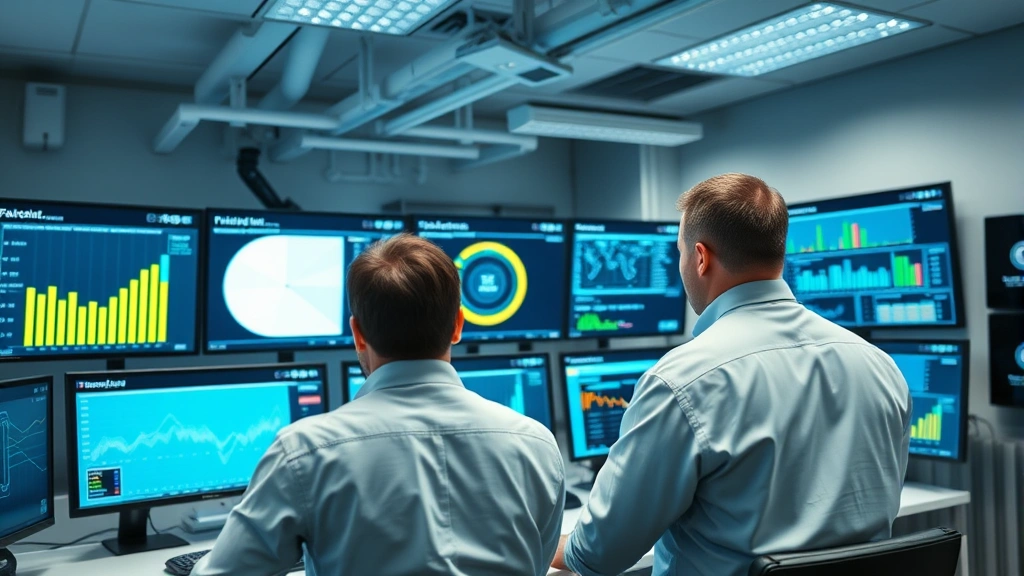
Perhaps most innovative is Baltimore Aircoil’s integration of Internet of Things (IoT) technology and artificial intelligence into cooling systems. Connected devices continuously monitor temperature, humidity, flow rates, and energy consumption, transmitting data to cloud-based analytics platforms. Machine learning algorithms identify optimization opportunities and automatically adjust system operation for maximum efficiency.
These smart controls enable predictive maintenance, identifying component degradation before failures occur. This proactive approach reduces unplanned downtime while extending equipment lifespan, diminishing the environmental impact associated with premature replacement. Customers gain real-time visibility into system performance through intuitive dashboards, enabling informed decisions about operational parameters.
The integration of IoT capabilities supports data-driven decision making at operational levels. Facility managers can identify peak consumption periods, correlate cooling demands with production schedules, and implement strategies that reduce simultaneous high-load operation. Remote monitoring capabilities enable rapid response to anomalies, preventing extended operation at suboptimal efficiency.
Baltimore Aircoil has developed proprietary algorithms that learn facility-specific patterns over time, continuously improving optimization recommendations. This machine learning capability means systems become more efficient as they operate longer, adapting to seasonal variations, production changes, and infrastructure modifications. Customers report energy savings of 15-25% in year two of operation compared to year one, as algorithms refine their understanding of optimal operational parameters.
Industry Recognition and Certifications
Baltimore Aircoil’s commitment to sustainability has earned recognition from major environmental and industry organizations. The company maintains certifications including ISO 14001 (Environmental Management Systems), demonstrating systematic approaches to environmental compliance and continuous improvement. Multiple products carry Energy Star certification, indicating superior efficiency compared to industry baselines.
The company has received accolades from Forbes and industry publications recognizing sustainable manufacturing leadership. These acknowledgments validate the company’s environmental claims while building credibility with procurement teams evaluating cooling solutions. Third-party validation proves particularly important when organizations face pressure to demonstrate genuine environmental commitment rather than superficial “greenwashing.”
Baltimore Aircoil participates actively in industry standards development through professional associations. Company engineers contribute to ASHRAE (American Society of Heating, Refrigerating and Air-Conditioning Engineers) committees establishing efficiency standards and best practices. This involvement positions Baltimore Aircoil at the forefront of industry evolution while ensuring emerging standards align with their technological capabilities.
The company has also earned recognition for corporate leadership in environmental stewardship. Industry analysts and business schools increasingly reference Baltimore Aircoil as a case study in how traditional industrial manufacturers can successfully transition toward sustainability-centric business models. This recognition attracts talent, customers, and investors increasingly valuing environmental responsibility.
Real-World Applications and Case Studies
The practical impact of Baltimore Aircoil’s innovations becomes evident through real-world applications across diverse industries. Data center operators—facing enormous cooling demands and energy costs—have achieved remarkable results implementing Baltimore Aircoil hybrid cooling systems. One major technology company reduced cooling energy consumption by 45% while improving system reliability, translating to multi-million-dollar annual savings alongside substantial carbon emission reductions.
Healthcare facilities managing critical climate control requirements for operating rooms, laboratories, and sensitive equipment have benefited from Baltimore Aircoil’s precision cooling technologies. These facilities require absolute reliability alongside environmental responsibility, making Baltimore Aircoil’s solutions particularly valuable. A major hospital network reduced cooling-related energy consumption by 28% while maintaining the stringent environmental controls essential for patient safety.
Manufacturing facilities utilizing Baltimore Aircoil solutions for process cooling have similarly reported impressive efficiency gains. An automotive component manufacturer reduced facility energy consumption by 22% through implementation of Baltimore Aircoil’s smart cooling controls, enabling reinvestment of savings into additional sustainability initiatives. The facility subsequently achieved carbon-neutral operations, with cooling system efficiency improvements representing critical components of their comprehensive sustainability strategy.
Commercial real estate operators managing large office complexes and mixed-use facilities have leveraged Baltimore Aircoil technologies to reduce operational costs while enhancing tenant comfort. Smart controls enable dynamic adjustment of cooling delivery based on occupancy patterns, weather conditions, and time-of-use electricity pricing. Building managers report tenant satisfaction improvements alongside energy consumption reductions, demonstrating how environmental responsibility enhances rather than compromises operational performance.
Future Roadmap for Sustainable Innovation
Baltimore Aircoil continues advancing its sustainability agenda through ambitious research initiatives. The company invests substantially in developing next-generation cooling technologies utilizing alternative refrigerants with zero global warming potential. Research teams explore natural refrigerants including hydrofluoroolefins and hydrofluoroolefin-free alternatives, engineering systems that deliver superior performance with minimal environmental impact.
Artificial intelligence and advanced analytics represent additional innovation frontiers. Baltimore Aircoil is developing increasingly sophisticated machine learning models that predict cooling demands with remarkable accuracy, enabling systems to optimize operation proactively rather than reactively. These predictive capabilities will further reduce energy consumption while improving system reliability and longevity.
The company recognizes that industry transformation requires collaborative innovation. Baltimore Aircoil partners with universities, research institutions, and industry peers to accelerate sustainable technology development. These collaborations accelerate innovation cycles while building ecosystems where multiple organizations contribute complementary expertise toward shared sustainability objectives.
Looking forward, Baltimore Aircoil envisions cooling systems that achieve net-positive environmental impact—generating more energy than they consume through integrated renewable energy harvesting and storage capabilities. While ambitious, this vision reflects the company’s commitment to fundamental transformation rather than incremental improvement. By articulating bold long-term objectives, Baltimore Aircoil motivates internal innovation while signaling to customers and stakeholders the company’s serious commitment to environmental leadership.
For organizations exploring cooling solutions aligned with sustainability objectives, understanding Baltimore Aircoil’s innovations and track record proves essential. The Companies Directory and BizVaultPro Blog provide additional resources for researching industrial companies prioritizing environmental responsibility. Similarly, the MA Company Lookup resource enables detailed research on regional manufacturers advancing sustainable practices.
FAQ
What specific energy savings can organizations expect from Baltimore Aircoil cooling systems?
Energy savings vary based on facility type, existing infrastructure, and operational patterns. Typical installations achieve 15-45% energy reductions compared to baseline systems. Data centers and manufacturing facilities often realize savings on the higher end of this range due to consistent cooling demands enabling sophisticated optimization. Healthcare and commercial facilities typically achieve 20-30% reductions. Baltimore Aircoil provides detailed energy modeling during project planning to establish realistic expectations specific to each application.
How do Baltimore Aircoil’s eco-friendly innovations impact total cost of ownership?
While initial capital investment may exceed conventional cooling systems, total cost of ownership typically favors Baltimore Aircoil solutions substantially. Energy savings alone frequently generate payback within 3-5 years, with subsequent decades of operation generating pure cost reduction. Extended equipment lifespan through superior engineering and predictive maintenance further improves lifetime economics. When factoring environmental and sustainability objectives, the value proposition becomes even more compelling.
Are Baltimore Aircoil cooling systems compatible with existing facility infrastructure?
Baltimore Aircoil offers solutions ranging from complete system replacement to retrofitting existing infrastructure. Hybrid cooling systems can often integrate with legacy equipment, enabling organizations to realize sustainability benefits without complete facility redesign. Engineering teams evaluate each facility’s specific configuration to determine optimal implementation approaches balancing performance objectives with practical constraints.
What refrigerants does Baltimore Aircoil use in their eco-friendly systems?
The company has transitioned toward low-global-warming-potential refrigerants including hydrofluoroolefins and is actively developing systems compatible with natural refrigerants. Refrigerant selection varies based on application requirements, regulatory environment, and performance objectives. Baltimore Aircoil’s engineering teams ensure all refrigerant choices balance environmental impact with operational reliability and safety requirements.
How does Baltimore Aircoil support customers in achieving sustainability certifications?
Baltimore Aircoil provides comprehensive documentation supporting LEED certification, Energy Star qualification, and other sustainability program requirements. The company’s lifecycle assessment data, efficiency certifications, and environmental impact analysis enable organizations to substantiate sustainability claims to third-party certifiers. Additionally, Baltimore Aircoil’s smart controls generate detailed performance data useful for demonstrating ongoing operational efficiency achievement.


