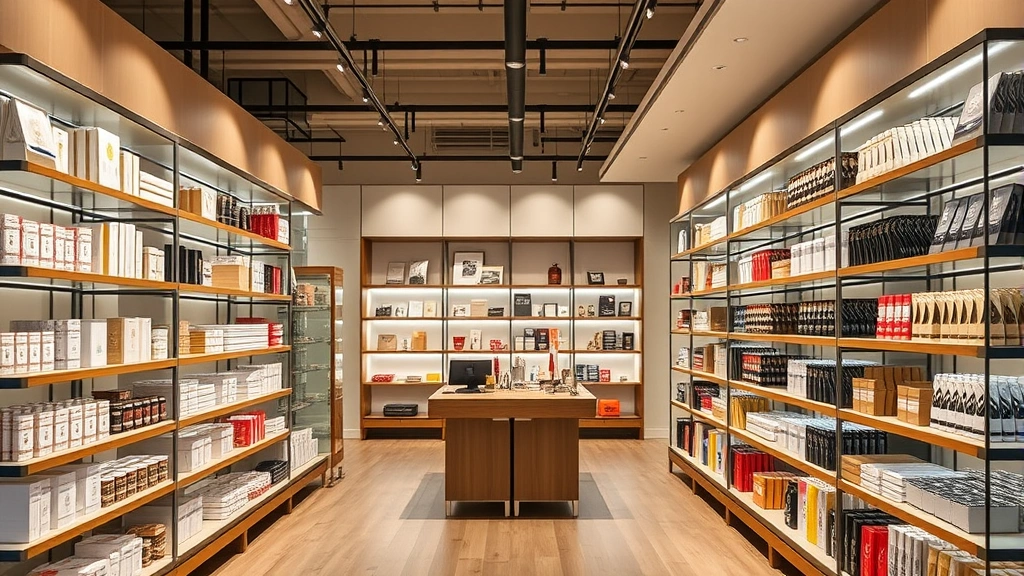
Top Merchandising Strategies: Expert Analysis for Modern Retail Success
Merchandising companies operate at the intersection of consumer psychology, inventory management, and strategic retail placement. In today’s competitive retail landscape, the difference between thriving and merely surviving often comes down to how effectively a company executes its merchandising strategy. Whether you’re managing a brick-and-mortar store, an e-commerce platform, or a hybrid retail operation, understanding the nuances of modern merchandising can directly impact your bottom line.
The merchandising industry has evolved dramatically over the past decade. Traditional approaches that relied solely on intuition and historical data have given way to sophisticated strategies powered by data analytics, consumer behavior research, and omnichannel integration. Leading merchandising companies now leverage artificial intelligence, predictive analytics, and real-time inventory systems to optimize product placement, pricing, and promotions. This comprehensive analysis explores the strategies that separate industry leaders from competitors, offering actionable insights for businesses looking to elevate their retail performance.
Understanding Modern Merchandising Strategy
Merchandising strategy encompasses far more than simply stocking shelves with products. It represents a comprehensive approach to understanding what customers want, when they want it, and how to present it in the most compelling way possible. Modern merchandising companies recognize that successful strategy requires alignment across multiple departments: buying, marketing, operations, and customer service.
The foundation of effective merchandising begins with deep customer insights. Top-performing merchandising companies invest heavily in understanding customer demographics, shopping behaviors, preferences, and pain points. This knowledge informs every decision from product selection to shelf placement to promotional timing. Harvard Business Review’s retail insights consistently demonstrate that companies with the strongest customer understanding outperform competitors by significant margins in both revenue and profitability.
Strategic merchandising also requires balancing multiple objectives simultaneously: maximizing sales velocity, improving profit margins, reducing inventory carrying costs, and enhancing customer satisfaction. These goals sometimes create tension, and skilled merchandising leaders know how to navigate these tradeoffs. For instance, featuring high-margin items prominently might boost profitability short-term, but if those items don’t align with customer demand, you’ll face excess inventory and markdowns that ultimately erode margins.
Data-Driven Inventory Optimization
Perhaps the most significant shift in merchandising strategy over the past five years has been the move toward sophisticated data analytics. Leading merchandising companies now employ data scientists and analysts who work alongside traditional merchandisers to optimize inventory decisions. This combination of domain expertise and analytical rigor produces superior results.
Effective inventory optimization starts with accurate demand forecasting. Rather than relying on historical sales data alone, advanced merchandising companies incorporate external factors like seasonality, weather patterns, local events, competitive activity, and macroeconomic indicators. Predictive models can now forecast demand with remarkable accuracy weeks or even months in advance, allowing companies to stock appropriately without excess inventory.
ABC analysis represents one foundational technique that remains relevant. Merchandising companies categorize products into three groups: A items (high-value, high-velocity products), B items (moderate value and velocity), and C items (low-value, low-velocity products). Different merchandising strategies apply to each category. A items receive prominent placement and frequent replenishment. B items are positioned strategically to support cross-selling. C items are evaluated regularly for potential discontinuation or repositioning. McKinsey’s retail practice notes that companies implementing sophisticated segmentation strategies see inventory turns improve by 15-25% while simultaneously reducing stockouts.
Real-time inventory visibility has become essential. Modern merchandising companies maintain systems that track inventory across all locations and channels, enabling dynamic reallocation. If a product is overstock in one location but in high demand in another, the system can trigger transfers, preventing markdowns in one place while avoiding stockouts elsewhere.
Visual Merchandising and Store Layout
While digital channels grow increasingly important, physical retail remains crucial for most merchandising companies. Visual merchandising—the art and science of presenting products attractively—significantly influences purchasing decisions. Research shows that customers form impressions about products and stores within seconds, making visual presentation critical.
Effective store layout follows psychological principles supported by decades of retail research. The “decompression zone” near store entrances should be neutral, allowing customers to slow down and orient themselves. High-traffic areas and natural sightlines deserve premium products that drive impulse purchases. End-cap displays, which require significant merchandising investment, should feature products with strong turn rates and healthy margins.
Color psychology plays a substantial role in merchandising effectiveness. Different colors evoke different emotional responses: red creates urgency, blue conveys trust, green suggests health and sustainability. Successful merchandising companies carefully consider color combinations when planning seasonal displays and promotional campaigns. Seasonal merchandising requires particular attention, as the visual presentation must shift to reflect changing customer needs and moods throughout the year.
Cross-merchandising—placing complementary products near each other—represents another powerful tactic. Placing pasta sauce next to fresh pasta, or pairing athletic wear with hydration products, increases basket size and improves customer satisfaction by simplifying shopping. When executed well, cross-merchandising feels natural and helpful rather than manipulative.
Omnichannel Merchandising Integration
Today’s consumers shop across multiple channels—online, mobile, in-store, via social media—often within the same shopping journey. Leading merchandising companies have dismantled silos between channels to create seamless omnichannel experiences. This requires fundamentally rethinking merchandising strategy.
In an omnichannel environment, inventory becomes a shared resource rather than channel-specific inventory. A customer might browse products online, check availability at nearby stores, visit in person, and complete the purchase via mobile app. The merchandising strategy must support all these touchpoints while maintaining consistent product information, pricing, and promotion. This complexity requires sophisticated systems and processes that many traditional merchandising companies struggle to implement.
Social commerce has emerged as a significant channel for many merchandising companies. Platforms like Instagram, TikTok, and Pinterest drive discovery and purchase intent, particularly among younger demographics. Successful merchandising companies develop specific strategies for these platforms, including influencer partnerships, user-generated content, and shoppable posts that allow purchases directly within social apps.
The rise of experiential retail also reflects omnichannel evolution. Some merchandising companies now use physical stores as experience centers where customers interact with products, receive personalized service, and build emotional connections. These stores may not drive the highest per-square-foot sales, but they generate significant online traffic and brand loyalty.
Pricing and Promotion Strategies
Pricing represents one of the most powerful merchandising levers, yet many companies approach it reactively rather than strategically. Advanced merchandising companies employ dynamic pricing strategies that adjust prices based on demand, inventory levels, competitive positioning, and customer segments. This approach, common in airline and hotel industries, is increasingly prevalent in retail.
Promotional effectiveness varies dramatically based on execution. Indiscriminate discounting erodes brand value and trains customers to wait for sales. Sophisticated merchandising companies use promotions strategically to achieve specific objectives: clearing seasonal inventory, driving trial of new products, acquiring new customers, or rewarding loyal customers. The best promotions feel valuable to customers while protecting margins.
Bundle pricing represents an effective tactic that merchandising companies often underutilize. By combining complementary products at an attractive price point, companies increase average transaction value while clearing slower-moving items. This approach works particularly well for seasonal assortments or when introducing new products that customers may not initially consider.
Psychological pricing tactics remain effective despite widespread awareness. Charm pricing (prices ending in .99), prestige pricing (round numbers for luxury items), and comparative pricing (showing original prices before discounts) all influence purchase decisions. Successful merchandising companies test different pricing presentations to optimize conversion without appearing deceptive.

Technology and Automation in Merchandising
Technology investments have become essential for competitive merchandising companies. Enterprise resource planning (ERP) systems, merchandising planning software, and business intelligence platforms provide the infrastructure for modern merchandising operations. However, technology alone doesn’t guarantee success—implementation requires significant change management and process redesign.
Artificial intelligence applications in merchandising continue expanding. AI algorithms can analyze vast datasets to identify merchandising patterns, predict which products will appeal to specific customer segments, and optimize shelf space allocation. Computer vision technology allows retailers to monitor shelf compliance in real-time, ensuring products are displayed according to planograms and identifying out-of-stock situations immediately.
Automation extends to physical operations as well. Automated storage and retrieval systems, robotic picking, and autonomous inventory scanning improve efficiency and accuracy in distribution centers and warehouses. These technologies free human merchandisers to focus on strategic analysis rather than routine tasks. Forbes Insights reports that merchandising companies investing in automation see labor productivity increase by 20-30% while improving accuracy metrics.
Customer relationship management (CRM) systems enable personalized merchandising at scale. By analyzing purchase history and preferences, companies can tailor product recommendations, offers, and communications to individual customers. This personalization drives higher conversion rates and customer lifetime value compared to generic merchandising approaches.
Building Effective Merchandising Teams
Even the most sophisticated strategies fail without effective execution by talented teams. Finding business mentors with merchandising expertise can accelerate learning and help organizations avoid costly mistakes. Leading merchandising companies invest heavily in recruiting, developing, and retaining top talent.
Modern merchandising roles have evolved significantly. Traditional buyers worked primarily with suppliers to negotiate prices and terms. Today’s merchandisers must also understand data analytics, digital marketing, supply chain dynamics, and customer psychology. This broader skill set means merchandising companies often compete with technology companies and consulting firms for talent.
Organizational structure significantly impacts merchandising effectiveness. Centralized merchandising provides consistency and efficiency but may lack local market responsiveness. Decentralized structures allow local adaptation but risk losing scale advantages and creating inefficient redundancy. Leading merchandising companies often employ hybrid models where centralized teams set strategy and planograms while local teams adapt within defined parameters based on local customer preferences and competitive dynamics.
Cross-functional collaboration represents another critical success factor. Merchandisers must work closely with marketing teams to align promotional calendars, with operations teams to ensure execution capability, and with finance teams to manage budgets and margin targets. When these functions operate in silos, merchandising effectiveness suffers. Companies that establish strong cross-functional governance structures see superior results. Understanding how business incubators support retail innovation reveals that collaborative approaches to problem-solving drive breakthrough improvements.
Continuous learning and development programs are essential given how rapidly the merchandising landscape evolves. Leading companies provide training in data analytics, emerging technologies, retail trends, and leadership skills. Some sponsor employees to pursue advanced degrees or industry certifications in merchandising and retail management.
FAQ
What is the most important merchandising metric to track?
While multiple metrics matter, inventory turns—the number of times inventory completely sells and is replaced over a period—represents perhaps the most important indicator of merchandising effectiveness. High inventory turns suggest strong demand alignment, minimal markdowns, and efficient capital deployment. However, this must be balanced with fill rates (product availability) and profitability metrics. Companies optimizing inventory turns at the expense of customer satisfaction or margins are pursuing the wrong objective.
How do merchandising companies handle seasonal demand fluctuations?
Leading merchandising companies employ sophisticated seasonal planning that begins months in advance. They analyze historical seasonal patterns, incorporate forward-looking indicators, and build flexibility into their supply chain. Seasonal inventory is often ordered well in advance to secure favorable pricing, but companies maintain the ability to adjust quantities based on early-season sales trends. After-season analysis comparing plans to actual results informs the following year’s strategy.
What’s the relationship between merchandising and marketing?
While distinct functions, merchandising and marketing must work closely together. Marketing drives customer awareness and traffic; merchandising ensures that when customers arrive, the products they want are available, attractively presented, and appropriately priced. Marketing campaigns should align with merchandising plans so that promoted products are well-stocked and prominently displayed. Conversely, merchandisers should understand marketing plans to anticipate demand spikes and adjust inventory accordingly.
How do merchandising companies measure success in omnichannel environments?
Omnichannel merchandising success requires measuring across multiple dimensions: online conversion rates, in-store traffic and conversion, inventory accuracy across channels, customer satisfaction scores, and overall profitability. Advanced companies track customer journey analytics to understand how customers interact across channels and which touchpoints drive conversion. The goal is optimizing total customer value rather than maximizing performance in any single channel.
What role does customer feedback play in merchandising strategy?
Customer feedback provides invaluable insights that data alone cannot capture. Through surveys, focus groups, social listening, and direct customer interactions, merchandisers understand what customers appreciate and what frustrates them. This feedback informs assortment decisions, helps identify gaps in product availability, and reveals opportunities for merchandising improvements. Companies that systematically collect and act on customer feedback typically see higher customer satisfaction and loyalty metrics.
How do merchandising companies stay competitive as e-commerce grows?
Rather than viewing e-commerce as a threat, leading merchandising companies recognize it as an evolution requiring adapted strategies. E-commerce demands different merchandising approaches: product photography and descriptions become critical, search functionality and filtering matter more than physical shelf placement, and personalization algorithms replace visual displays. Smart companies apply merchandising principles across channels rather than treating them as separate businesses. Many also find that physical retail remains valuable for building brand experience and customer relationships, even as e-commerce drives significant sales volume.


