Need Dump Trucks? Local Service Guide
Finding reliable dump truck companies near you requires understanding the landscape of local service providers, evaluating their capabilities, and assessing how they align with your project requirements. Whether you’re managing a construction site, handling landscaping debris, or coordinating a large-scale excavation project, access to dependable dump truck services can make or break your timeline and budget. This comprehensive guide walks you through identifying local operators, understanding service options, and making strategic decisions that drive project success.
The dump truck industry serves as a critical backbone for construction, demolition, landscaping, and waste management operations across North America. Local service providers range from independent owner-operators to established fleets with dozens of vehicles. Understanding the nuances of how these companies operate, what they charge, and how to evaluate their reliability helps you secure the right equipment at competitive rates while maintaining project momentum.
Understanding Dump Truck Services and Categories
Dump truck services encompass far more than simply transporting loose materials. Modern service providers offer specialized solutions tailored to specific industry needs. Understanding these categories helps you match your requirements with appropriate vendors.
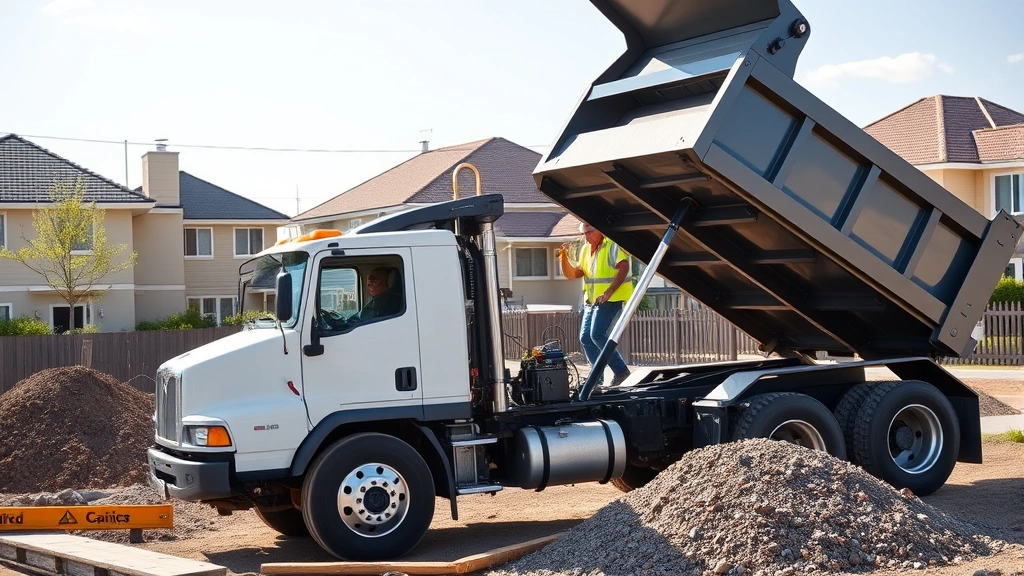
Standard dump trucks represent the most common category, featuring hydraulic beds that tilt to unload bulk materials like dirt, gravel, sand, and aggregates. These vehicles typically handle construction debris, landscaping waste, and general excavation byproducts. Capacity ranges from 10 to 20 cubic yards depending on vehicle size and configuration.
Roll-off container services provide large enclosed boxes that contractors load and leave on-site, with the service provider retrieving and disposing of contents later. This model works exceptionally well for demolition projects, major renovations, and situations where you need extended material accumulation periods. Containers typically range from 10 to 40 cubic yards.
Specialized hauling services address unique material types requiring specific handling. Hazardous waste, asbestos, contaminated soil, and regulated materials demand certified operators with appropriate licensing and insurance. Environmental compliance becomes paramount with these services, making vendor selection critical.
Articulated dump trucks (ADTs) excel in rough terrain and tight spaces where standard vehicles cannot navigate. Construction sites with limited access, mining operations, and remote locations benefit significantly from ADT services. These vehicles maintain superior maneuverability while handling substantial loads.
When developing your business plan for construction or contracting operations, accounting for dump truck logistics becomes a core operational consideration. Understanding service categories directly impacts scheduling, budgeting, and resource allocation across your projects.
How to Find Dump Truck Companies in Your Area
Locating qualified dump truck companies near you involves multiple research channels, each offering distinct advantages. A comprehensive search strategy combines digital research, industry connections, and local referrals.
Digital search strategies form the foundation of modern vendor discovery. Google Maps searches for “dump truck companies near me” or “hauling services in [city]” reveal local operators with reviews, ratings, and contact information. Google Business profiles often display service areas, equipment photos, and customer testimonials that indicate operational quality. Industry-specific directories like the American Trucking Associations member database provide vetted companies meeting professional standards.
Specialized platforms connect contractors with equipment providers. Services like Craigslist, TaskRabbit, and industry platforms like DOZR or EquipmentShare list available dump trucks with operator information and availability calendars. These platforms often include user ratings and booking histories that provide transparency about service reliability.
Local referrals from construction companies, general contractors, and property managers offer invaluable insights. Contractors who regularly source dump truck services know which operators maintain equipment properly, arrive on schedule, and handle materials responsibly. Your network within the construction industry represents a goldmine of practical recommendations.
Chamber of Commerce and trade associations maintain directories of local service providers. The Associated General Contractors of America (AGC), local construction industry associations, and Chamber of Commerce listings feature vetted members committed to professional standards. These organizations often provide preliminary screening that filters out unreliable operators.
Supplier networks through concrete companies, landscaping suppliers, and demolition firms frequently recommend trusted dump truck operators. These businesses depend on reliable hauling services and maintain relationships with operators who consistently perform well. A single conversation with a supplier contact can yield multiple quality referrals.
Implementing effective business networking strategies within your local construction community opens doors to established, trusted service providers. Building meaningful professional connections creates access to vendor networks that newer market entrants cannot easily penetrate.
Evaluating Local Service Providers
Identifying dump truck companies represents just the initial step. Thorough evaluation ensures you partner with operators who deliver consistent, professional service aligned with your project standards.
Licensing and insurance verification forms the non-negotiable foundation of vendor evaluation. Every legitimate dump truck operator must carry current commercial driver’s licenses (CDL) for drivers, commercial vehicle liability insurance, and appropriate cargo coverage. Request certificates of insurance directly from providers’ insurance agents to verify active coverage. Uninsured or underinsured operators expose your projects to catastrophic liability risks if accidents occur.
Equipment inspection and maintenance records reveal operational standards. Professional operators maintain detailed service records, demonstrate regular maintenance schedules, and conduct pre-trip inspections documented in driver logs. Request to observe equipment before hiring, examining hydraulic systems, tire conditions, bed mechanisms, and overall structural integrity. Well-maintained equipment indicates management quality and reduces breakdown risks that disrupt project schedules.
Safety record evaluation extends beyond insurance to include accident history, OSHA compliance, and driver safety ratings. The Federal Motor Carrier Safety Administration (FMCSA) provides public access to carrier safety and fitness information through their Safety and Fitness Electronic Records (SAFER) system. Reviewing FMCSA records reveals accident patterns, inspection violations, and regulatory compliance status.
Reference checks and customer testimonials provide practical insights into service quality. Request three to five references from recent projects comparable to yours. Contact these references directly, asking specific questions about punctuality, professionalism, damage or spillage incidents, and whether they would rehire the provider. Online reviews on Google, Yelp, and industry platforms offer additional perspective, though you should weight recent reviews more heavily than older feedback.
Responsiveness and communication evaluation begins during initial inquiry. Professional operators respond promptly to inquiries, provide clear quotes, explain service terms transparently, and answer questions thoroughly. Slow responses, vague pricing, or evasive communication patterns suggest operational disorganization that will likely persist throughout your engagement.
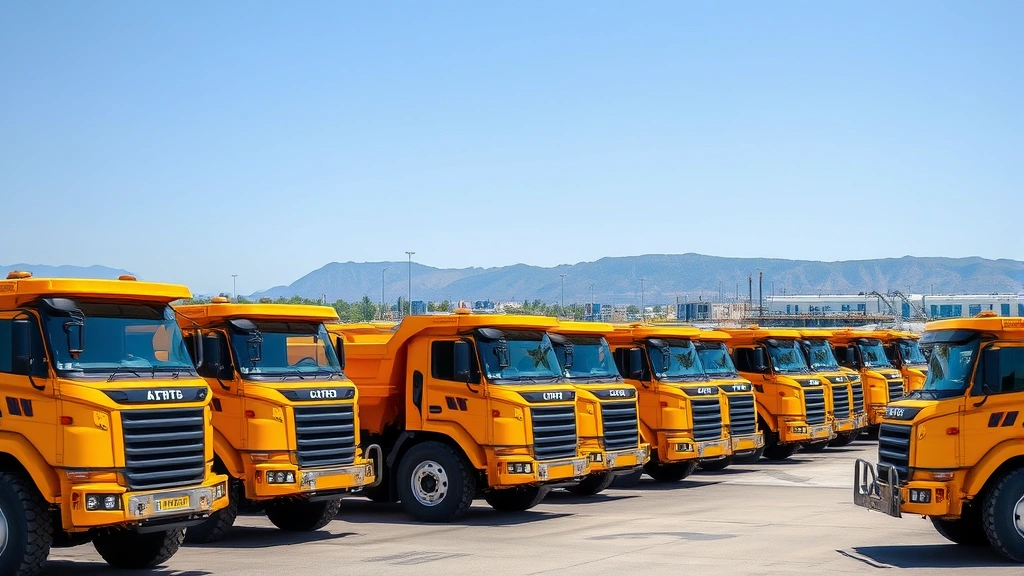
Capacity and availability assessment ensures providers can accommodate your project timeline. Ask about fleet size, typical lead times for scheduling, availability during your project window, and backup procedures if primary equipment becomes unavailable. Operators with larger fleets and flexible scheduling accommodate urgent requests better than single-truck operations with limited flexibility.
Your SWOT analysis of potential vendors—examining their strengths, weaknesses, opportunities, and threats—helps you make strategic vendor selections aligned with your organizational priorities and risk tolerance.
Pricing Models and Cost Factors
Understanding dump truck pricing structures prevents budget surprises and enables accurate project cost estimation. Multiple pricing models exist, each appropriate for different project types.
Per-load pricing charges a flat fee for each truck dispatch, typically ranging from $150 to $500 depending on distance, material type, and local market conditions. This model works well for one-time or occasional needs where you don’t require frequent service. Per-load pricing simplifies budgeting but becomes expensive for projects requiring multiple daily loads.
Hourly rates typically range from $75 to $150 per hour, including operator and equipment. This model suits projects with variable timing where you cannot predict exact load quantities in advance. Hourly rates work well for demolition projects, site cleanup, and situations requiring flexibility.
Monthly contracts provide dedicated equipment and operator availability at negotiated rates, typically $3,000 to $8,000 monthly depending on equipment type and usage intensity. Long-term projects benefit from contract pricing that locks in rates and guarantees availability. Contractors often achieve 20-30% cost savings through monthly contracts compared to per-load pricing.
Distance-based pricing adds charges based on haul distance from pickup location to disposal site. Local hauls (under 10 miles) cost significantly less than distant hauls requiring 30+ minutes of travel time. Understanding the disposal site location relative to your project location helps you anticipate distance charges accurately.
Material type surcharges apply to hazardous materials, asbestos, contaminated soil, and other regulated waste requiring specialized disposal. These surcharges reflect increased disposal costs, regulatory compliance requirements, and operator certification expenses. Budget 50-200% premium for specialized material handling compared to standard debris.
Minimum charges apply to most dump truck services, typically $200-$400 minimum per dispatch even if the load doesn’t fill the truck bed. This reflects the operator’s fixed costs for fuel, time, and vehicle operation. Understanding minimum charges prevents sticker shock on small loads.
Idle time and wait charges apply when drivers wait beyond standard loading/unloading times. Most operators include 30-45 minutes of wait time in their base charge, then charge $50-$100 per additional hour. Coordinating material staging to minimize driver wait time reduces project costs significantly.
Strategic cost management requires understanding these pricing variables. Consolidating loads, scheduling multiple pickups efficiently, and selecting appropriate service models based on project characteristics directly impact your bottom line. Harvard Business Review’s pricing strategies research demonstrates how understanding service provider cost structures enables better procurement decisions.
Selecting the Right Equipment for Your Project
Matching equipment specifications to your specific project requirements optimizes efficiency and cost-effectiveness. Different projects demand different truck configurations.
Standard single-axle dump trucks (10-14 cubic yard capacity) suit most construction debris removal, landscaping waste, and general hauling. These versatile vehicles navigate standard streets and access typical job sites. Single-axle trucks cost less than larger alternatives and work efficiently for moderate-volume projects.
Tandem-axle dump trucks (16-20+ cubic yard capacity) handle larger volumes and heavier materials. Construction sites with significant excavation, demolition projects, and commercial landscaping benefit from tandem-axle capacity. These vehicles require proper site access but transport more material per trip, reducing overall load counts.
Roll-off containers (10-40 cubic yard capacity) excel for projects with extended timelines or uncertain volume requirements. Demolition, major renovations, and site cleanup benefit from containers that remain on-site, allowing material accumulation without daily scheduling. Container services eliminate wait-time pressure that burdens standard dump truck operations.
Articulated dump trucks handle challenging terrain, tight spaces, and rough site conditions where standard trucks cannot operate. Mining operations, remote construction sites, and projects with limited access benefit from ADT maneuverability. ADT services cost more but enable project execution in otherwise inaccessible locations.
Specialized vehicles for hazardous waste, contaminated soil, or regulated materials require certified operators and equipment meeting specific regulatory standards. Never attempt to transport hazardous materials using standard dump truck services. Specialized haulers possess proper containment, documentation systems, and disposal facility relationships.
Selecting equipment involves analyzing your specific needs: What volume of material requires hauling? What is the material type and weight? How frequently do you need service? What site access constraints exist? How long will your project extend? Answering these questions guides you toward optimal equipment selection.
Building Long-Term Vendor Relationships
Strategic contractors recognize that dump truck operators represent valuable long-term partners deserving relationship investment. Strong vendor relationships yield tangible benefits including priority scheduling, improved pricing, flexible terms, and quality service.
Consistent communication forms the foundation of strong vendor relationships. Provide clear project timelines, accurate load estimates, and advance notice of service needs. When circumstances change, communicate promptly rather than canceling last-minute or creating unexpected scheduling conflicts. Operators who feel respected and informed deliver better service and accommodate requests more readily.
Fair pricing recognition acknowledges that dump truck operators face real costs—fuel, maintenance, insurance, labor, and equipment depreciation. Expecting unrealistically low pricing creates adversarial relationships where operators cut corners or prioritize other clients. Fair pricing that reflects actual service costs builds loyalty and ensures quality.
Prompt payment practices significantly strengthen vendor relationships. Operators depend on timely payment to cover fuel, maintenance, and labor costs. Establishing consistent payment terms (net 15 or net 30) and honoring those terms demonstrates professionalism and reliability. Late payments create cash flow stress that leads operators to deprioritize your future requests.
Referral opportunities strengthen relationships and provide mutual benefit. When your dump truck operator performs exceptionally, refer them to other contractors and colleagues. These referrals expand their business while demonstrating your confidence in their capabilities. Operators remember clients who generate new business opportunities.
Feedback and recognition of good performance reinforce positive behaviors. Compliment professional service, acknowledge punctuality, and recognize driver courtesy. Positive feedback costs nothing but significantly impacts operator morale and commitment to your projects. A simple “great work” email or verbal appreciation builds relationship equity.
Flexibility and accommodation during unexpected challenges demonstrates partnership mindset. If your project schedule changes or unexpected circumstances arise, work collaboratively with your operator toward solutions rather than demanding immediate compliance with changed requirements. Operators reciprocate flexibility when they know you treat them as valued partners.
Applying business leadership principles to vendor management—treating operators with respect, communicating clearly, and recognizing contributions—creates vendor relationships that outperform transactional arrangements.
Developing strong vendor relationships also connects to broader employee engagement strategies. When your team views vendors as partners rather than service providers, they communicate more effectively and collaborate toward shared success.
FAQ
What should I ask dump truck companies before hiring them?
Request proof of commercial driver’s licenses for all operators, current liability insurance certificates, FMCSA safety ratings, equipment maintenance records, and references from recent projects. Ask about capacity, availability during your project window, backup equipment procedures, and exact pricing including all potential surcharges. Clarify wait time policies, minimum charges, and payment terms before agreeing to service.
How far in advance should I schedule dump truck services?
For standard services, schedule 3-7 days in advance to secure your preferred time slots. During peak seasons (spring and fall construction), schedule 1-2 weeks ahead. Emergency same-day or next-day service typically costs 50% premium over standard scheduling. Establishing monthly contracts provides guaranteed availability without advance scheduling pressure.
What happens if a dump truck damages my property during service?
Legitimate operators carry liability insurance covering property damage. Photograph any damage immediately and document details including date, time, and damage description. Report damage to the operator and their insurance company within 24 hours. The operator’s liability insurance should cover reasonable repair costs. Always verify insurance before hiring to ensure coverage exists.
Can I dispose of any material in dump trucks?
No. Hazardous materials, asbestos, radioactive waste, and many regulated substances require specialized disposal through certified hazardous waste haulers. Standard dump trucks cannot legally transport these materials. Ask your dump truck operator about material restrictions and request recommendations for specialized hauling if needed.
How do I reduce dump truck costs for my project?
Consolidate materials to minimize load counts, stage materials efficiently to reduce driver wait time, negotiate monthly contracts for extended projects, select appropriate equipment capacity avoiding oversized vehicles, and schedule during off-peak seasons when rates are lower. Comparing multiple quotes and building relationships with operators who offer volume discounts also reduces costs.
What is the difference between a dump truck and a roll-off container service?
Dump trucks transport loose materials immediately, ideal for jobs requiring quick removal. Roll-off containers remain on-site, allowing material accumulation over time, better for demolition and major renovations. Dump trucks cost less per load but require frequent scheduling. Containers cost more initially but offer flexibility and often lower total cost for extended projects.


