
Top 5 Largest Trucking Companies: Industry Review
The trucking industry represents one of America’s most critical economic sectors, moving approximately 70% of domestic freight tonnage annually. These logistics powerhouses generate hundreds of billions in revenue while managing complex supply chains, massive fleets, and thousands of employees across the nation. Understanding the largest trucking companies provides valuable insights into operational excellence, market consolidation trends, and the future of freight transportation.
The competitive landscape among major trucking firms reveals how scale, technology integration, and strategic partnerships drive success in this capital-intensive industry. Whether you’re a business leader seeking logistics partners or an industry analyst tracking market dynamics, examining these industry titans offers critical perspective on what it takes to dominate the transportation sector.
1. UPS Freight and Logistics Division
United Parcel Service (UPS) operates one of the world’s largest logistics networks, with its freight division commanding significant market share in less-than-truckload (LTL) and full truckload services. As a subsidiary of the global logistics giant, UPS Freight manages thousands of vehicles across North America, generating annual revenues exceeding $20 billion for the parent company’s logistics segment.
The company’s competitive advantage stems from its integrated network approach, combining ground transportation with air and international logistics capabilities. UPS Freight operates approximately 125 facilities nationwide and maintains one of the industry’s most technologically advanced tracking systems. Their investment in business process automation benefits has streamlined operations, reduced delivery times, and improved customer satisfaction metrics significantly.
UPS has strategically positioned itself to handle specialized freight including healthcare logistics, automotive components, and time-sensitive shipments. The company’s scale allows them to negotiate favorable rates with shippers while maintaining premium service standards. Their customer base includes Fortune 500 companies relying on predictable, reliable freight solutions integrated with broader supply chain strategies.
2. FedEx Freight Corporation
FedEx Freight operates as the LTL subsidiary of FedEx Corporation, maintaining a robust network of service centers and distribution hubs throughout North America. With annual revenues around $9-10 billion and a fleet exceeding 19,000 vehicles, FedEx Freight competes directly with UPS while maintaining distinct operational philosophies and service specializations.
The company distinguishes itself through exceptional service reliability metrics and a highly trained workforce. FedEx Freight operates over 600 service locations and employs approximately 24,000 team members dedicated to freight transportation and logistics. Their technology infrastructure supports real-time shipment visibility, enabling customers to track freight with precision previously unavailable in traditional trucking operations.
FedEx Freight’s pricing strategies reflect their premium positioning within the LTL market. The company targets customers valuing reliability and specialized handling over lowest-cost options. This approach, detailed extensively in discussions about business pricing strategies, has maintained profit margins despite competitive pressures. Their focus on service quality over volume maximization distinguishes them from competitors pursuing aggressive growth strategies.
The organization invests heavily in equipment modernization and driver training programs. FedEx Freight’s commitment to employee engagement improvements has resulted in lower turnover rates compared to industry averages, creating operational stability and consistent service delivery.
3. J.B. Hunt Transport Services
J.B. Hunt Transport Services stands as one of America’s largest trucking companies by revenue, with annual earnings exceeding $15 billion and a fleet comprising over 23,000 tractors and 68,000 trailers. Founded in 1961, the company has evolved from regional carrier to multinational logistics provider operating across North America, Mexico, and Canada.
The company’s diversified service portfolio includes intermodal transportation, dedicated contract carriage, final mile delivery, and integrated logistics solutions. This diversification strategy reduces reliance on any single service line, providing revenue stability during market fluctuations. J.B. Hunt’s intermodal division, combining truck and rail transportation, represents a significant competitive advantage in long-haul freight markets.
J.B. Hunt has invested substantially in autonomous vehicle technology and digital logistics platforms. Their forward-thinking approach to transportation innovation positions them advantageously for industry evolution toward automated freight movement. The company’s technology initiatives address driver shortage challenges while improving safety metrics and operational efficiency.
Their customer relationships span manufacturing, retail, automotive, and consumer goods sectors. J.B. Hunt’s ability to provide customized logistics solutions enables them to command premium pricing while maintaining customer loyalty. The company’s emphasis on operational excellence and continuous improvement reflects best practices in asset-intensive industries.
4. Schneider National
Schneider National operates as a diversified transportation and logistics company generating annual revenues around $5-6 billion. With approximately 13,000 trucks and 32,000 trailers, Schneider National maintains significant presence in long-haul trucking, dedicated contract carriage, and intermodal services throughout North America.
The company distinguishes itself through technology leadership and digital transformation initiatives. Schneider National’s digital freight marketplace, Schneider Connect, leverages artificial intelligence and data analytics to optimize load matching and route planning. This platform-based approach modernizes traditional freight brokerage models, creating efficiency gains benefiting both carriers and shippers.
Schneider National’s commitment to driver experience and recruitment addresses the industry’s persistent talent shortage. The company offers competitive compensation, flexible scheduling, and career advancement opportunities that attract and retain quality drivers. Their recognition of human capital value aligns with broader discussions on how to improve employee engagement in demanding operational environments.
The organization’s sustainability initiatives include investments in alternative fuel vehicles, aerodynamic equipment modifications, and route optimization reducing carbon emissions. These environmental commitments respond to customer demands for sustainable supply chains while improving operational efficiency and long-term cost structures.
5. Knight-Swift Transportation
Knight-Swift Transportation emerged as a major industry consolidator following the 2017 merger of Knight Transportation and Swift Transportation, creating North America’s largest trucking company by fleet size. The combined entity operates approximately 23,000 trucks and 71,000 trailers, generating annual revenues exceeding $5 billion.
The merger created significant operational synergies through network consolidation, equipment standardization, and administrative efficiency improvements. Knight-Swift’s scale enables aggressive pricing on large customer contracts while maintaining profitability through operational leverage. The company serves diverse industries including automotive, manufacturing, retail, and consumer goods.
Knight-Swift has invested substantially in technology infrastructure, including advanced telematics systems providing real-time fleet monitoring and performance analytics. These capabilities support driver safety programs, reduce accident rates, and optimize fuel consumption across the massive fleet. The company’s data-driven approach to operations management reflects industry best practices in performance optimization.
The organization faces integration challenges typical of large-scale mergers, including cultural alignment and system consolidation. However, the strategic rationale remains compelling: consolidated operations achieve cost advantages while providing customers with national coverage and service consistency previously unavailable from single carriers.
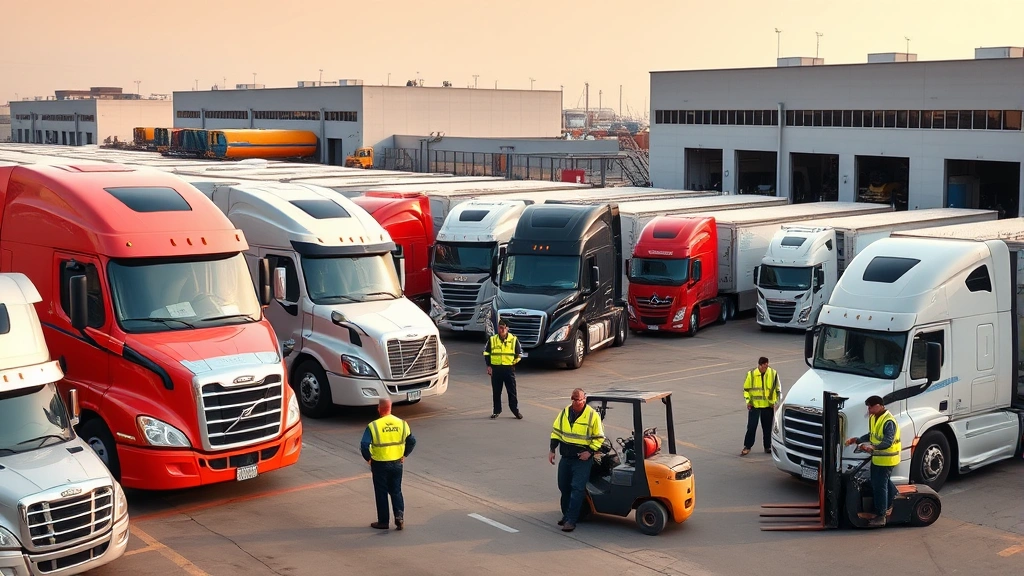
” alt=”Large trucking company distribution center with rows of trailers and loading docks during daytime operations”>
Key Success Factors in Trucking
The largest trucking companies share common success attributes that distinguish them from smaller competitors. Understanding these factors provides insight into industry dynamics and competitive positioning strategies.
Scale and Network Coverage: National and continental networks enable these companies to serve customers with complex, multi-location shipping requirements. Scale reduces per-unit costs through equipment utilization optimization and administrative efficiency.
Technology Integration: Advanced telematics, route optimization algorithms, and digital freight marketplaces provide competitive advantages in efficiency and customer service. Technology investments reduce operational costs while improving reliability metrics customers increasingly demand.
Asset Efficiency: Fleet utilization rates, trailer-to-tractor ratios, and equipment maintenance standards directly impact profitability in capital-intensive transportation. The largest companies achieve superior metrics through scale economies and operational discipline.
Talent Management: Driver recruitment, retention, and training represent critical competitive factors in tight labor markets. Companies emphasizing employee engagement strategies achieve lower turnover and superior safety records compared to industry averages.
Customer Diversification: Exposure to multiple industries and customer segments reduces revenue volatility. Companies serving automotive, manufacturing, and retail sectors balance cyclical demand fluctuations across industries.
Financial Strength: Capital availability for equipment purchases, technology investments, and strategic acquisitions enables larger companies to invest in competitive advantages smaller competitors cannot match. Financial resources support weathering industry downturns and capitalizing on growth opportunities.
Industry Trends and Challenges
The trucking industry confronts significant transformation pressures reshaping competitive dynamics and operational requirements for all market participants.
Driver Shortage Crisis: Demographic trends, regulatory requirements, and lifestyle preferences have created persistent driver shortages affecting capacity and wage inflation. The industry must attract younger workers through improved compensation, technology adoption reducing driving stress, and career advancement opportunities.
Autonomous Vehicle Development: Self-driving truck technology promises significant long-term disruption to driver-dependent business models. Leading companies invest heavily in autonomous capabilities while managing transition risks to existing driver workforce and customer relationships.
Regulatory Pressures: Environmental regulations increasingly mandate emissions reductions, alternative fuel adoption, and efficiency improvements. Compliance costs escalate for all competitors, but larger companies absorb these investments more easily through scale.
Fuel Price Volatility: Fuel costs represent significant operating expenses subject to geopolitical and market forces beyond company control. Fuel surcharge mechanisms pass costs to customers, but volatile prices create margin uncertainty and customer dissatisfaction.
E-Commerce Impact: Rising online retail demand drives freight growth but creates complex delivery requirements and last-mile logistics challenges. Companies must develop specialized capabilities serving e-commerce customers with different service requirements than traditional freight customers.
Supply Chain Digitalization: Customers increasingly demand digital visibility, automated booking systems, and integrated logistics platforms. Technology investments required to meet these expectations create barriers to entry for smaller competitors lacking capital resources.
Industry consolidation appears likely to continue as regulatory compliance costs, technology investments, and customer demands favor larger, better-capitalized competitors. Smaller carriers may face margin compression and consolidation pressures as the largest companies achieve competitive advantages through scale and investment capacity.
The trucking industry’s evolution reflects broader transportation sector trends toward automation, sustainability, and digital integration. Companies successfully navigating these transformations will likely achieve dominant market positions, while slower-moving competitors risk margin erosion and consolidation.
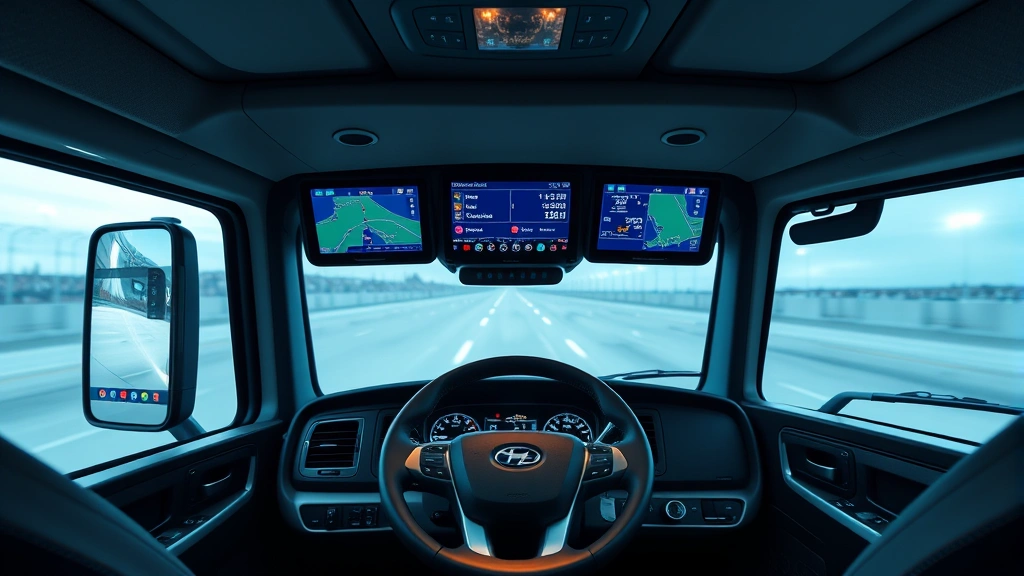
” alt=”Modern truck driver in cab monitoring digital dashboard with GPS and telematics systems while parked at rest area”>
FAQ
What makes the largest trucking companies more profitable than smaller competitors?
Scale advantages enable larger companies to achieve superior equipment utilization rates, negotiate favorable supplier contracts, spread technology investments across larger revenue bases, and absorb regulatory compliance costs more efficiently. Additionally, customer relationships with major enterprises provide volume discounts and stable revenue streams unavailable to smaller carriers.
How do trucking companies address driver shortages?
Leading companies employ comprehensive talent strategies including competitive wage packages, flexible scheduling, advanced safety training, career advancement opportunities, and improved work environment conditions. Technology investments reducing stress and fatigue also help attract and retain quality drivers. Some companies offer signing bonuses and student loan repayment assistance programs.
What role does technology play in trucking company competitiveness?
Technology enables route optimization reducing fuel consumption, telematics systems improving safety and maintenance scheduling, digital freight marketplaces improving load matching efficiency, and customer platforms providing real-time visibility. Technology investments reduce operational costs while improving service quality, creating competitive advantages for well-capitalized companies.
How are trucking companies preparing for autonomous vehicle technology?
Leading companies invest in autonomous vehicle research and development while building digital infrastructure supporting autonomous fleet management. However, widespread autonomous adoption remains years away due to regulatory, technical, and infrastructure challenges. Companies balance autonomous investments with current driver-focused operations.
What factors drive consolidation in the trucking industry?
Consolidation stems from regulatory compliance cost increases, technology investment requirements, customer demands for national coverage, and competitive pressures favoring scale. Larger companies achieve cost advantages through network consolidation, administrative efficiency, and equipment standardization that smaller competitors struggle to match.
How do pricing strategies differ among large trucking companies?
Premium carriers like FedEx Freight emphasize service reliability and specialized handling, commanding higher rates. Volume-focused carriers like Knight-Swift compete on price and capacity. Mid-market companies balance service quality with competitive pricing. Customer relationships, service differentiation, and competitive positioning determine appropriate pricing strategies for different market segments.
What sustainability initiatives do major trucking companies pursue?
Large carriers invest in alternative fuel vehicles (natural gas, electric), aerodynamic equipment reducing drag, route optimization software minimizing mileage, and driver training programs improving fuel efficiency. These initiatives reduce environmental impact while lowering long-term operational costs. Customer demands for sustainable supply chains drive investment acceleration.


