Pacific Fur Company History: Expert Overview of North America’s Pioneering Trade Enterprise
The Pacific Fur Company stands as one of the most significant commercial ventures in North American history, representing a pivotal moment when American enterprise extended its reach across the continental frontier. Founded by John Jacob Astor in 1810, this ambitious fur trading operation attempted to establish a transcontinental network that would dominate the lucrative fur trade and generate unprecedented wealth. The company’s story encompasses exploration, competition, geopolitical conflict, and the complex dynamics of early American capitalism.
Understanding the Pacific Fur Company requires examining not merely its operations but its strategic vision, the entrepreneurial ambitions it embodied, and the lasting impact it had on American expansion and commerce. The enterprise demonstrated how visionary leadership and calculated risk-taking could transform regional markets into continental concerns, though ultimate success proved elusive. This overview explores the company’s founding, operations, competitive challenges, and historical significance.
Founding and Vision of the Pacific Fur Company
John Jacob Astor, a German-born merchant who had already accumulated considerable wealth through the North American fur trade, conceived the Pacific Fur Company with audacious ambition. In 1810, Astor secured a charter and capitalized the enterprise with approximately $400,000—an enormous sum for the period. His vision extended beyond regional fur trading; Astor envisioned a comprehensive system that would control the fur supply chain from the Pacific Northwest to the Atlantic markets and European export centers.
The foundational strategy involved establishing a permanent settlement at the mouth of the Columbia River, which Astor named Astoria. This post would serve as the anchor for a vast network of trading posts stretching inland, connected by supply lines and communication routes. The geographic positioning was strategically brilliant: the Columbia River provided access to the rich fur territories of the interior while offering direct ocean access for shipping valuable pelts to international markets. Astor’s model represented an early form of vertical integration, controlling production, logistics, and distribution.
The company employed multiple operational approaches simultaneously. Maritime fur traders would sail directly to the Pacific coast, trading manufactured goods with indigenous peoples for sea otter pelts. Simultaneously, overland trading posts would acquire beaver and other furs from interior regions. This dual approach maximized market access and diversified revenue streams—a sophisticated business model for the era.
Astor’s enterprise also benefited from strategic political positioning. He cultivated relationships with President James Madison’s administration, securing government support for his commercial ambitions. The Pacific Fur Company represented American economic expansion into territories claimed but not yet effectively controlled by the United States, serving both commercial and geopolitical interests.
Strategic Operations and Trade Network
The operational complexity of the Pacific Fur Company rivaled modern multinational corporations in its scope and sophistication. The enterprise maintained three primary operational divisions: the maritime division, the overland division, and the administrative headquarters in New York.
The maritime operations dispatched ships equipped with trade goods—blankets, iron tools, firearms, alcohol, and luxury items—to the Pacific Northwest coast. Experienced sea captains negotiated with Native American tribes, exchanging these manufactured goods for premium sea otter pelts that commanded extraordinary prices in Canton, China, and European markets. The triangular trade pattern involved purchasing goods in America, trading them on the Pacific coast, selling furs in Asia, and importing luxury goods back to American markets.
The overland division, established after the famous Lewis and Clark Expedition demonstrated the feasibility of transcontinental travel, created a network of trading posts extending from the Columbia River eastward. These posts served multiple functions: acquiring furs from trappers and indigenous traders, storing supplies for seasonal operations, and maintaining communication across vast distances. The company employed hundreds of trappers, voyageurs, and support staff, many recruited from French-Canadian trading communities with extensive frontier experience.
Astor’s leadership demonstrated sophisticated business budgeting and financial planning capabilities. The company maintained detailed accounting systems tracking inventory, expenses, and revenues across geographically dispersed operations. Supply chain management required coordinating shipments from New York, managing seasonal trading cycles, and maintaining adequate inventory levels across multiple trading posts.
The company also invested in infrastructure development. Astor funded construction of Astoria as a permanent settlement, complete with warehouses, residential quarters, and fortifications. This represented significant capital investment in fixed assets designed to establish American presence in contested territory. The settlement required maintaining supply lines across the continent, representing logistical challenges comparable to modern global supply chain operations.
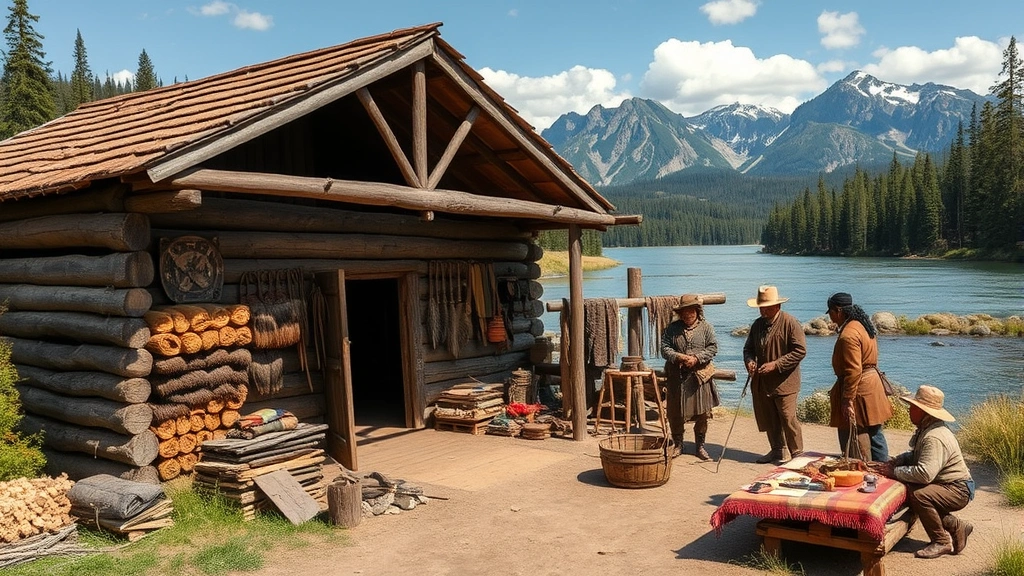
” alt=”Historical fur trading post with wooden palisades, trading goods displayed, Native American and European traders in period clothing conducting commerce in Pacific Northwest landscape”>
Competition and Market Dynamics
The Pacific Fur Company’s operational environment proved intensely competitive, with established rivals possessing significant advantages. The North West Company, a Canadian enterprise with deep roots in the fur trade, operated extensively throughout North American territories. The Hudson’s Bay Company, chartered by the British Crown and possessing centuries of trading experience, controlled vast territories in Canada. Both competitors possessed established relationships with indigenous traders, experienced personnel, and superior knowledge of frontier operations.
Astor’s enterprise faced the fundamental challenge of late entry into a mature market. Despite superior capitalization and ambitious vision, the Pacific Fur Company lacked the institutional knowledge and established trading relationships that characterized competitors. Additionally, the company’s reliance on overland supply lines created vulnerability—maintaining communication and supply across thousands of miles of wilderness proved extraordinarily difficult.
Competitive dynamics shifted as the company established operations. The North West Company aggressively opposed Astor’s expansion, viewing American presence as threatening to Canadian dominance. Competition manifested through direct competition for furs, undercutting on prices, and occasionally through hostile actions against American trading posts. The competitive environment resembled modern business exit strategies considerations—Astor recognized that sustaining the enterprise against entrenched competitors would require either overwhelming competitive advantages or strategic exit mechanisms.
Market dynamics also reflected broader economic patterns. The fur trade operated within international commodity markets influenced by European fashion trends, Chinese demand patterns, and exchange rate fluctuations. Fur prices fluctuated significantly based on fashion preferences and economic conditions, creating revenue volatility that challenged long-term planning and profitability.
The War of 1812 and Operational Collapse
The declaration of war between the United States and Britain in 1812 fundamentally transformed the Pacific Fur Company’s operational environment. The conflict directly threatened American commercial interests in the Pacific Northwest, as British naval superiority created risks for maritime operations and supply lines. More significantly, the war strengthened the competitive position of British-allied rivals—the North West Company and Hudson’s Bay Company.
The company’s Astoria settlement became increasingly isolated and vulnerable. Supply lines from the eastern United States faced disruption, and the military situation in the Pacific Northwest remained uncertain. American military forces could not effectively protect the settlement, leaving it exposed to potential British attack or seizure. The company’s personnel at Astoria faced declining morale as the geopolitical situation deteriorated.
In 1813, facing unsustainable competitive pressure and wartime disruptions, the Pacific Fur Company negotiated the sale of Astoria to the North West Company. This represented a dramatic reversal of Astor’s grand vision—the company’s primary asset and geographic anchor was surrendered to competitors. The sale price reflected the asset’s diminished value under wartime conditions, substantially reducing the company’s return on invested capital.
The military conclusion of the War of 1812 did not restore the Pacific Fur Company’s operational capability. The company never reestablished significant presence on the Pacific coast, ceding the region to British competitors. The Columbia River territory, which Astor had envisioned as the foundation of an American commercial empire, remained under British influence for decades following the war.
Legacy and Historical Impact
Despite its operational failure, the Pacific Fur Company exerted profound historical influence on American expansion and commercial development. The enterprise demonstrated that American capital and entrepreneurial vision could compete in frontier regions, establishing a precedent for subsequent commercial ventures extending American influence westward. The company’s activities contributed to American claims on Pacific Northwest territories, supporting subsequent diplomatic negotiations with Britain.
The Pacific Fur Company represented an early model of American multinational enterprise, combining maritime operations, overland trading networks, and international commerce within a single organizational structure. The company’s operational complexity anticipated modern business structures, including centralized management, distributed operations, and integrated supply chain management.
Astor’s personal fortune ultimately derived from New York real estate rather than the fur trade, illustrating a broader historical pattern—early American wealth frequently accumulated through real estate and urban development rather than commodity trading. However, Astor’s fur trading activities established his credibility and generated initial capital that funded subsequent investments. The Pacific Fur Company, while operationally unsuccessful, served as a vehicle for wealth accumulation and strategic positioning.
The company’s history also illuminates the competitive dynamics of early American capitalism. The enterprise demonstrated that superior capitalization alone could not overcome competitors with established market position, institutional knowledge, and geopolitical advantages. The competitive failure of the Pacific Fur Company reflected broader patterns in American business history—late entrants frequently struggle against established rivals despite significant resource advantages.
Modern business sustainability strategies can benefit from examining the Pacific Fur Company’s experience. The company’s vulnerability to external disruptions—geopolitical conflict, competitive pressure, and supply chain fragility—illustrates the importance of building resilient organizational structures capable of withstanding environmental shocks. The company’s reliance on transcontinental supply lines created operational fragility that competitors with established regional networks avoided.

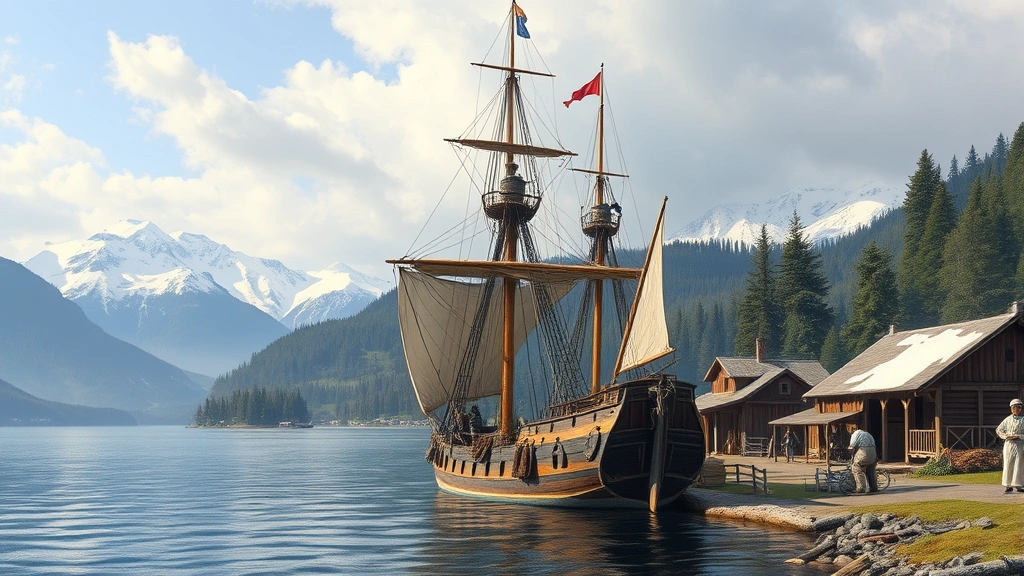
” alt=”Early 19th century merchant ship at Pacific coast trading post, wooden structures, cargo being loaded, mountains and water in background, period-accurate maritime commerce scene”>
Lessons for Modern Business Strategy
The Pacific Fur Company’s history offers valuable insights for contemporary business leaders considering expansion into competitive markets. First, the company’s experience demonstrates that capital alone cannot overcome competitive disadvantages. Astor’s substantial financial resources proved insufficient to overcome the North West Company’s and Hudson’s Bay Company’s established relationships, operational experience, and regional knowledge. Modern enterprises expanding into new markets must recognize that capital advantages require complementary competitive strengths.
Second, the company’s vulnerability to geopolitical disruption illustrates the importance of political risk assessment. Astor’s enterprise operated within an unstable geopolitical environment where international conflict could rapidly transform competitive dynamics. Contemporary businesses operating in international markets must similarly assess political risk and develop contingency strategies. The company’s failure to anticipate or adequately prepare for the War of 1812’s impact contributed significantly to its operational collapse.
Third, the Pacific Fur Company’s supply chain fragility offers lessons about operational resilience. The company’s dependence on transcontinental supply lines created vulnerability when external disruptions occurred. Modern supply chain management emphasizes redundancy, diversification, and resilience—principles that would have benefited the Pacific Fur Company had they been available in the early 19th century.
Fourth, the company’s experience suggests that employee productivity and morale significantly influence enterprise success in challenging environments. The company’s personnel at Astoria faced declining morale as competitive and geopolitical pressures intensified, contributing to reduced operational effectiveness. Organizations operating in hostile environments must invest in personnel retention and morale maintenance.
Fifth, the Pacific Fur Company’s history demonstrates the importance of strategic exit planning. Astor’s decision to sell Astoria rather than attempt to defend it during wartime reflected pragmatic assessment of unsustainable operational conditions. Contemporary business leaders should similarly recognize when environmental conditions make continued operations uneconomical and develop exit strategies that preserve remaining capital value.
Finally, the company’s attempt to integrate maritime operations, overland trading networks, and international commerce anticipated modern vertical integration strategies. However, the company’s experience suggests that vertical integration creates complexity that can become disadvantageous in rapidly changing competitive environments. Organizations must balance integration benefits against the organizational agility required to respond to competitive and environmental challenges.
FAQ
Who founded the Pacific Fur Company?
John Jacob Astor founded the Pacific Fur Company in 1810. Astor was a German-born merchant who had already accumulated substantial wealth through North American fur trading before establishing the more ambitious Pacific Fur Company.
What was the primary purpose of the Pacific Fur Company?
The company aimed to establish a transcontinental fur trading network controlling the supply chain from the Pacific Northwest to Atlantic and European markets. The enterprise combined maritime fur trading on the Pacific coast with overland trading posts extending inland.
Where was Astoria located?
Astoria was established at the mouth of the Columbia River in present-day Oregon. This location provided access to interior fur territories while offering direct ocean access for shipping furs to international markets.
Why did the Pacific Fur Company fail?
The company faced multiple challenges: competitive pressure from established rivals like the North West Company and Hudson’s Bay Company, the War of 1812 which disrupted operations and strengthened British competitors, and the company’s vulnerability to geopolitical disruptions. In 1813, Astor sold Astoria to the North West Company, effectively ending the enterprise.
What was the company’s lasting impact?
Despite operational failure, the Pacific Fur Company demonstrated American commercial capability in frontier regions, contributed to American territorial claims in the Pacific Northwest, and anticipated modern multinational business structures. The company’s history illustrates important lessons about competitive dynamics, supply chain resilience, and strategic planning.
Did John Jacob Astor profit from the Pacific Fur Company?
Astor’s financial returns from the fur trading enterprise were modest, particularly after the sale of Astoria during wartime. However, the company contributed to Astor’s wealth accumulation and established his credibility as a major merchant. Astor subsequently accumulated substantial wealth through New York real estate investments.
How did the Pacific Fur Company compare to competitors?
The company faced significant competitive disadvantages against established rivals. The North West Company and Hudson’s Bay Company possessed established trading relationships, operational experience, and superior knowledge of frontier conditions. Despite superior capitalization, the Pacific Fur Company could not overcome these competitive advantages.