Ohio Brewing Company: Columbus Craft Scene Insights
Columbus has emerged as one of America’s most dynamic craft brewing hubs, with Ohio brewing companies establishing themselves as serious contenders in a competitive national market. The city’s thriving beer culture reflects broader trends in craft beverage innovation, entrepreneurial spirit, and community engagement that define modern American manufacturing. From neighborhood taprooms to award-winning production facilities, Columbus-based breweries demonstrate how regional businesses can build sustainable competitive advantages through quality, authenticity, and strategic market positioning.
The craft brewing renaissance in Columbus represents more than just a trend—it’s a fundamental shift in how local businesses create value, build brand loyalty, and contribute to regional economic development. Understanding the dynamics of Ohio brewing companies provides valuable insights into small business strategy, market differentiation, and the critical importance of operational excellence in today’s competitive landscape.

The Rise of Columbus Craft Brewing
Columbus’s brewing renaissance began in earnest during the early 2000s when a handful of passionate entrepreneurs recognized an underserved market opportunity. The city, historically dominated by regional and national beer brands, lacked the vibrant craft beer culture prevalent in Portland, San Francisco, and Denver. This gap represented a significant opportunity for forward-thinking business leaders to establish Ohio brewing companies that could capture market share while building authentic community connections.
The growth trajectory has been remarkable. From just a few craft breweries a decade ago, Columbus now hosts over 40 operational breweries and brewpubs, making it one of the Midwest’s most concentrated craft beer markets. This expansion reflects successful execution of fundamental business principles: identifying market gaps, delivering superior products, and building sustainable operational models. The success of these ventures demonstrates how establishing a clear mission statement and brand identity can differentiate companies in crowded markets.
Leading Ohio brewing companies have invested heavily in production capacity, taproom experiences, and distribution networks. These breweries recognize that craft beer success requires balancing artisanal quality with business discipline. Many have implemented sophisticated inventory management systems, quality control protocols, and financial management practices that rival larger corporate operations. The competitive intensity has driven continuous innovation in brewing techniques, flavor profiles, and customer experience design.
Market Dynamics and Competitive Landscape
The Columbus craft beer market operates within a complex ecosystem of regional, national, and international competitors. Local Ohio brewing companies compete not only with each other but with established craft breweries from other regions seeking distribution in Ohio’s growing market. This competitive pressure has forced Columbus breweries to develop distinctive positioning strategies that emphasize local pride, unique flavor innovation, and community integration.
Market research indicates that consumers increasingly prefer locally-produced beverages, creating a significant competitive advantage for Columbus-based breweries. This preference stems from multiple factors: perceived freshness, support for local economies, environmental considerations regarding transportation, and the authentic storytelling that local breweries can provide. Successful Ohio brewing companies leverage these advantages through strategic marketing that emphasizes their Columbus heritage and commitment to community.
Distribution represents a critical competitive battleground. Ohio’s three-tier alcohol distribution system creates barriers that protect local breweries from larger competitors while simultaneously constraining their growth potential. Understanding and navigating these regulatory frameworks requires expertise that extends beyond brewing. Many successful Ohio brewing companies employ dedicated compliance and business development professionals who understand distribution networks, regulatory requirements, and retail relationships. This operational sophistication mirrors the business infrastructure that comprehensive small business insurance provides—essential risk management that enables growth.
According to McKinsey research on beverage industry dynamics, craft breweries that successfully navigate regulatory complexity while maintaining product consistency achieve significantly higher profitability margins than industry averages. Columbus breweries have increasingly adopted this strategic approach, investing in professional management structures that separate brewing expertise from business operations.
Operational Excellence and Quality Standards
Quality consistency represents the foundation of sustainable competitive advantage for Ohio brewing companies. Unlike larger breweries that rely on economies of scale, craft breweries differentiate through superior product quality, innovative recipes, and meticulous production standards. This quality orientation requires significant operational investment in equipment, training, and process management.
Leading Columbus breweries have implemented rigorous quality assurance protocols that rival pharmaceutical manufacturing standards. Every batch undergoes comprehensive sensory evaluation, chemical analysis, and microbial testing. This commitment to quality extends beyond the brewing process to packaging, storage, and distribution. Temperature-controlled environments, nitrogen purging systems, and advanced packaging technologies ensure product integrity from production through consumer consumption.
The brewing process itself demands both artistic creativity and scientific precision. Head brewers function simultaneously as artists, chemists, and engineers. They must understand complex fermentation chemistry, ingredient interactions, and flavor development while maintaining consistent results across hundreds of batches annually. This specialized expertise commands premium compensation and represents a critical competitive resource for Ohio brewing companies.
Process standardization enables quality consistency while maintaining room for innovation. Successful breweries document every aspect of production—water chemistry, grain specifications, yeast strains, temperature profiles, timing parameters—creating reproducible systems that reliably deliver target flavor profiles. This systematic approach to production reflects modern business management principles and positions breweries for sustainable growth.
Brand Building and Customer Engagement
Brand identity drives competitive differentiation in the craft brewing market. Ohio brewing companies that effectively communicate distinctive brand stories, values, and product attributes achieve stronger customer loyalty and premium pricing compared to competitors emphasizing only product quality. Successful brands create emotional connections that transform customers into advocates who actively promote products within their social networks.
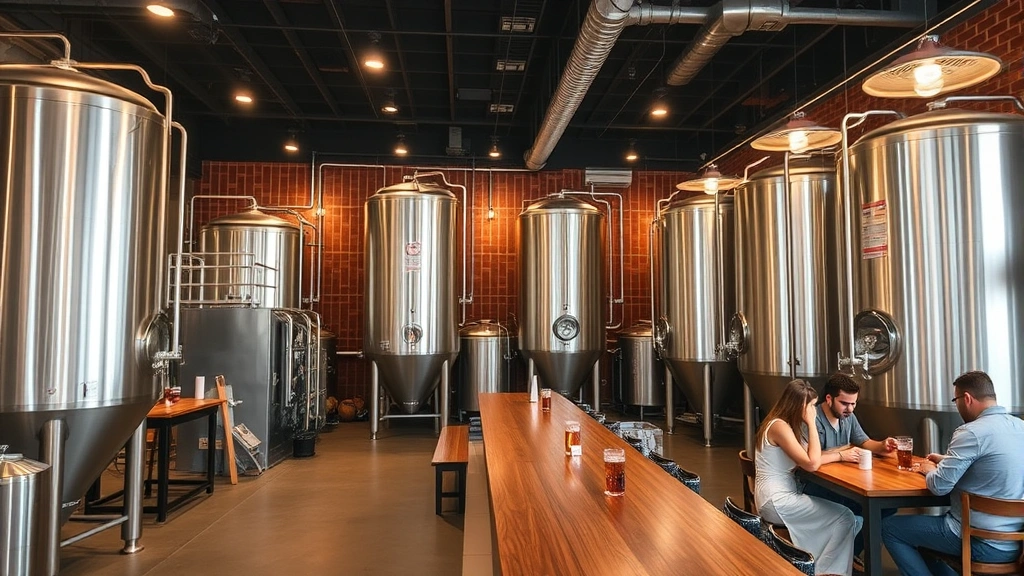
Taproom experiences represent critical brand touchpoints where Ohio brewing companies engage directly with consumers. These spaces function simultaneously as retail locations, social venues, and marketing platforms. Thoughtfully designed taprooms communicate brand personality through aesthetic choices, music curation, and beverage selection. Many Columbus breweries host events, live music, food collaborations, and community gatherings that deepen customer relationships and generate organic word-of-mouth marketing.
Social media strategy amplifies brand reach and enables direct consumer engagement. Ohio brewing companies leverage Instagram, Facebook, and TikTok to showcase brewing processes, announce new releases, and celebrate community connections. User-generated content—customers sharing photos of brewery visits—provides authentic marketing that corporate advertising cannot match. Successful breweries actively cultivate these content streams through strategic engagement and community building.
Customer complaint management directly impacts brand reputation and loyalty. As detailed in comprehensive resources about handling customer complaints effectively, breweries that respond promptly and generously to quality concerns build stronger long-term relationships than those avoiding accountability. This principle proves particularly important in the craft beverage market where passionate consumers expect transparent engagement.
Business Infrastructure Requirements
Operating a successful Ohio brewing company requires sophisticated business infrastructure extending far beyond brewing equipment. Regulatory compliance, financial management, human resources, supply chain coordination, and risk management demand professional attention that many startup founders initially underestimate.
Legal and regulatory compliance imposes substantial operational requirements. Federal Alcohol and Tobacco Tax and Trade Bureau (TTB) regulations govern label approval, production reporting, and tax obligations. State-level regulations control distribution channels, pricing, and promotional activities. Local zoning laws, building codes, and health department requirements add additional complexity. Navigating this regulatory landscape requires specialized expertise and ongoing monitoring as regulations evolve.
Financial management systems must track production costs with precision while providing accurate profitability analysis. Craft breweries operate with relatively thin margins compared to other beverage categories, making cost control critical to financial sustainability. Sophisticated breweries implement activity-based accounting that assigns all production costs—including labor, utilities, ingredients, packaging, and equipment depreciation—to specific products, enabling accurate pricing decisions and profitability assessment.
Human resources management becomes increasingly important as breweries grow beyond founder-operated ventures. Recruiting experienced brewers, production staff, taproom personnel, and administrative professionals requires competitive compensation packages and professional management structures. Implementing team building activities that boost collaboration and morale proves particularly valuable in craft brewing where passionate employees drive product innovation and customer experience quality.
Supply chain management requires coordination with ingredient suppliers, packaging vendors, and distribution partners. Successful Ohio brewing companies maintain strong relationships with these critical partners while negotiating favorable terms that protect profitability. Many breweries have adopted just-in-time inventory systems that minimize storage costs while ensuring ingredient freshness. Technology integration through cloud computing advantages in business enables real-time supply chain visibility and coordination across multiple partners.
Risk management extends beyond the insurance coverage that protects against operational risks to include product liability, worker safety, environmental compliance, and business continuity planning. Breweries that proactively identify and mitigate risks achieve greater operational stability and lower insurance costs than those addressing risks reactively.
Maintaining comprehensive company secretarial files and documentation systems ensures regulatory compliance while providing institutional memory that supports succession planning and operational continuity. Professional breweries implement document management systems that organize regulatory approvals, production records, financial documentation, and strategic planning materials in accessible, auditable formats.
Growth Strategies and Market Expansion
Ohio brewing companies pursue diverse growth strategies reflecting their size, resources, and market positioning. Early-stage breweries typically focus on establishing strong local market presence through direct-to-consumer sales in taprooms and regional distribution through local retailers. This approach builds brand awareness and cash flow while minimizing distribution complexity.
As breweries mature, many pursue geographic expansion into adjacent markets—Cincinnati, Cleveland, and regional markets beyond Ohio. This expansion requires significant capital investment in production capacity, distribution infrastructure, and marketing support. Successful expansion strategies emphasize gradual market entry with appropriate production capacity to fulfill retailer demand without overextending resources.
Contract brewing arrangements enable growth while managing capital requirements. Some Ohio brewing companies partner with larger production facilities to manufacture products during growth phases, avoiding the substantial capital expenditure required for dedicated production space. This flexible approach allows breweries to test market demand and scale production efficiently as sales volume justifies dedicated capacity.
Product line expansion represents another critical growth lever. Successful Ohio brewing companies develop distinctive flagship beers that establish brand identity, then introduce seasonal offerings and experimental products that maintain customer interest and capture diverse consumer preferences. Limited-edition releases generate excitement and urgency that drive retail traffic and social media engagement.
Hospitality expansion transforms breweries from beverage manufacturers into experiential destinations. Many Columbus breweries have invested in food programs, outdoor spaces, and entertainment offerings that encourage extended visits and repeat patronage. These enhancements increase per-visit spending while deepening customer relationships and generating additional revenue streams beyond beverage sales.
According to Harvard Business Review analysis of craft beverage consolidation, successful breweries that achieve sustainable growth typically maintain founder involvement in product development while implementing professional management structures for operations and finance. This balance preserves the authenticity and innovation that drive consumer preference while ensuring financial discipline and operational scalability.
Strategic partnerships with complementary businesses—restaurants, food trucks, event venues—expand market reach and create mutually beneficial relationships. Many Ohio brewing companies have developed robust event programs that position their taprooms as community gathering spaces, generating significant incremental revenue while strengthening brand loyalty.
Sustainability initiatives increasingly influence purchasing decisions, particularly among younger consumers. Ohio brewing companies that implement water conservation, waste reduction, and renewable energy initiatives not only reduce operational costs but also build brand differentiation with environmentally conscious consumers. These initiatives require initial investment but generate long-term competitive advantages and operational efficiencies.
As detailed in Forbes insights on craft beverage brand scaling, successful growth requires balancing expansion ambition with commitment to core values and product quality. Breweries that compromise quality in pursuit of volume growth typically experience declining customer loyalty and brand damage that proves difficult to reverse.
FAQ
What regulatory requirements do Ohio brewing companies face?
Ohio breweries must navigate federal TTB regulations governing production reporting, label approval, and tax obligations; state-level regulations controlling distribution and promotion; and local zoning, building, and health requirements. Compliance requires ongoing professional attention and specialized expertise in alcohol beverage regulations.
How do Columbus breweries differentiate in a competitive market?
Successful Ohio brewing companies differentiate through superior product quality, distinctive flavor innovation, authentic brand storytelling, memorable taproom experiences, strong community engagement, and local market positioning. These factors combine to create emotional connections that drive customer loyalty and premium pricing.
What are typical startup costs for a craft brewery?
Craft brewery startup costs typically range from $500,000 to $2 million depending on production capacity, taproom amenities, and location. This includes equipment, facility build-out, working capital, and professional services. Contract brewing arrangements enable lower-cost market entry for breweries willing to outsource production initially.
How important is distribution to brewery success?
Distribution represents critical importance to brewery growth beyond initial local markets. Successfully navigating Ohio’s three-tier distribution system, building relationships with distributors and retailers, and ensuring product availability directly impacts revenue growth and brand building.
What growth strategies work best for craft breweries?
Effective growth strategies include establishing strong local market presence initially, pursuing geographic expansion into adjacent markets, developing distinctive flagship products, expanding product lines with seasonal and experimental offerings, enhancing taproom experiences, and building strategic partnerships with complementary businesses.
How do successful breweries maintain quality while scaling production?
Quality maintenance requires rigorous standardization of production processes, comprehensive quality assurance protocols, investment in advanced equipment, ongoing staff training, and thoughtful expansion that avoids overextending production capacity. Successful breweries document every aspect of production to ensure consistency across increasing batch volumes.


