
Top Community Engagement Examples: Expert Insights
Community engagement has become a cornerstone of modern business strategy, transforming how companies build brand loyalty, strengthen social responsibility, and create lasting impact. Leading organizations recognize that meaningful community involvement extends far beyond corporate philanthropy—it represents a fundamental shift in how businesses operate within their social ecosystems. When executed strategically, community engagement initiatives generate measurable returns through enhanced reputation, employee satisfaction, customer retention, and sustainable growth.
The most successful companies understand that authentic community engagement requires genuine commitment, transparent communication, and long-term investment. Whether through volunteer programs, local partnerships, educational initiatives, or environmental sustainability projects, forward-thinking organizations are demonstrating that profit and purpose can coexist harmoniously. This comprehensive guide explores proven community engagement examples from industry leaders, revealing the strategies and insights that drive meaningful change while strengthening business fundamentals.
Why Community Engagement Matters for Business Success
Community engagement represents a strategic investment that delivers multifaceted organizational benefits. According to Harvard Business Review, companies that prioritize community involvement experience improved employee retention, enhanced brand perception, and stronger customer relationships. The correlation between social responsibility and business performance has become increasingly evident in contemporary markets where consumers actively support brands aligned with their values.
Modern employees, particularly millennials and Gen Z professionals, demonstrate significantly higher engagement and loyalty when their employers demonstrate genuine community commitment. This alignment between employee values and organizational purpose creates a virtuous cycle: motivated employees deliver superior performance, attract top talent, and become authentic brand ambassadors within their networks. Research from leading business institutions shows that organizations with robust community engagement programs experience 22% lower turnover rates compared to peers lacking such initiatives.
Beyond human capital advantages, community engagement strengthens business resilience and market positioning. Companies embedded in their communities develop stronger stakeholder relationships, gain valuable market insights, and create competitive differentiation. When businesses invest in community development, they simultaneously invest in their own long-term sustainability and market relevance.
Leading Examples of Corporate Community Engagement
Salesforce’s 1-1-1 Model stands as a paradigm-shifting community engagement framework. This comprehensive approach dedicates 1% of equity, 1% of employee time, and 1% of product resources to community initiatives. Since implementing this model in 1999, Salesforce has contributed over $600 million to nonprofit organizations, engaged thousands of employees in volunteer activities, and provided software to educational institutions globally. The model demonstrates how strategic resource allocation can scale community impact while reinforcing company culture and employee purpose.
Google’s Community Impact Programs showcase technology-driven engagement strategies. Through Google.org, the company funds nonprofit organizations, provides digital skills training in underserved communities, and partners with educational institutions to bridge technology access gaps. Google’s commitment extends beyond financial contributions—the company mobilizes its technical expertise, volunteer workforce, and platform capabilities to address systemic challenges in digital inclusion and economic opportunity.
Microsoft’s TEALS Program exemplifies how tech companies leverage specialized expertise for educational transformation. This initiative pairs software engineers with high school teachers to co-teach computer science, addressing critical STEM education gaps in underresourced schools. The program has impacted over 100,000 students, demonstrating that community engagement becomes most powerful when companies contribute their unique capabilities rather than generic corporate citizenship activities.
Unilever’s Sustainable Living Plan integrates community engagement with environmental sustainability and business growth. The company invests in smallholder farmer development, women’s economic empowerment, and sustainable livelihoods across supply chains in developing markets. This approach strengthens supply chain resilience while creating meaningful impact in communities where Unilever operates, illustrating how community engagement can align with core business operations.
JPMorgan Chase’s Community Development Initiatives demonstrate financial services sector leadership in community engagement. The organization invests billions in affordable housing development, small business lending, and workforce development programs. These initiatives address systemic economic barriers while creating long-term value for communities and the company’s business objectives.
Building Authentic Employee Volunteer Programs
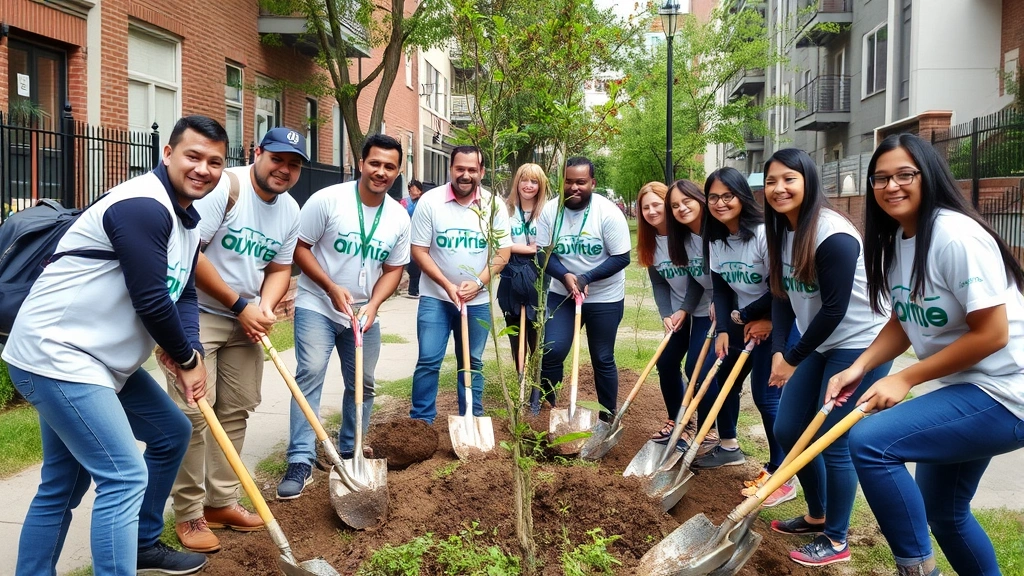
Effective employee volunteer programs represent the intersection of community impact and organizational culture. The most successful initiatives move beyond transactional volunteer days to create sustained engagement opportunities that align with employee skills, interests, and career development goals. Organizations implementing this approach report higher volunteer participation rates, stronger employee satisfaction, and more meaningful community outcomes.
Strategic volunteer program design incorporates several critical elements: clear alignment with organizational values, diverse opportunity portfolios accommodating different skill levels and time commitments, structured volunteer training and support, and transparent impact measurement. Companies like IBM have created sophisticated volunteer matching systems that connect employee expertise with nonprofit needs, maximizing value creation for both parties.
Volunteering strengthens the foundation for business team building activities by creating shared purpose beyond workplace transactions. When employees collaborate on meaningful community projects, they develop deeper relationships, enhanced communication capabilities, and stronger organizational cohesion. This informal team development often proves more impactful than traditional team-building exercises because it grounds connection in authentic contribution.
Progressive organizations provide paid volunteer time, leadership development through volunteer roles, and clear pathways for employees to direct community investment. Patagonia, for example, allocates 40 hours annually of paid time for employee environmental activism, recognizing that volunteer engagement strengthens company culture while advancing mission-critical environmental goals. This investment signals organizational commitment to employee values and community impact simultaneously.
Measuring volunteer program effectiveness extends beyond participation metrics. Forward-thinking companies track volunteer satisfaction, skill development, community partner feedback, impact outcomes, and long-term volunteer retention. This comprehensive measurement approach ensures program sustainability and continuous improvement while demonstrating ROI to leadership and stakeholders.
Strategic Partnerships and Local Impact Initiatives
The most impactful community engagement initiatives emerge from strategic partnerships between corporations, nonprofits, government agencies, and community organizations. These collaborations leverage diverse resources, expertise, and networks to address complex social challenges that no single organization can solve independently. According to McKinsey & Company, companies that develop deep community partnerships experience stronger stakeholder trust and more sustainable impact outcomes.
Effective partnership models require clear alignment on objectives, transparent communication structures, shared decision-making processes, and equitable resource distribution. Companies like Starbucks have developed exemplary community partnerships addressing youth employment, education, and economic opportunity. The Starbucks College Achievement Plan, developed in partnership with Arizona State University, removes financial barriers to education for eligible employees and their families, demonstrating how partnerships can create transformative community benefits.
Local impact initiatives gain strength when corporations invest in understanding community assets, challenges, and aspirations. This community-centered approach, grounded in genuine listening and collaborative problem-solving, contrasts sharply with top-down corporate philanthropy models. Companies like Whole Foods Market have built community engagement into core operations through local procurement partnerships, community investment programs, and grassroots economic development support in neighborhoods where they operate.
Educational partnerships represent particularly high-impact engagement opportunities. Companies partnering with schools, universities, and workforce development organizations address critical talent pipeline challenges while strengthening community economic mobility. Forbes has documented how technology companies partnering with community colleges create pathways to meaningful employment while addressing persistent skills gaps in local labor markets.
Environmental partnerships demonstrate how community engagement aligns with sustainability imperatives. Companies partnering with conservation organizations, environmental nonprofits, and government agencies on habitat restoration, renewable energy projects, and pollution remediation initiatives create measurable environmental benefit while strengthening community relationships. These initiatives often become powerful employee engagement tools, as environmental sustainability increasingly reflects employee values and career aspirations.
Measuring Community Engagement ROI
Strategic community engagement requires rigorous measurement frameworks that demonstrate impact while informing continuous improvement. Leading organizations move beyond activity metrics—volunteer hours, dollars contributed, events hosted—to outcome-focused measurement capturing actual community benefit and organizational value creation.
Comprehensive measurement frameworks incorporate quantitative and qualitative indicators. Quantitative metrics might include participants served, jobs created, students impacted, or environmental resources preserved. Qualitative assessment captures participant satisfaction, community feedback, relationship strength, and narrative impact stories demonstrating transformation and meaning. The most sophisticated measurement approaches employ mixed-methods research combining statistical analysis with deep qualitative understanding.
Organizations should measure community engagement impact across multiple dimensions: direct community benefit (poverty reduction, educational advancement, environmental improvement), organizational benefit (employee retention, brand enhancement, stakeholder trust), and systemic benefit (policy influence, market transformation, social norm shifts). This multidimensional approach reveals the full value proposition of community investment while identifying areas for strategic improvement.
Tools like social return on investment (SROI) frameworks quantify social and environmental value creation in financial terms, enabling comparison with alternative investment strategies. Accenture research demonstrates that companies employing sophisticated impact measurement strategies achieve higher stakeholder engagement, more effective resource allocation, and stronger business case justification for continued community investment.
Transparency in impact reporting builds stakeholder trust and accountability. Companies publishing comprehensive community impact reports—detailing investments, activities, outcomes, and lessons learned—demonstrate genuine commitment to community benefit beyond marketing purposes. This transparency also enables peer learning and industry-wide advancement as companies share methodologies, challenges, and insights across organizational boundaries.
Technology and Digital Community Engagement
Digital transformation has fundamentally expanded community engagement possibilities, enabling organizations to reach broader audiences, facilitate distributed participation, and scale impact in previously constrained ways. Technology-enabled engagement complements in-person community connection, creating hybrid models that maximize reach and flexibility.
Digital platforms facilitate volunteer matching, project management, and impact tracking at scale. Companies leverage specialized volunteer platforms, social media engagement strategies, and custom digital tools to coordinate distributed volunteers, communicate impact stories, and mobilize virtual participation. Remote work normalization has accelerated adoption of digital community engagement, enabling employees to contribute meaningfully regardless of geographic location.
Effective business communication tools enhance community engagement program coordination and transparency. Project management platforms, communication systems, and data analytics tools enable real-time coordination across complex volunteer networks while providing visibility into program performance and impact trajectories. This technological infrastructure supports scalability while maintaining quality and consistency.
Social media platforms amplify community engagement storytelling, enabling organizations to share impact narratives, celebrate community partners, and mobilize broader stakeholder participation. Companies leveraging digital storytelling effectively create emotional connection, inspire action, and build supportive communities around social causes. Authentic digital engagement, grounded in genuine community relationships rather than performative corporate social media, proves most effective in building lasting stakeholder commitment.
Data analytics capabilities enable sophisticated impact measurement and continuous program optimization. Organizations analyzing volunteer engagement patterns, community outcome data, and organizational benefit metrics gain actionable insights for strategic refinement. Predictive analytics can identify high-impact opportunities, optimize resource allocation, and anticipate emerging community needs requiring organizational response.

Overcoming Common Community Engagement Challenges
Despite genuine organizational commitment, community engagement initiatives encounter predictable challenges requiring strategic attention and adaptive management. Understanding common obstacles enables proactive problem-solving and stronger program design from inception.
Authenticity and Community Trust represent foundational challenges. Communities have experienced extractive corporate relationships where companies benefit from association while delivering minimal genuine impact. Overcoming this skepticism requires sustained presence, transparent communication, community leadership in program design, and accountability for promised outcomes. Companies must demonstrate commitment through consistent resource investment and willingness to follow community direction rather than imposing corporate agendas.
Resource Constraints and Sustainability plague many well-intentioned programs. Organizations launch initiatives with enthusiasm but lack sustained funding, staffing, or leadership commitment necessary for long-term impact. Successful programs establish dedicated funding mechanisms, professional coordination, and explicit organizational prioritization ensuring continuity through leadership transitions and business cycle fluctuations.
Measuring Meaningful Impact presents methodological and resource challenges. Organizations struggle to move beyond activity metrics to genuine outcome measurement, particularly for long-term, systemic change. Addressing this challenge requires investment in evaluation capacity, partnership with research institutions, and willingness to acknowledge both successes and limitations. Stanford Graduate School of Business research emphasizes that rigorous measurement, even when revealing disappointing results, strengthens long-term program effectiveness and organizational learning.
Diversity and Inclusivity within community engagement programs require intentional design and ongoing attention. Organizations risk replicating existing power imbalances and exclusionary patterns within volunteer programs and community partnerships unless explicitly designing for inclusive participation. This requires examining volunteer opportunity accessibility, community partner selection criteria, decision-making processes, and resource distribution through equity lenses.
Employee Burnout and Volunteer Fatigue emerge when organizations overextend limited volunteer capacity. Sustainable programs balance ambitious community impact goals with realistic volunteer availability and wellbeing. Successful organizations establish healthy participation norms, rotate intensive volunteer opportunities, provide adequate training and support, and celebrate contributions without demanding unsustainable commitment.
Alignment with Business Operations represents a strategic challenge requiring executive attention. When community engagement functions operate peripherally to core business operations, initiatives remain underfunded, understaffed, and vulnerable to elimination during business downturns. Integration of community engagement into strategic planning, performance metrics, and resource allocation ensures institutional resilience and meaningful business-community alignment.
Companies addressing workplace diversity through community engagement initiatives strengthen both internal culture and external impact. When organizations prioritize diversity in volunteer recruitment, community partner selection, and leadership development, they simultaneously advance workplace inclusion and community equity.
FAQ
What are the most effective types of community engagement for businesses?
The most effective community engagement initiatives align organizational capabilities with community needs. Strategic options include employee volunteer programs, educational partnerships, environmental sustainability projects, local economic development initiatives, and nonprofit capacity building. Effectiveness depends on authentic commitment, sustained resource investment, community collaboration, and rigorous impact measurement. Organizations should select engagement models matching their unique assets, stakeholder priorities, and strategic objectives.
How can small businesses implement community engagement programs?
Small businesses build effective community engagement through focused initiatives leveraging their specific expertise and local market position. Options include pro bono professional services, local scholarship programs, community event sponsorship, supply chain community investment, and employee volunteer time. Small businesses often develop particularly strong community relationships through authentic local presence and personalized engagement. Starting with one strategic initiative and building from demonstrated impact creates sustainable momentum.
What is the business case for community engagement investment?
Community engagement delivers measurable business value through employee retention and satisfaction, brand enhancement, customer loyalty, market insights, stakeholder trust, and risk mitigation. Research demonstrates that companies with robust community engagement programs outperform peers on multiple financial and operational metrics. Additionally, community engagement addresses systemic challenges affecting long-term business sustainability, including talent availability, consumer preferences, regulatory environment, and social stability.
How do organizations measure community engagement success?
Comprehensive measurement incorporates quantitative metrics (participants served, resources invested, outcomes achieved) and qualitative assessment (satisfaction, relationship quality, narrative impact). Leading organizations employ social return on investment frameworks, longitudinal outcome tracking, community partner feedback, and employee engagement surveys. Transparent impact reporting builds stakeholder trust while enabling continuous program improvement.
How can companies ensure authentic community engagement versus performative corporate social responsibility?
Authentic engagement prioritizes community voice in program design, transparent communication about limitations and challenges, sustained long-term commitment, equitable partnership structures, and accountability for promised outcomes. Organizations should involve community members in decision-making, follow community direction rather than imposing corporate agendas, and demonstrate willingness to address difficult issues honestly. Authentic engagement often proves less photogenic than performative alternatives but builds genuine trust and lasting impact.
What role does employee involvement play in community engagement effectiveness?
Employee participation strengthens community engagement through volunteer contribution, authentic stakeholder relationships, organizational culture alignment, and sustained program commitment. Employees serve as bridge between corporate organizations and communities, bringing personal networks, professional expertise, and genuine passion. Programs facilitating meaningful employee involvement generate stronger community relationships, higher volunteer satisfaction, and more sustainable organizational commitment to community impact.