Retail Automation in Action: Top Company Insights
The retail landscape has undergone a seismic transformation over the past decade, driven largely by technological innovation and changing consumer expectations. Retail automation has become not merely an operational efficiency tool but a competitive necessity, reshaping how leading companies manage inventory, fulfill orders, and serve customers across physical and digital channels. From warehouse robotics to AI-powered checkout systems, retailers worldwide are investing billions to modernize their operations and stay ahead of market disruption.
This comprehensive exploration examines how industry leaders are leveraging automation technologies to drive profitability, enhance customer experiences, and optimize workforce allocation. By understanding these real-world implementations, retail executives and business strategists can identify automation opportunities within their own operations and benchmark against best-in-class performers.
The Evolution of Retail Automation
Retail automation has evolved dramatically from basic barcode scanning systems to sophisticated ecosystems integrating artificial intelligence, robotics, and real-time data analytics. The industry’s transformation reflects broader digital trends and consumer behavior shifts that have fundamentally altered retail operations. What began as a cost-reduction initiative has matured into a strategic capability that differentiates market leaders from competitors.
The Harvard Business Review has extensively documented how automation adoption correlates with improved financial performance across retail segments. Companies implementing comprehensive automation strategies report operational cost reductions of 20-35%, while simultaneously improving delivery speeds and product availability. This dual benefit—efficiency gains coupled with enhanced customer satisfaction—explains the accelerating investment pace across the sector.
Today’s retail automation encompasses multiple dimensions: supply chain optimization, warehouse operations, last-mile delivery, in-store logistics, and customer-facing technologies. Leading retailers recognize that isolated automation initiatives yield limited returns; instead, they’re building integrated systems where data flows seamlessly across departments and platforms. This holistic approach enables real-time decision-making and adaptive operations that respond dynamically to market conditions.
Warehouse and Fulfillment Automation Leaders
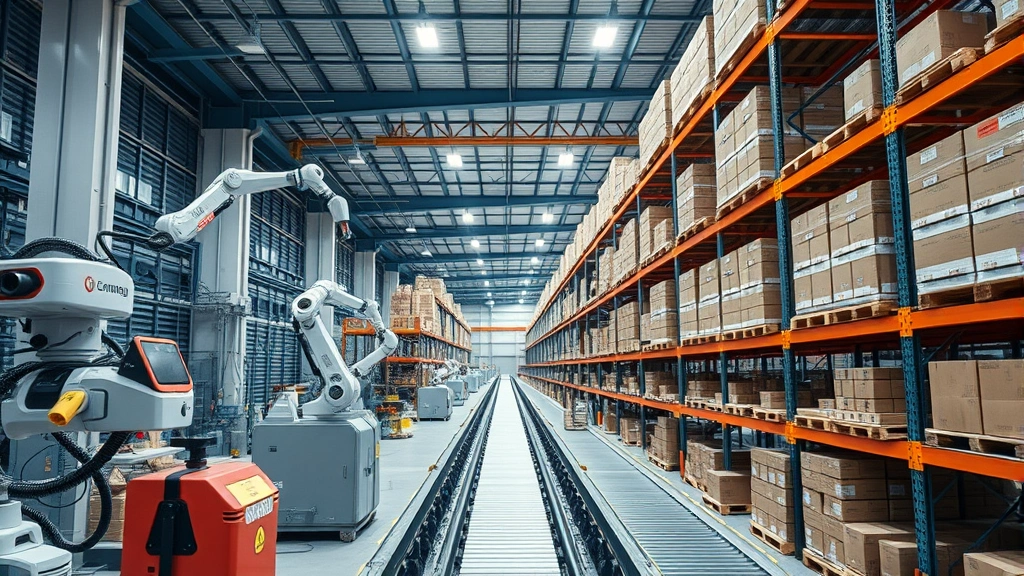
Amazon remains the gold standard for warehouse automation, operating over 520 fulfillment centers globally with approximately 520,000 robotic drive units. Their Kiva robots (now Amazon Robotics) revolutionized order fulfillment by bringing inventory to human workers rather than requiring workers to traverse massive warehouses. This innovation reduced picking time by 50% and enabled Amazon to process millions of orders daily with remarkable accuracy. The system’s success prompted numerous competitors to develop similar technologies or partner with automation vendors.
Walmart has invested heavily in automation across its supply chain, deploying automated case-handling systems, sorting robots, and AI-powered demand forecasting. Their distribution centers now feature automated systems that handle high-velocity, high-volume operations while maintaining flexibility for seasonal fluctuations. Walmart’s automation strategy directly supports their employee productivity improvements by reallocating workers from repetitive tasks to higher-value activities like quality control and customer service.
Target has implemented Symbotic automation systems in multiple distribution centers, featuring robotic case-handling and sortation capabilities that increase throughput while reducing labor requirements. These systems process orders faster and with fewer errors than traditional methods, directly improving the company’s ability to fulfill online orders and maintain in-store inventory levels.
Kroger, a major grocery retailer, deployed robotic automation in multiple fulfillment centers to handle the explosive growth in online grocery orders. Their Ocado partnership brought sophisticated automated picking systems that can process thousands of orders daily, fundamentally changing how grocery e-commerce operates. The grocery sector’s unique challenges—perishability, variety, and customer expectations for rapid delivery—make automation particularly valuable.
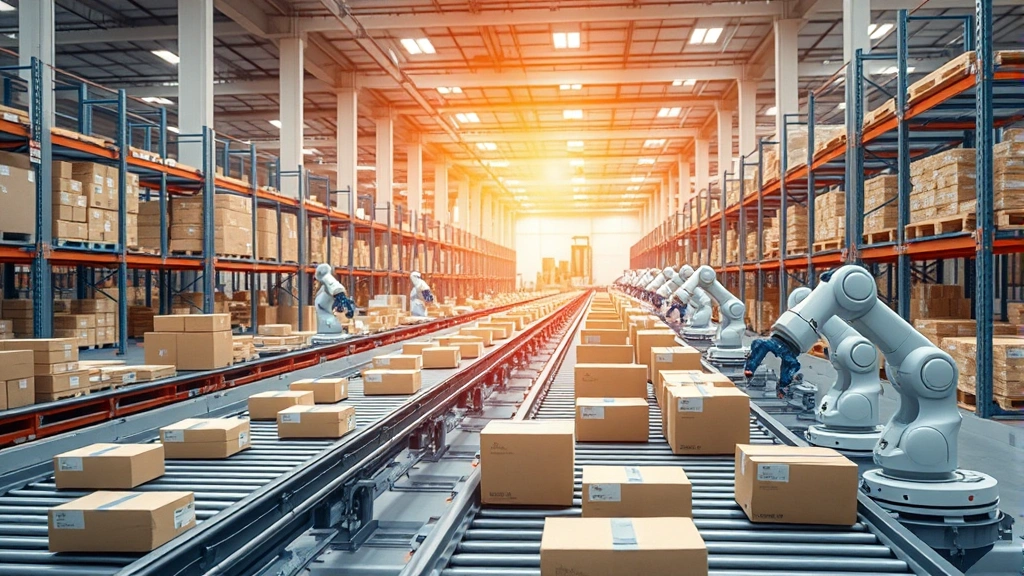
DHL and logistics partners supporting retail networks have implemented sophisticated warehouse automation, including automated storage and retrieval systems (ASRS) and conveyor networks that handle millions of parcels. These investments enable retailers to offer competitive delivery speeds while managing the cost pressures of last-mile logistics.
” alt=”Modern warehouse with robotic systems processing packages on conveyor belts during daytime operations”>
Checkout and Payment Innovation
In-store automation has fundamentally changed how customers complete transactions. Amazon Go pioneered cashier-less retail with computer vision and sensor technology that eliminates traditional checkout lines entirely. Customers simply pick items and leave; the system automatically charges their account. This innovation addresses one of retail’s most persistent pain points—checkout congestion—while providing valuable behavioral data about product interactions and purchasing patterns.
Walmart has deployed thousands of self-checkout units across stores and is experimenting with mobile scanning technology that lets customers check out while shopping. Their investment in Scan & Go technology enables rapid transactions and reduces theft losses, demonstrating how automation serves both convenience and loss-prevention objectives simultaneously.
Target continues expanding self-checkout infrastructure while integrating mobile payment options and digital wallet support. Their approach balances automation with human oversight, maintaining staff to monitor transactions and assist customers, thereby preserving service quality while improving efficiency.
Retailers across Europe and Asia have adopted facial recognition payment systems and biometric authentication, enabling transactions without physical cards or cash. These systems reduce transaction time to seconds and appeal to security-conscious consumers, though they raise privacy considerations that retailers must navigate carefully.
Contactless payment adoption, accelerated by pandemic-driven hygiene concerns, has become standard across retail environments. Mobile wallets, QR code payments, and Near-Field Communication (NFC) technology have transformed payment processing, reducing cash handling requirements and enabling faster transactions.
Inventory Management Systems
Real-time inventory visibility represents one of automation’s most transformative retail applications. RFID technology, deployed by major retailers including Target, Walmart, and H&M, enables precise tracking of inventory throughout supply chains and stores. This technology reduces out-of-stocks, minimizes excess inventory, and provides data for demand forecasting and replenishment optimization.
Computer vision systems scan shelves automatically, detecting low-stock conditions, misplaced items, and pricing errors without manual intervention. Retailers using these systems report 20-30% improvements in shelf availability and significant reductions in labor hours spent on inventory management.
AI-powered demand forecasting represents a sophisticated automation application that predicts customer demand based on historical patterns, weather, social trends, and competitive factors. McKinsey research demonstrates that advanced forecasting reduces safety stock requirements by 10-20%, freeing working capital while improving product availability. Leading retailers integrate these predictions directly into automated replenishment systems that order products without manual intervention.
Omnichannel inventory systems provide unified visibility across stores, warehouses, and fulfillment centers, enabling automation of inventory allocation and transfer decisions. When a customer orders online, these systems automatically identify the optimal fulfillment location and trigger picking, packing, and shipping processes without human intervention.
Customer Experience Through Automation
Automation extends beyond backend operations to directly enhance customer experiences. Chatbots and virtual assistants handle routine customer inquiries, product recommendations, and order tracking, providing immediate responses while routing complex issues to human representatives. This hybrid approach maximizes efficiency while maintaining service quality.
Personalization engines powered by machine learning analyze purchase history and browsing behavior to deliver customized product recommendations, promotions, and content. These systems drive higher conversion rates and average order values while making customers feel understood and valued.
Dynamic pricing systems automatically adjust prices based on demand, inventory levels, competitor pricing, and other factors. While controversial, these systems optimize revenue and inventory turns when implemented transparently and fairly. Forbes has documented how leading retailers use algorithmic pricing to improve profitability while maintaining customer trust.
Recommendation algorithms deployed across e-commerce platforms drive significant revenue increments. Netflix, Amazon, and Spotify built their businesses partially on sophisticated recommendation engines that increase engagement and customer lifetime value. Retailers increasingly adopt similar technologies to compete effectively in digital channels.
Augmented reality (AR) technologies enable customers to visualize products in their environments before purchasing, reducing returns and increasing purchase confidence. Furniture retailers like Wayfair and fashion brands utilize AR to enhance online shopping experiences, making digital retail more immersive and satisfying.
” alt=”Retail store interior with modern shelving displays and customers browsing products with natural lighting”>
Implementation Strategies and Challenges
Successful retail automation requires strategic planning and organizational readiness. Phased implementation approaches, where retailers pilot automation in limited locations before broader rollout, reduce risk and enable process refinement. Companies that rushed automation investments without adequate planning often experienced disappointing returns and operational disruptions.
When developing a project proposal for automation initiatives, retail leaders must clearly define objectives, quantify expected benefits, identify risks, and establish success metrics. Rigorous business cases ensure stakeholder alignment and appropriate resource allocation.
Workforce transition planning represents a critical success factor. Rather than viewing automation as replacement technology, leading retailers position it as a tool that elevates human workers to higher-value activities. Companies investing in retraining programs, career development opportunities, and transparent communication about automation timelines experience smoother implementations and maintain employee engagement.
Technology integration challenges often emerge when automating legacy systems. Retailers operating multiple disparate systems must invest in middleware and data integration platforms to enable seamless information flow. Without proper integration, automation initiatives create information silos that undermine their effectiveness.
Data quality and governance represent foundational requirements for automation success. Machine learning algorithms and automated decision systems depend on accurate, consistent, and timely data. Retailers lacking strong data governance frameworks often find their automation systems making poor decisions based on flawed inputs.
Cybersecurity considerations grow as automation systems proliferate. Automated systems controlling inventory, pricing, and fulfillment represent attractive targets for malicious actors. Retailers must implement robust security protocols, regular audits, and incident response plans to protect automated operations.
Cost management remains critical. While automation reduces ongoing labor costs, initial capital investments are substantial. Retailers must carefully evaluate ROI timelines and ensure automation investments align with strategic priorities. Conducting SWOT analysis helps identify automation opportunities that leverage organizational strengths while addressing competitive weaknesses.
Regulatory compliance varies across jurisdictions. Labor laws, data privacy regulations, and consumer protection rules affect automation strategies. Retailers operating internationally must navigate complex regulatory environments when implementing global automation programs.
FAQ
What are the primary benefits of retail automation?
Retail automation delivers multiple benefits: reduced operational costs through decreased labor requirements, improved accuracy in order fulfillment and inventory management, faster delivery and checkout processes, enhanced customer experiences through personalization and convenience, and better data collection enabling informed decision-making. Leading retailers report 20-35% cost reductions while simultaneously improving customer satisfaction metrics.
How much does retail automation cost to implement?
Costs vary dramatically based on scope and technology choices. Checkout automation might require $50,000-$500,000 per location, while comprehensive warehouse automation systems cost millions. Leading retailers often budget $100 million-$500 million+ for enterprise-wide automation initiatives. However, properly implemented systems typically achieve payback within 3-5 years through operational savings.
Which companies are automation leaders in retail?
Amazon, Walmart, Target, Kroger, and major European retailers like Carrefour and Tesco lead automation adoption. Amazon’s robotics investments and Walmart’s comprehensive supply chain automation set industry standards. Smaller retailers increasingly adopt automation through partnerships with technology vendors and service providers, democratizing access to these capabilities.
What skills do employees need in automated retail environments?
Automation shifts skill requirements toward technical competencies, analytical capabilities, and complex problem-solving. Retailers need data analysts, automation engineers, IT specialists, and cybersecurity professionals. Traditional retail skills remain valuable for customer-facing roles and quality control positions. Leading companies invest heavily in employee retraining to help existing staff transition to higher-value roles.
How does automation affect retail employment?
While automation reduces certain job categories, particularly repetitive warehouse and checkout roles, it creates new positions in technology, management, and specialized services. The net employment effect varies by region and company strategy. Retailers committed to employee development often maintain or grow total headcount while improving job quality and compensation. Reviewing company information and employment policies helps assess how specific retailers approach workforce transitions.
What is the future of retail automation?
Emerging technologies including advanced robotics, autonomous vehicles, drone delivery, advanced AI, and quantum computing will further transform retail operations. Retailers are experimenting with fully autonomous stores, drone-based inventory management, and AI systems that predict customer needs before they’re expressed. The industry consensus suggests automation will continue accelerating, with competitive advantage flowing to early adopters who successfully navigate implementation challenges.