
The road construction industry represents a critical pillar of infrastructure development and economic growth across North America and globally. As governments and private entities continue investing in transportation networks, the road construction companies leading this sector demonstrate remarkable resilience, technological innovation, and strategic market positioning. Understanding which firms dominate this landscape helps investors, stakeholders, and industry professionals make informed decisions about partnerships, investments, and market trends.
This comprehensive industry review examines the top road construction companies, their operational capabilities, market performance, and strategic advantages. Whether you’re evaluating best companies to invest in right now or assessing industry dynamics, this analysis provides actionable insights into the major players reshaping infrastructure development.
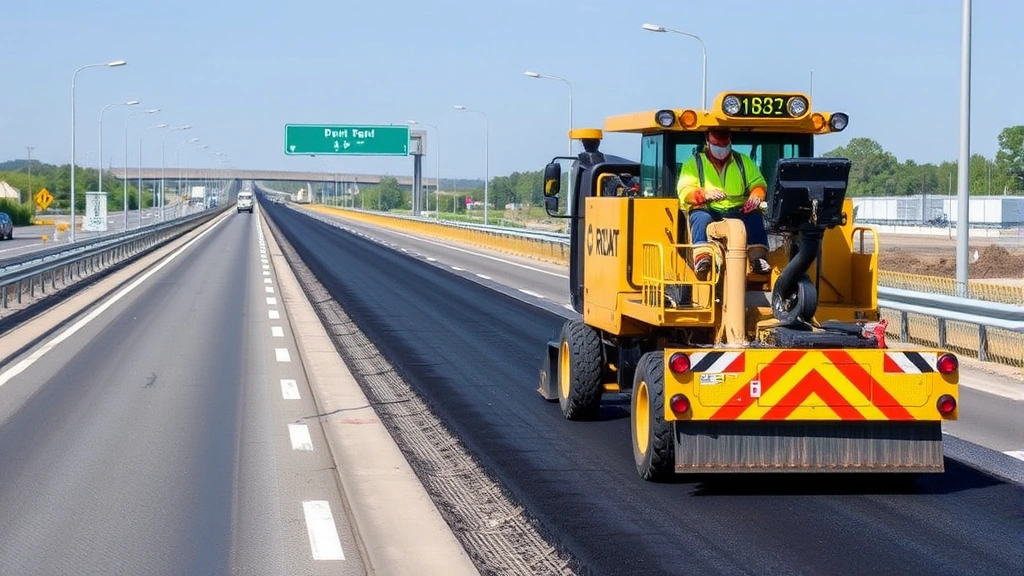
Industry Overview and Market Dynamics
The road construction sector operates within a complex ecosystem influenced by government spending, infrastructure policy, economic cycles, and technological advancement. In the United States alone, federal and state governments allocate billions annually toward highway maintenance, expansion, and new construction projects. The Infrastructure Investment and Jobs Act significantly boosted capital allocation toward transportation infrastructure, creating unprecedented opportunities for established and emerging road construction companies.
Market dynamics reveal several compelling trends. First, consolidation continues as larger firms acquire regional players to expand geographic reach and service capabilities. Second, project complexity has increased, requiring specialized expertise in environmental compliance, traffic management, and advanced materials. Third, labor shortages and rising material costs present ongoing challenges that separate efficient operators from struggling competitors. Companies demonstrating operational excellence, technological adoption, and workforce development gain substantial competitive advantages in this environment.
The global road construction market exceeded $1.5 trillion in recent years, with projections suggesting continued growth driven by urbanization, emerging market development, and infrastructure modernization in developed nations. Harvard Business Review has extensively documented how infrastructure investments drive long-term economic returns, making this sector strategically important for institutional investors.

Top Road Construction Companies
Boral Limited ranks among the world’s largest road construction and materials suppliers, with operations spanning Australia, Asia, and North America. The company generates over $7 billion in annual revenue and maintains industry-leading margins through integrated operations combining construction, materials manufacturing, and logistics. Boral’s strategic positioning in high-growth Asian markets provides significant expansion potential.
Granite Construction operates as one of North America’s premier heavy civil construction companies, specializing in highway, bridge, and infrastructure projects. With approximately $3.5 billion in annual revenue, Granite maintains a robust backlog of multi-year contracts, providing revenue visibility and growth predictability. The company’s operational discipline and project management excellence have established its reputation among government agencies and private clients.
Kiewit Corporation represents one of the largest privately-held construction companies globally, with substantial road construction operations across North America. Though private, Kiewit’s estimated $20+ billion in annual revenue demonstrates its massive scale and market influence. The company’s diversified portfolio and long-term project commitments provide stability and growth opportunities.
Fluor Corporation brings engineering, procurement, and construction expertise to major infrastructure projects worldwide. While broader than pure road construction, Fluor’s transportation segment generates significant revenue from highway and infrastructure projects. The company’s global reach and technical capabilities position it advantageously for complex, large-scale developments.
Sterling Construction Company focuses on heavy civil infrastructure including roads, highways, and underground utilities. With approximately $1.5 billion in annual revenue, Sterling maintains strong regional presence and specialized capabilities in challenging project environments.
Market Leaders and Their Competitive Advantages
Successful road construction companies leverage multiple competitive advantages. Understanding these differentiators illuminates why certain firms consistently outperform peers and command premium valuations.
Operational Excellence and Project Management: Industry leaders implement sophisticated project management systems, lean construction methodologies, and real-time performance monitoring. Companies investing in digital tools, data analytics, and workforce training achieve superior productivity metrics, cost control, and schedule adherence. These capabilities directly translate to higher margins and improved client satisfaction, generating repeat business and referrals.
Technological Integration: Modern road construction increasingly relies on automation, GPS-guided equipment, drone surveying, and advanced materials. Companies adopting Building Information Modeling (BIM), autonomous machinery, and predictive maintenance systems reduce costs while improving quality. McKinsey research demonstrates that construction firms embracing digital transformation achieve 15-20% productivity improvements.
Strategic Relationships and Backlog: Leading firms maintain long-standing relationships with government agencies, securing multi-year contracts that provide revenue stability. A substantial backlog of signed contracts reduces revenue uncertainty and enables more efficient workforce planning and equipment utilization.
Geographic Diversification: Companies operating across multiple regions, states, or countries mitigate exposure to localized economic downturns or political changes. Geographic diversity also enables firms to leverage expertise across markets and pursue growth in high-opportunity regions.
Understanding how to price products and services strategically applies directly to construction bidding, where firms must balance competitive pricing against margin requirements and risk considerations.
Financial Performance and Growth Trends
Financial metrics reveal which road construction companies are executing effectively. Key performance indicators include revenue growth, gross margins, operating margins, return on invested capital, and backlog-to-revenue ratios.
Leading firms typically maintain gross margins of 15-25%, with operating margins of 5-12% depending on project mix, geographic markets, and operational efficiency. Companies with higher margins generally demonstrate superior project selection, cost management, and operational capabilities. Revenue growth among top-tier firms averages 5-10% annually, though this varies based on economic cycles and infrastructure spending patterns.
Backlog analysis proves particularly important for road construction companies. A healthy backlog-to-revenue ratio of 1.5-2.5x indicates strong future revenue visibility and growth trajectory. Companies with limited backlogs face uncertainty about future work and may struggle to maintain workforce levels and equipment utilization.
Recent financial data shows consolidation accelerating, with larger firms acquiring smaller regional competitors to achieve scale economies and geographic expansion. This trend suggests that mid-sized companies face increasing pressure to either grow through acquisition or risk becoming acquisition targets themselves.
Technology and Innovation in Road Construction
Technological innovation fundamentally reshapes how road construction companies operate. Emerging technologies address industry challenges including labor shortages, cost pressures, quality inconsistencies, and safety concerns.
Autonomous and Semi-Autonomous Equipment: Autonomous compactors, pavers, and graders reduce labor requirements while improving consistency and precision. These machines operate with GPS guidance and real-time feedback systems, achieving superior compaction uniformity and surface quality compared to manual operation.
Advanced Materials and Recycling: Recycled asphalt pavement (RAP) and warm-mix asphalt technologies reduce material costs and environmental impact while maintaining performance standards. Companies investing in sustainable materials gain competitive advantages as environmental regulations tighten and client preferences shift toward sustainable practices.
Data Analytics and Predictive Maintenance: IoT sensors embedded in equipment generate real-time performance data, enabling predictive maintenance that prevents costly breakdowns. Analytics platforms identify efficiency bottlenecks, inform equipment deployment decisions, and optimize resource allocation across project portfolios.
Drone Surveying and 3D Mapping: Unmanned aerial vehicles enable rapid site surveying, progress monitoring, and quality documentation. Drones reduce survey costs by 30-50% while providing higher-resolution data compared to traditional methods. This technology particularly benefits road construction companies managing multiple dispersed project sites.
Sustainability and Environmental Considerations
Environmental sustainability increasingly influences how road construction companies compete and operate. Government agencies prioritize contractors demonstrating environmental stewardship, and investor focus on ESG metrics affects capital availability and valuations.
Sustainable practices in road construction include minimizing material waste, reducing carbon emissions, protecting water resources, and restoring habitats. Companies implementing comprehensive sustainability programs achieve cost savings through material efficiency while enhancing reputation and client relationships. Forbes consistently highlights construction firms excelling in sustainability as industry leaders worthy of investment consideration.
Recycled materials represent significant sustainability opportunities. Using reclaimed asphalt pavement, recycled concrete, and reclaimed base materials reduces virgin material extraction while lowering costs. Some leading firms have established closed-loop recycling operations where old pavement is reclaimed, processed, and reused in new construction.
Carbon accounting and emissions reduction programs increasingly differentiate competitors. Firms tracking and reducing Scope 1, 2, and 3 emissions through equipment efficiency, renewable energy adoption, and material optimization position themselves advantageously as carbon pricing mechanisms expand globally.
Investment Opportunities and Strategic Outlook
The road construction sector presents compelling investment opportunities for those understanding industry dynamics and company fundamentals. Infrastructure spending continues expanding globally, driven by urbanization, climate resilience needs, and aging infrastructure replacement.
Investors should evaluate regulated investment companies and construction firms with strong governance, transparent financial reporting, and disciplined capital allocation. companies that had their IPO in 2016 and subsequent years provide case studies in how construction firms access capital and execute growth strategies.
Strategic considerations for investors include: government policy continuity, backlog quality and duration, management team capability, technological adoption progress, and competitive positioning. Companies demonstrating excellence across these dimensions offer superior risk-adjusted returns compared to industry averages.
Building meaningful professional connections within the construction industry provides valuable insights into company operations, competitive dynamics, and emerging opportunities. Industry conferences, association meetings, and professional networks facilitate knowledge-sharing and relationship development.
Long-term industry tailwinds include infrastructure modernization in developed markets, continued urbanization in emerging markets, climate adaptation investments, and technological advancement improving productivity. Companies positioned to capitalize on these trends while managing cyclical risks offer attractive investment profiles.
FAQ
Which road construction companies are publicly traded?
Granite Construction (NYSE: GVA), Sterling Construction Company (NASDAQ: STRL), and Fluor Corporation (NYSE: FLR) trade publicly. Others like Boral Limited trade on Australian exchanges. Many large construction firms including Kiewit remain privately held, limiting direct investment access but offering exposure through project partnerships or supplier relationships.
How do road construction companies manage project risk?
Leading firms employ comprehensive risk management including detailed cost estimating, contingency reserves, contract risk allocation, insurance programs, and experienced project management teams. Strong firms negotiate favorable contract terms protecting against unforeseen conditions, material price fluctuations, and scope changes.
What skills and qualifications matter most for road construction company employees?
Technical expertise in heavy equipment operation, civil engineering, project management, and safety compliance proves essential. Soft skills including communication, problem-solving, and leadership differentiate high-performing employees. Companies prioritizing employee engagement through training and development attract and retain top talent.
How do infrastructure spending cycles affect road construction companies?
Infrastructure spending follows political and economic cycles. Government spending typically increases during economic downturns as stimulus and during infrastructure-focused policy periods. Companies with diversified client bases, geographic reach, and flexible cost structures weather spending cycles more effectively than specialized, regional competitors.
What emerging technologies most impact road construction operations?
Autonomous equipment, advanced materials, data analytics, drone surveying, and Building Information Modeling represent the most impactful technologies. Companies investing in these areas achieve cost reductions, quality improvements, and safety enhancements, creating sustainable competitive advantages.
How important is backlog for evaluating road construction companies?
Backlog represents future revenue visibility and provides critical insight into growth trajectory and financial stability. A healthy backlog-to-revenue ratio of 1.5-2.5x indicates strong near-term growth prospects, while declining backlogs signal potential revenue challenges. Investors should carefully monitor backlog trends when assessing company health.


