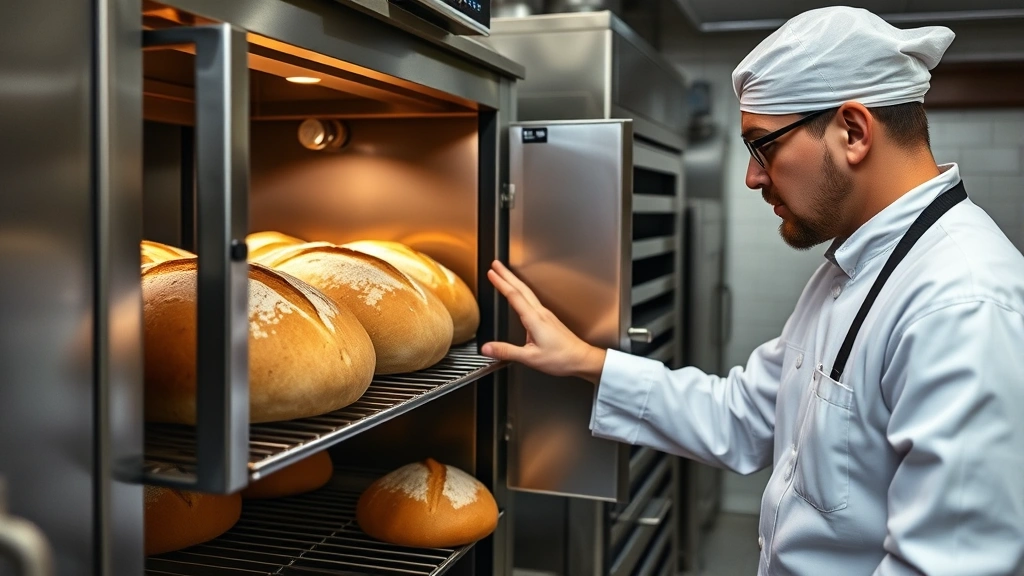
Sourdough Success? Baker’s Proven Tips for Building a Thriving Sourdough Company
The artisanal bread market has exploded over the past decade, with sourdough leading the charge as consumers increasingly demand authentic, naturally fermented products. For entrepreneurs looking to launch or scale the sourdough company, understanding both the craft and the business fundamentals is essential. This comprehensive guide explores the strategic, operational, and financial considerations that separate successful sourdough bakeries from those that struggle to rise.
Building a profitable sourdough business requires more than just mastering fermentation times and hydration ratios. It demands a sophisticated understanding of supply chain management, operational efficiency, workforce development, and market positioning. Whether you’re operating a single storefront or managing a multi-location bakery network, the principles outlined here will help you achieve sustainable growth and profitability.
Understanding the Sourdough Market Opportunity
The artisanal bread segment represents one of the fastest-growing categories in the bakery industry, with sourdough commanding premium pricing due to its perceived health benefits and authentic appeal. Market research indicates that consumers are willing to pay 40-60% more for naturally fermented bread compared to commercial yeast-based alternatives. This premium pricing structure creates significant margin opportunities for well-executed sourdough operations.
Before launching your sourdough venture, conduct thorough market analysis specific to your region. Identify competitor density, average price points, and customer demographics. Understanding whether you’re entering a saturated market or an underserved area fundamentally shapes your business strategy. Consider researching your local market through the California Company Search if you’re operating on the West Coast, which provides access to competitor information and business registration data.
The sourdough business model operates across multiple channels: direct retail through storefronts, wholesale distribution to restaurants and retailers, online sales with shipping capabilities, and farmers’ market presence. Most successful bakeries derive revenue from multiple channels, reducing dependence on any single customer segment. Diversification protects against market fluctuations and maximizes revenue potential.
According to Harvard Business Review, specialty food companies that maintain premium positioning while achieving operational scale generate the strongest returns. Your sourdough company’s value proposition should emphasize authenticity, quality ingredients, and production methods that justify premium pricing.
Mastering Production Efficiency and Scaling
Production efficiency determines whether your sourdough company achieves profitability at scale. The fundamental challenge lies in maintaining artisanal quality while increasing volume—a tension that requires careful process design and quality control systems.
Starter maintenance and consistency form the foundation of reliable production. Develop standardized protocols for feeding schedules, temperature control, and hydration levels. Document every variable affecting fermentation: ambient temperature, flour sourcing, water mineral content, and timing. This data-driven approach to artisanal baking enables predictable results across multiple production runs.
Invest in proper infrastructure including temperature-controlled fermentation chambers, commercial-grade ovens, and proofing boxes. These capital investments directly impact production consistency and capacity. A well-designed production facility can increase daily output by 300-400% compared to manual methods, while maintaining superior product quality.
Batch scheduling represents another critical efficiency lever. Map your production calendar to demand patterns, accounting for day-of-week variations and seasonal fluctuations. Most sourdough bakeries operate on a 2-3 day fermentation cycle, requiring careful coordination to match production timing with sales demand. Overproduction leads to waste; underproduction leaves money on the table.
Consider implementing a tiered product strategy: premium hand-shaped loaves for retail, standard bulk loaves for wholesale, and specialty items for direct sales. This approach maximizes equipment utilization while serving different market segments efficiently. High-margin specialty items subsidize volume sales and improve overall profitability.

Building Your Team and Improving Operations
A sourdough company’s success ultimately depends on its people. Bakers represent your most critical resource, yet bakery positions historically suffer from high turnover and wage pressure. Developing a compelling employee value proposition is essential for competitive advantage.
Implement training programs that develop baker skills systematically. Many successful sourdough companies invest in apprenticeship models, offering structured learning paths from entry-level production assistant to head baker. This investment reduces turnover while improving product consistency and innovation capacity. Refer to resources on how to improve employee productivity for practical frameworks applicable to production teams.
Compensation strategy should reflect the specialized nature of sourdough baking. While entry-level positions may command standard wages, experienced bakers warrant premium compensation—often 20-30% above standard bakery wages. This investment pays dividends through reduced turnover, higher quality output, and stronger customer relationships.
Establish clear operational procedures and quality standards. Document your recipes, fermentation protocols, scoring techniques, and baking parameters. This systematization enables consistent training and reduces dependence on individual baker expertise. It also facilitates scaling beyond a single location.
Create a positive workplace culture that celebrates craft and quality. Bakers choosing this profession often prioritize meaningful work and professional development over maximum earnings. Recognition programs, skill development opportunities, and clear career progression paths generate loyalty that cash compensation alone cannot achieve.
Strategic Location and Property Management
Location decisions fundamentally impact sourdough company success. Retail-focused bakeries require high-traffic pedestrian locations with strong demographics. Wholesale-focused operations prioritize proximity to customer bases and transportation corridors. Mixed-model companies must balance competing location demands.
Facility requirements differ significantly from typical retail spaces. Sourdough bakeries require commercial kitchens with specific infrastructure: proper ventilation for fermentation chambers, sturdy flooring to support heavy equipment, climate control for temperature consistency, and adequate space for bulk fermentation and staging. These specialized requirements limit available locations and increase buildout costs.
Partner with experienced commercial property management companies familiar with food production operations. Property managers experienced with bakery operations understand zoning requirements, health department specifications, and buildout costs specific to bread production. This expertise prevents costly mistakes and accelerates facility setup.
Negotiate lease terms carefully. Bakery equipment represents substantial capital investment, making long-term location stability crucial. Seek lease terms of 5-10 years with renewal options. Include provisions for facility modifications necessary for your production setup, and clarify responsibility for major repairs and maintenance.
Consider the economics of expansion locations carefully. A second location increases operational complexity while requiring management attention. Many sourdough companies find that maximizing first-location profitability and scale before expanding yields better returns than premature multi-unit expansion.
Distribution and Logistics Excellence
Wholesale distribution represents significant growth opportunity but introduces operational complexity. Bread has inherent shelf-life limitations—typically 3-5 days for peak quality—making logistics timing critical. Develop distribution routes that minimize product age at point of sale.
Evaluate whether your company will handle direct delivery or partner with distributors. Direct delivery maintains customer relationships and margin control but requires vehicle fleet and driver investment. Distributor partnerships reduce operational burden but compress margins by 15-25%. Many successful sourdough companies employ hybrid models: direct delivery for key accounts and distributor relationships for smaller retail locations.
Product packaging significantly impacts distribution success. Invest in packaging that maintains freshness, communicates brand story, and withstands distribution handling. Kraft paper bags with clear branding cost slightly more than generic packaging but command price premiums and build brand recognition.
For sourdough companies considering broader expansion, transportation logistics become increasingly important. Research best trucking companies to work for if planning to scale distribution beyond local markets. Reliable logistics partners ensure product arrives in optimal condition, protecting your brand reputation.
Develop real-time inventory tracking systems that monitor product age and freshness. Implement first-in-first-out (FIFO) protocols rigorously. Stale product damages brand perception far more than occasional stockouts.
Financial Management and Profitability
Sourdough bakeries typically operate with gross margins of 55-70%, depending on product mix and production efficiency. However, operating expenses—particularly labor, rent, and utilities—often consume 45-55% of revenue, leaving net margins of 10-20% for well-managed operations.
Cost of goods sold (COGS) analysis reveals profitability drivers. Flour typically represents 25-35% of COGS, making supplier relationships and volume purchasing critical. Develop relationships with grain suppliers offering consistent quality at competitive pricing. Consider longer-term contracts locking in pricing during market volatility.
Monitor labor efficiency metrics closely. Productive bakeries achieve 40-50 loaves per labor hour depending on product complexity. Track this metric regularly and benchmark against industry standards. Productivity improvements directly translate to profitability.
Implement robust financial reporting systems tracking revenue by channel, COGS by product line, and labor efficiency by shift. Most bakeries operate on thin margins, making financial discipline essential. Monthly financial reviews identifying variance from budget enable rapid corrective action.
Capital planning for equipment and facility expansion requires careful analysis. Evaluate expected returns on major investments: new ovens, fermentation chambers, or retail locations. Most sourdough companies should target payback periods of 3-5 years for major capital expenditures.
Marketing and Brand Positioning
Successful sourdough companies build premium brands commanding price premiums and customer loyalty. Brand positioning should emphasize unique differentiators: heritage starter lineage, local grain sourcing, specific fermentation techniques, or community connections.
Develop compelling storytelling around your production process. Consumers purchasing artisanal sourdough seek connection to craft and authenticity. Share your story through social media, in-store signage, and direct customer interactions. Transparency about ingredients, sourcing, and methods builds trust that justifies premium pricing.
Community engagement creates durable competitive advantages. Sponsor local events, partner with nearby restaurants, and host bakery tours or fermentation workshops. These activities build brand loyalty while generating word-of-mouth marketing with exceptional ROI.
Digital marketing should emphasize visual content showcasing the artistry of sourdough production. High-quality photography of loaves, fermentation processes, and finished products performs exceptionally well on Instagram and Pinterest. Consider that McKinsey research indicates visual content generates 40% higher engagement than text-based content in food categories.
Email marketing to regular customers drives repeat purchases and builds community. Share recipes, baking tips, and seasonal offerings. Loyalty programs offering discounts or free products after X purchases encourage repeat business and increase customer lifetime value.
Technology Integration for Growth
Point-of-sale (POS) systems designed for bakeries streamline transactions while capturing customer data. Invest in systems enabling loyalty program tracking, inventory management, and sales analytics. Modern POS systems integrate with accounting software, reducing manual data entry and improving financial accuracy.
Inventory management software prevents overproduction and waste while ensuring adequate stock to meet demand. Real-time inventory visibility enables dynamic pricing: slight discounts on aging inventory maximize revenue while preventing waste.
Online ordering systems expand addressable market while improving customer convenience. Platforms like Shopify or specialized bakery software enable pre-ordering, payment processing, and fulfillment scheduling. Online ordering also smooths demand volatility, improving production planning.
Production scheduling software coordinates fermentation timing, oven utilization, and labor scheduling. Proper scheduling ensures consistent product availability while minimizing overtime labor costs. Several specialized bakery management platforms offer production scheduling integrated with inventory and financial reporting.
Consider exploring education technology companies offering training modules for bakery operations. Digital training platforms enable standardized staff development, reducing training time while improving consistency across multiple locations or shifts.
Business intelligence dashboards providing real-time visibility into key metrics—daily sales, production efficiency, labor costs, and inventory levels—enable data-driven decision making. These systems identify trends and anomalies requiring management attention before they impact profitability.
FAQ
What distinguishes successful sourdough companies from competitors?
Successful sourdough companies combine authentic craftsmanship with operational excellence. They maintain superior product quality while achieving production efficiency, develop strong brand positioning justifying premium pricing, and build customer loyalty through exceptional experience and consistency. Many also diversify revenue streams across retail, wholesale, and direct-to-consumer channels.
How much capital investment does a sourdough bakery require?
Startup capital requirements typically range from $150,000 to $400,000 depending on location, facility size, and equipment quality. This includes lease deposits, buildout costs, commercial equipment (ovens, mixers, fermentation chambers), initial inventory, permits and licenses, and working capital for operations. Existing retail spaces require lower buildout investment than build-to-suit facilities.
What is the typical timeline to profitability for sourdough companies?
Well-executed sourdough bakeries typically achieve profitability within 12-24 months of opening. This timeline assumes adequate startup capital, experienced management, and realistic initial revenue projections. Businesses undercapitalized or located in saturated markets may require 3+ years to achieve profitability, if at all.
Should sourdough companies pursue multi-unit expansion?
Most sourdough companies should maximize single-location profitability and operational systems before expanding. Multi-unit expansion increases management complexity while requiring systems, capital, and personnel not yet developed in early-stage operations. Premature expansion often dilutes brand quality and strains financial resources. Successful expansion typically occurs after 3-5 years of single-location operation with proven systems and strong unit economics.
How do sourdough companies handle seasonal demand fluctuations?
Seasonal variations significantly impact sourdough bakeries. Winter months typically see 30-40% higher demand than summer. Successful companies address seasonality through diverse revenue streams (wholesale, direct-to-consumer, specialty items), flexible staffing models, and strategic pricing adjustments. Some develop seasonal products capitalizing on specific occasions (holiday breads, etc.) maintaining revenue during slower periods.
What certifications or credentials should sourdough bakers possess?
While formal credentials aren’t required, bakers benefit from professional training through culinary schools or apprenticeship programs. Certifications in food safety and sanitation are essential. Many successful bakers develop expertise through years of hands-on experience combined with continuous learning through industry conferences, professional associations, and specialized training programs. The National Flour Association and specialty bakery organizations offer valuable professional development resources.
How can sourdough companies maintain quality while scaling production?
Scaling while maintaining quality requires systematic documentation of all production variables, investment in proper equipment and facilities, rigorous quality control protocols, and careful training of additional staff. Many successful sourdough companies implement tiered product strategies—maintaining premium hand-shaped loaves while introducing standardized bulk loaves—enabling scale without compromising core products. Regular product testing and customer feedback monitoring identify quality drift before it becomes significant.
What role does local sourcing play in sourdough company strategy?
Local sourcing of flour and ingredients strengthens brand positioning, supports community relationships, and can reduce transportation costs. However, sourcing decisions should balance brand benefits against cost and consistency considerations. Many successful companies source primary ingredients locally while maintaining relationships with backup suppliers ensuring supply chain resilience. Transparent communication about sourcing choices builds customer loyalty among values-conscious consumers.